The Unspoken Ledger
The passing of Lord Alistair Blackwood has prompted a formal gathering at the family estate. The absence of a key legal document has introduced a period of profound uncertainty regarding the household's future.
 Initial Crime Scene
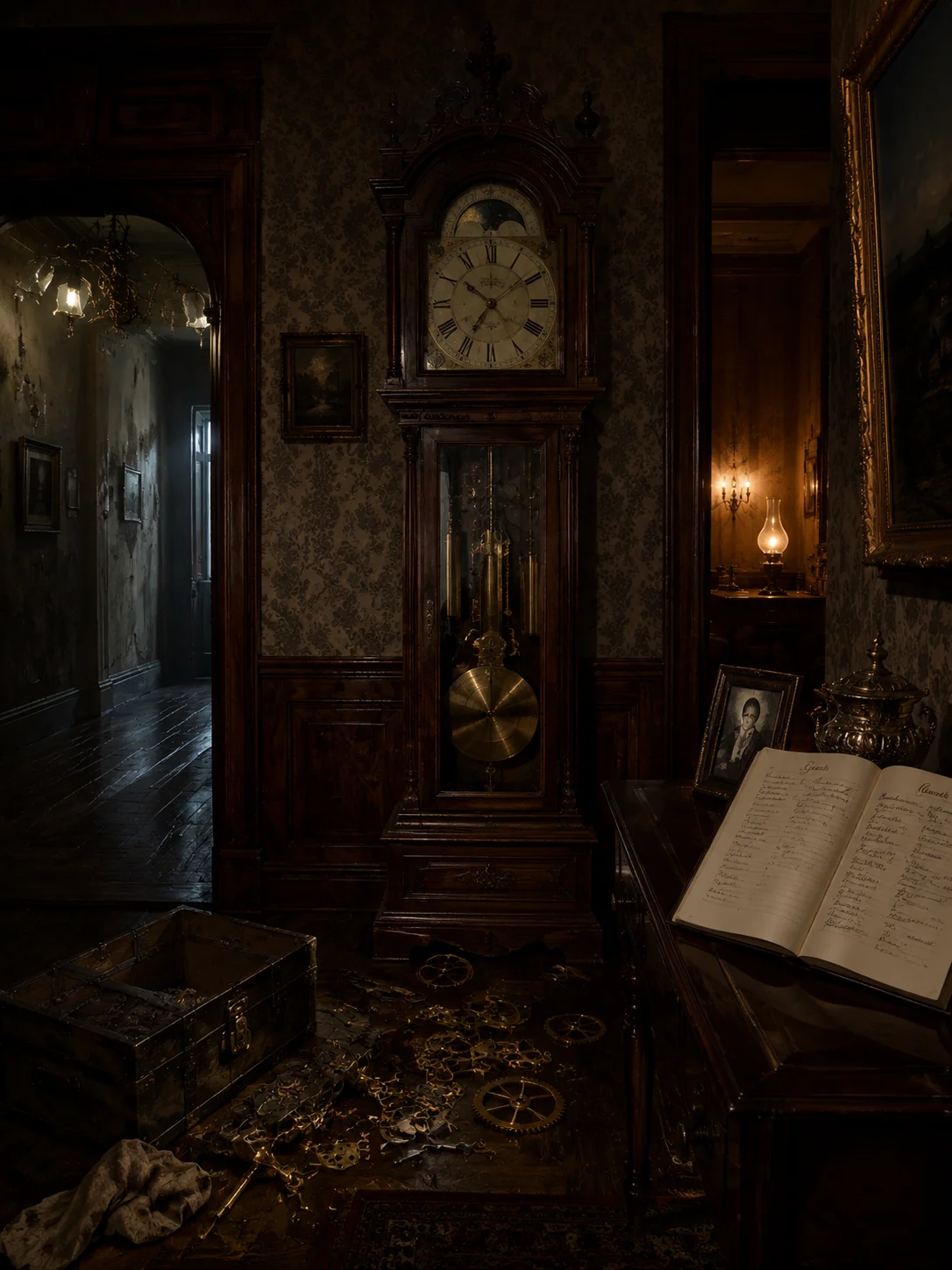
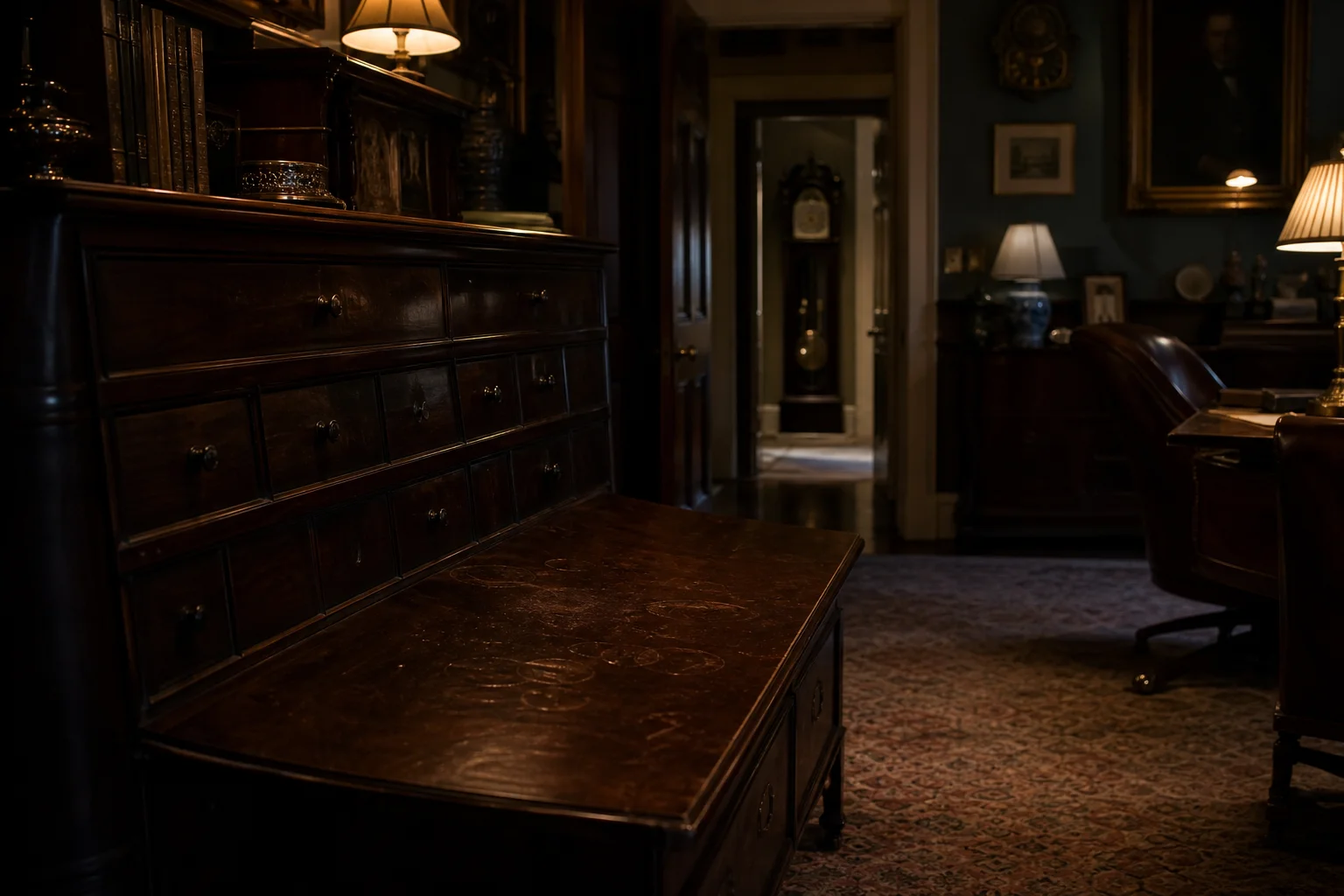
The scent of musty paper and aged leather from the library hangs in the still air of the entrance hall, a fragrance thick with decades of sealed correspondence. A grandfather clock ticks with a heavy, resonant beat somewhere in the shadowed corridor. Your gaze lands on the warped, empty slots in the study's mahogany document cabinet, the polished wood showing faint rings where objects once rested. A faint, discolored ring on the polished surface of a side table catches the lamplight, a lighter mark against the varnish. The warped, empty slots in the study's mahogany document cabinet stare out like missing teeth from the paneled room.
 Crime Scene Environment
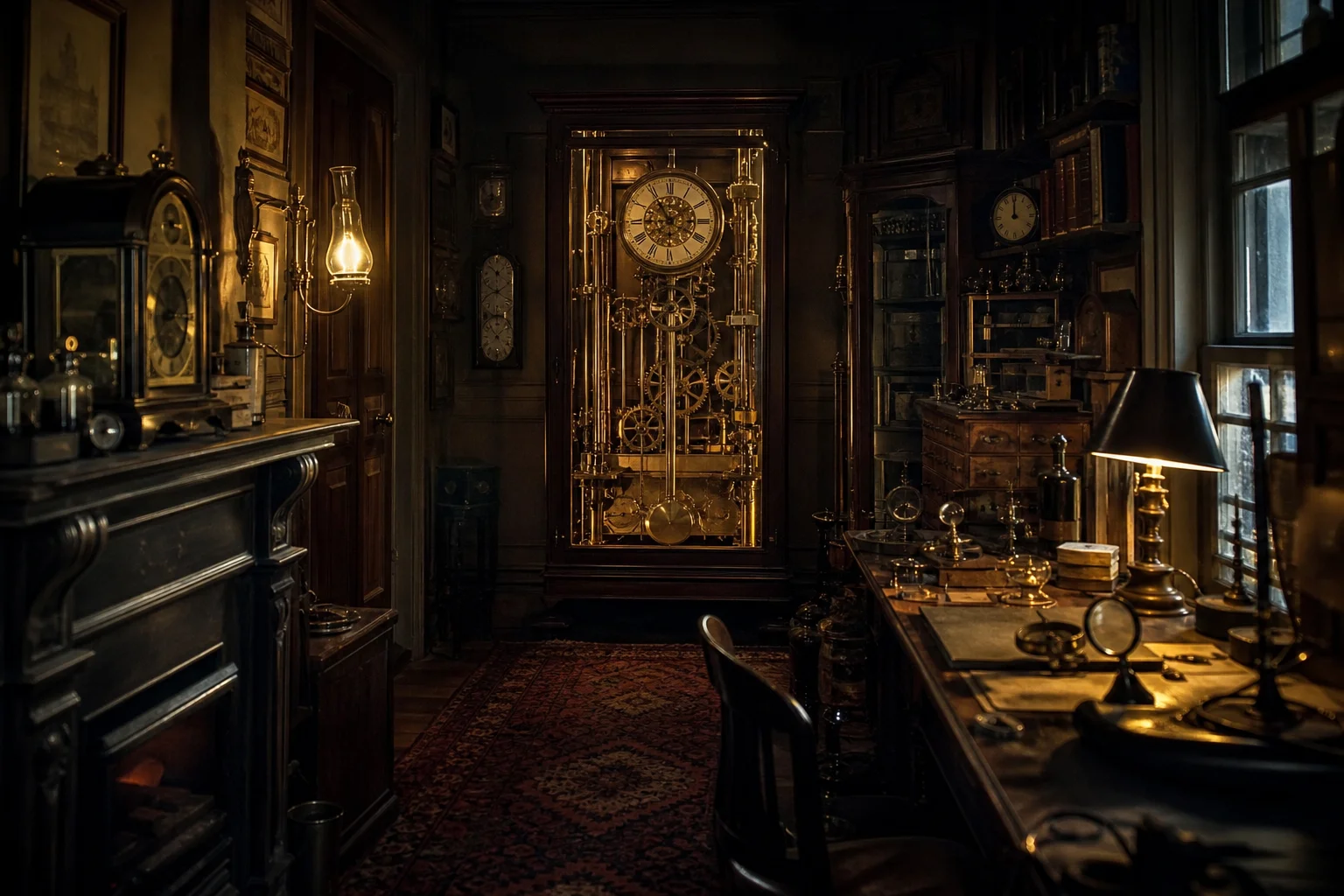
The interior is lit by the low, warm glow of table lamps and sconces, casting long, soft-edged shadows that pool in corners and under furniture. The air carries a consistent, heavy humidity, a product of old stone walls and coal-fired heating, making the environment feel close and still. Acoustic density is high; sounds are muffled by thick carpets, heavy drapes, and the pervasive quiet of a house holding its breath, making every creak of floorboards and distant rustle pronounced.
 Investigation Constraints
Mid-20th century English manor house setting. Tools include: antique key-and-lock mechanisms, rotary telephones, handwritten ledgers and diaries, mechanical clock systems, coal-fired heating, basic photographic film cameras, physical mail delivery, and simple mechanical locks on cabinets and desks. No digital, electronic, or advanced computational systems exist.
✦ Related Cases ✦