The Unspooling
A forensic music analyst is called to a recording studio after a catastrophic record scratch ruins a legendary singer's comeback album premiere. The investigation must untangle a web of professional rivalries, contractual disputes, and personal secrets to determine the source of the sabotage.
 Initial Crime Scene
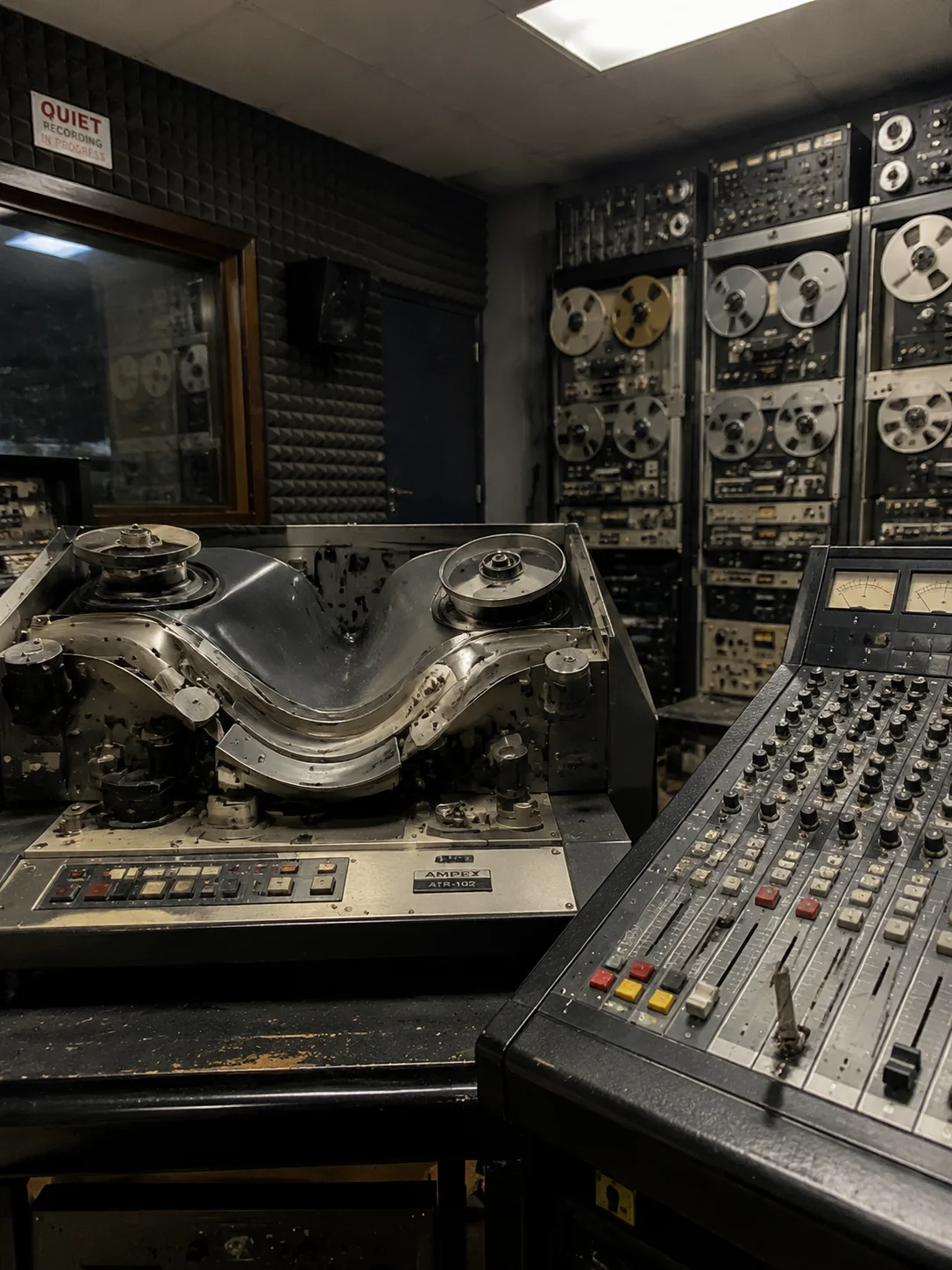
The air tastes of ozone and old vinyl. From the corridor, a faint, rhythmic *click-click-click* of a tape machine's idler roller underscores the silence. The control room is a dim cavern of polished chrome faders, their indicator lights winking like red and green eyes. On the console, a single reel of 2-inch magnetic tape rests, its surface catching the glow of a green-shaded desk lamp. To the left, a thick glass window looks into a padded vocal booth, empty and dark.
 Crime Scene Environment
The primary lighting is the cool, multicolored glow from the mixing console's LEDs, supplemented by a single green-shaded desk lamp that pools light on the main workspace. The air is dry and cool, maintained by a constant, low hum of climate control, with a persistent scent of warm electronics and aged paper. Acoustic density is high; sounds are muffled and absorbed by padded walls and heavy equipment, creating a sense of enclosed, focused silence.
 Investigation Constraints
Analog and early digital recording equipment (reel-to-reel tape, vinyl pressing masters, early digital audio workstations). Landline telephones with switchboard operators. Physical contracts, NDAs, and ledgers. Polaroid cameras. Newspaper gossip columns and tabloid photography. No internet, no mobile phones, no modern digital forensics.
✦ Related Cases ✦