The Unwinding Mechanism
At a countryside horology symposium, the death of a master clockmaker brings an outside consultant to a closed circle. The investigation uncovers a series of personal and professional secrets: hidden financial records, disputed design provenance, and forged historical documents. Attendees' panicked actions create a web of contradictory statements and evidence, obscuring the initial event.
 Initial Crime Scene
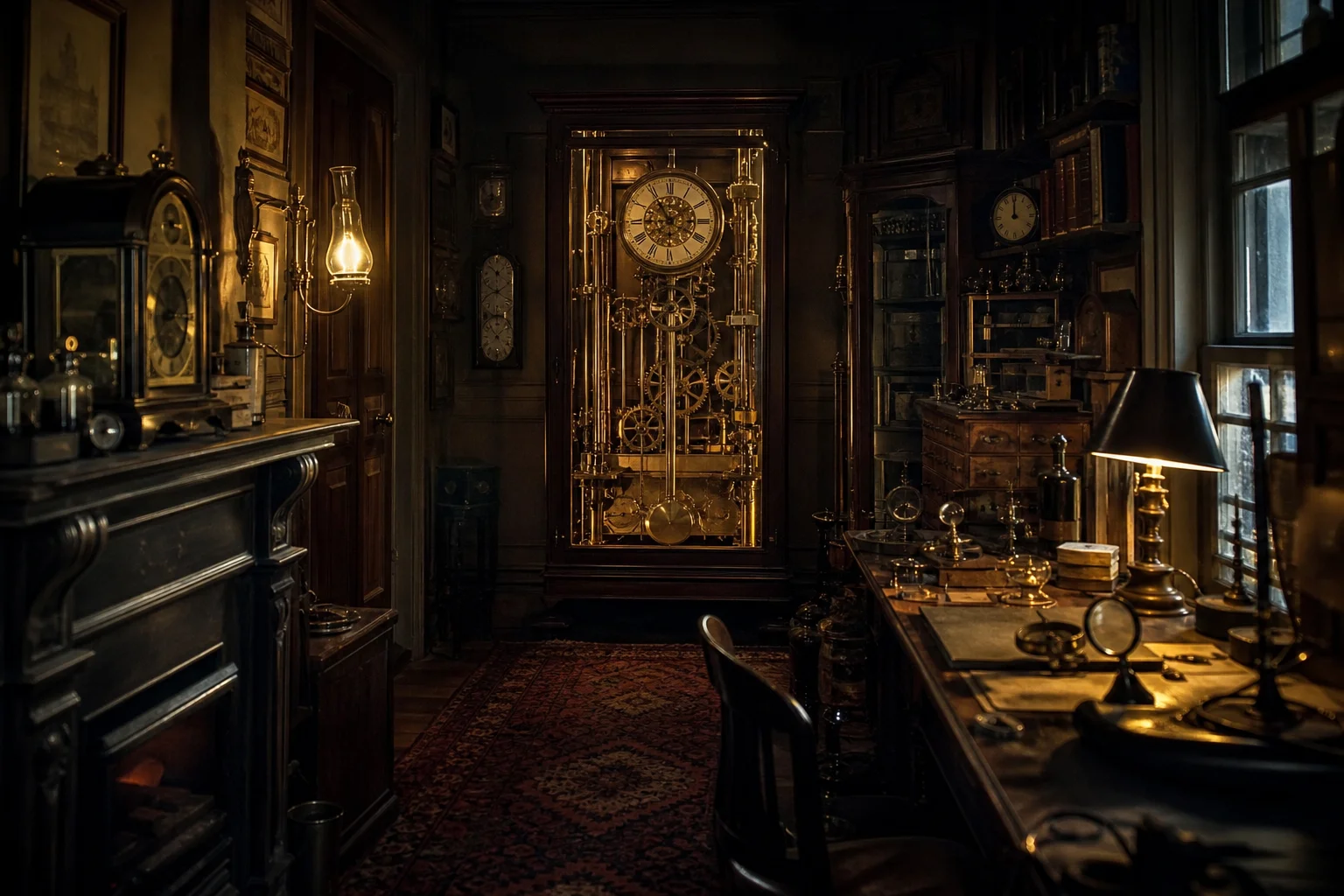
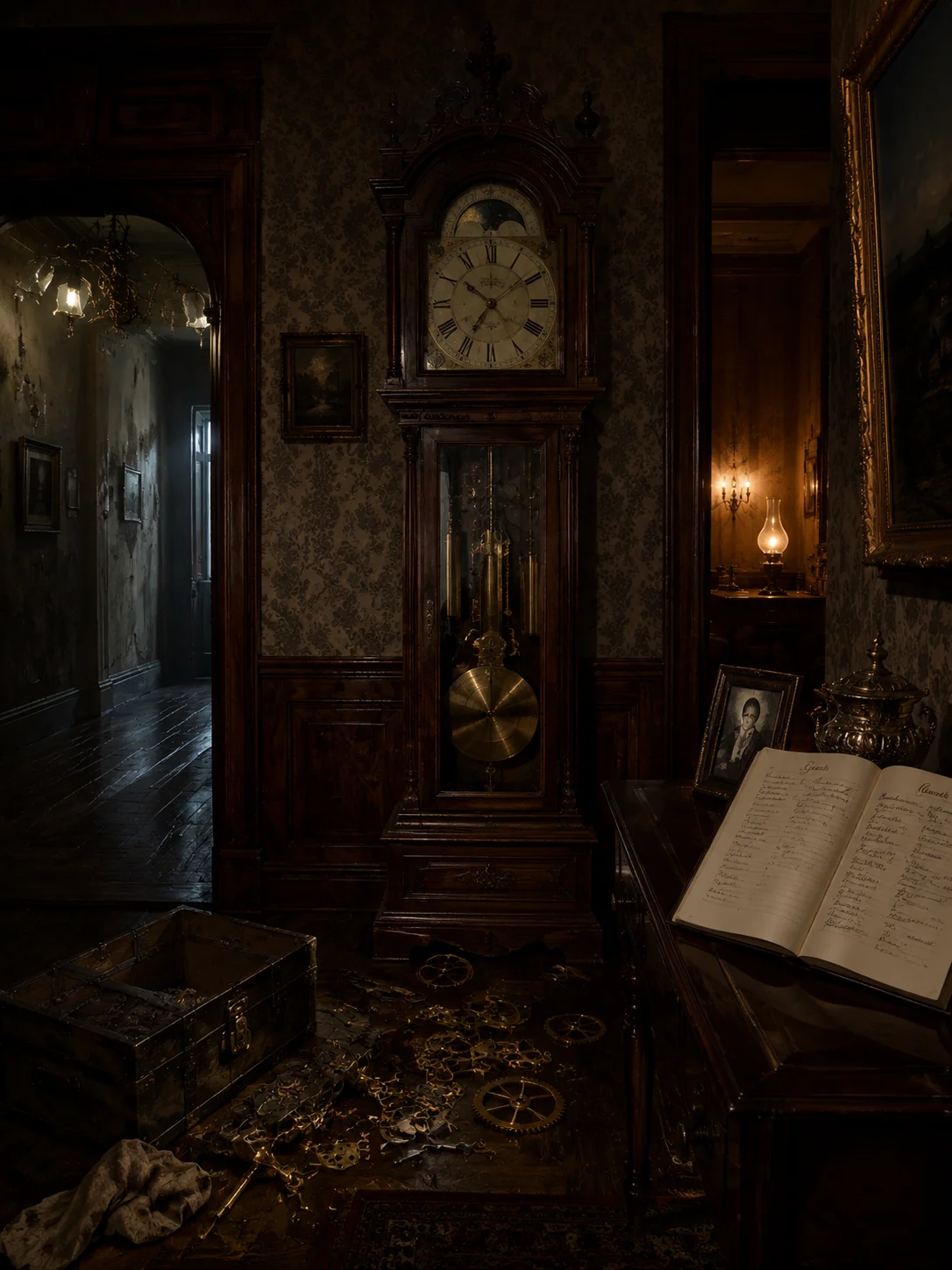
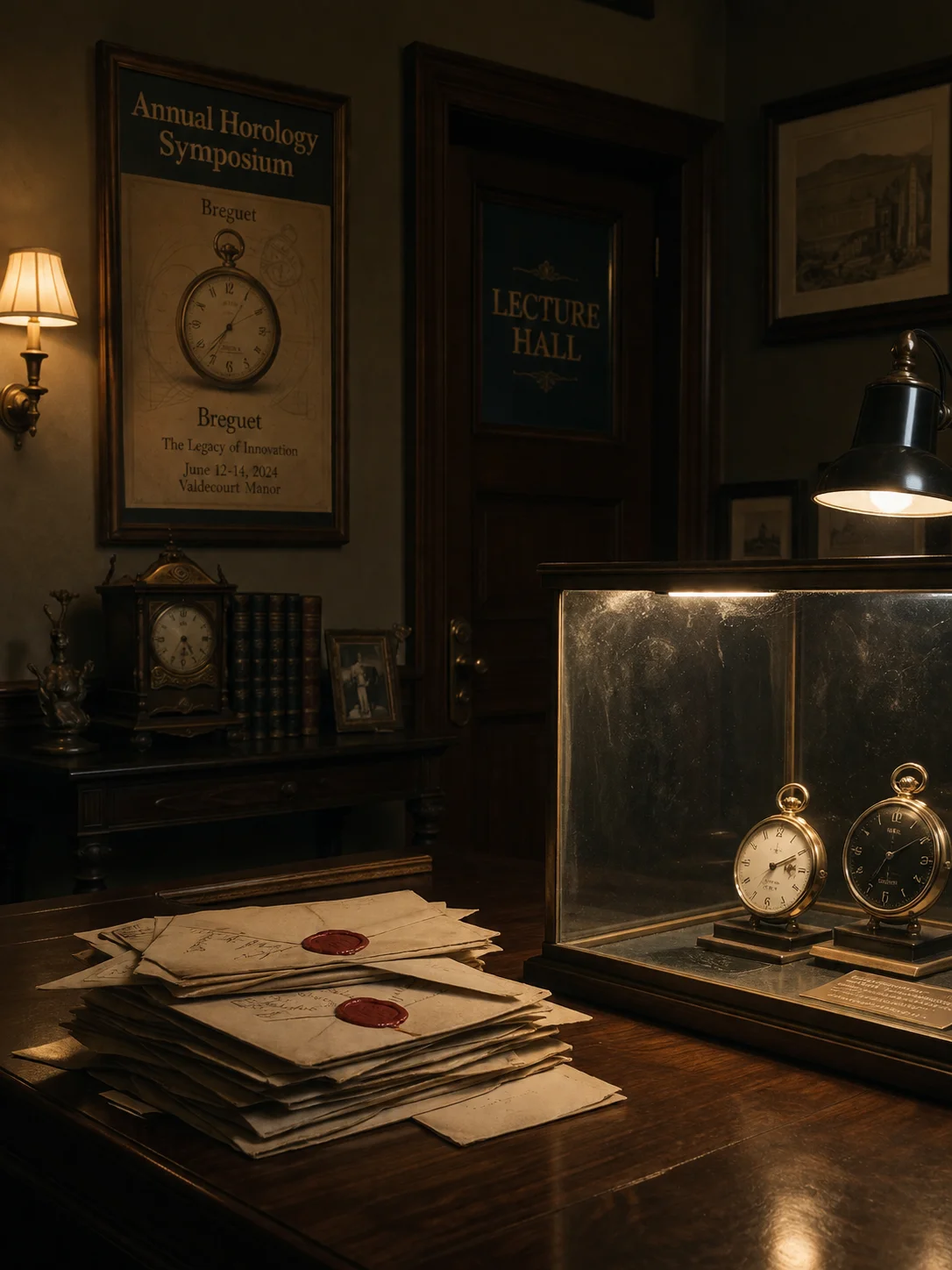
The first thing that hits is the smell of beeswax and brass polish, sharp and clean. Then the sound: a cacophony of synchronized chimes from dozens of clocks striking the hour, a disorienting wall of noise that abruptly stops, leaving a ringing silence. Before you: polished wood paneling glows under focused lamplight; a glass display case shows a fine, almost invisible dust pattern, disturbed only in specific spots; wax seals on a stack of personal letters show signs of careful repasting.
 Crime Scene Environment
The lighting is a mix of focused, warm lamplight and deep, cool shadows in the room's corners. The air is hushed and dry, carrying a faint, constant chill. The acoustic density is high, defined by the residual memory of the chime and the omnipresent, subtle ticking of unseen mechanisms.
 Investigation Constraints
Tools are purely mechanical and analog. Time is kept by meticulously maintained pendulum clocks, pocket watches, and winding keys. Communication is via handwritten letters, telegram, and in-person conversation. Security involves physical lock-and-key mechanisms, wax seals, and the implicit honor of a close-knit social circle. Forensic analysis relies on magnifying glasses, ledger books, and the naked eye for noticing scratches, ink blots, and fabric snags.
✦ Related Cases ✦