The Vicar's Missing Bicycle
A vicar's prized bicycle vanishes from a locked church shed. The investigation draws attention to the quiet routines and strained civility of the village's respectable figures, revealing a network of overlapping personal anxieties, professional pressures, and buried social histories.
 Initial Crime Scene
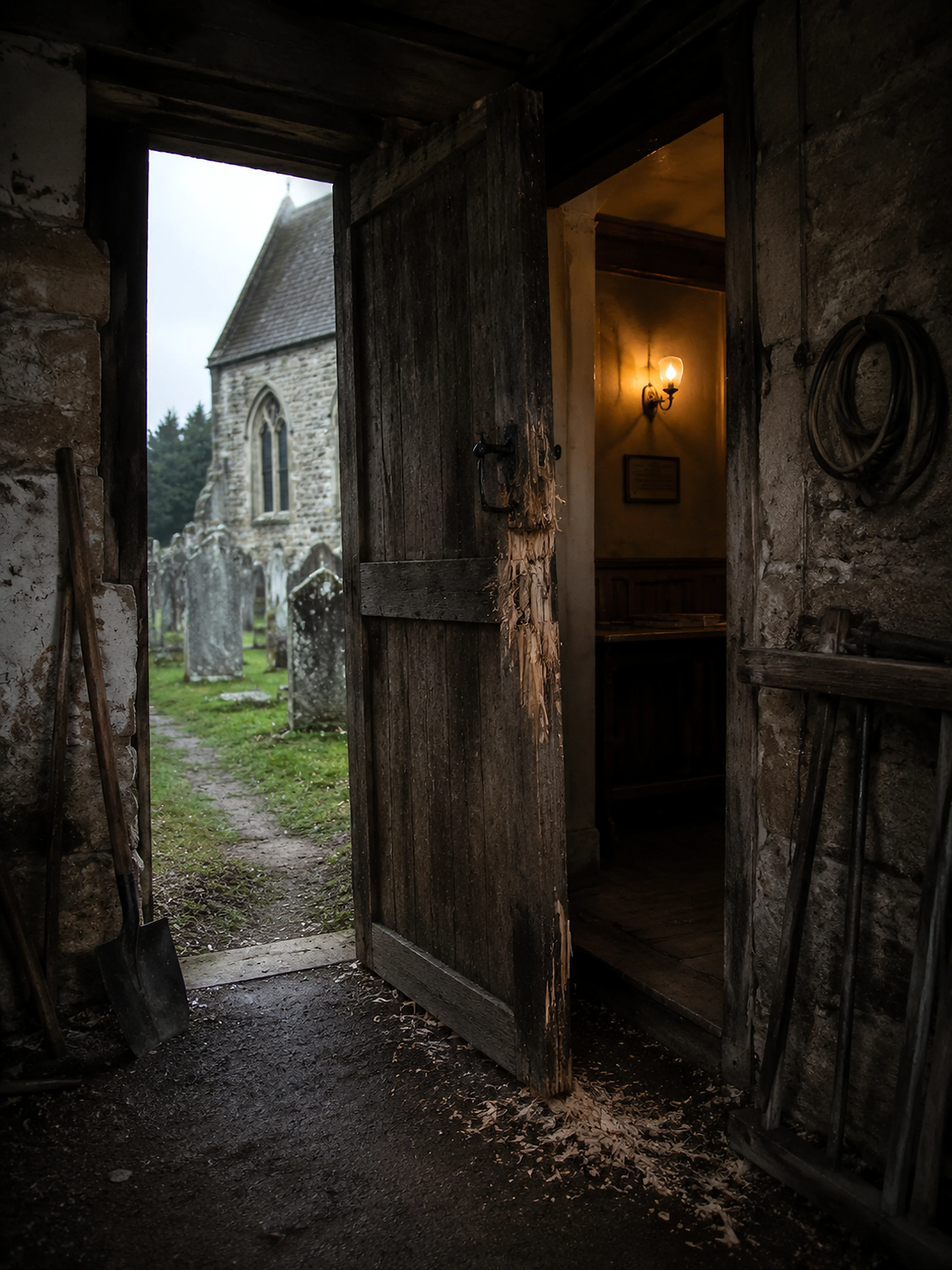
The scent of drying lavender and perpetual damp hits first. A warped door frame, showing fresh wood stress, hangs ajar on the bicycle shed. The muffled scrape of a rotary dial telephone sounds from the vicarage. Inside the dim shed, the vicar's black Raleigh bicycle is absent. Fresh, pale-yellow pine shavings litter the dirt floor near the base of the door frame. A single sconce in the nearby vestry casts a dim, yellow light on the oak-paneled wall.
 Crime Scene Environment
The sandbox is a Pre-digital, late 20th-century rural English village. The lighting profile is one of perpetual overcast daylight, dim interior sconces, and gloomy, shadow-filled spaces. The humidity/temperature profile is perpetual damp and cool air, with chill flagstones and a constant battle against wood rot. The acoustic density is low, characterized by creaking floorboards, clipped vowels in conversation, and the distant hum of the village's single printing press.
 Investigation Constraints
Pre-digital, late 20th-century rural English village. Technologies include: handwritten ledgers and parish registers, rotary dial telephones, a single shared village post office, local newspaper printing press, mechanical combination locks, physical keys, bicycle pump and repair kits, paper-based church archives, film cameras, and telegrams.
✦ Related Cases ✦