The Weight of the Flat
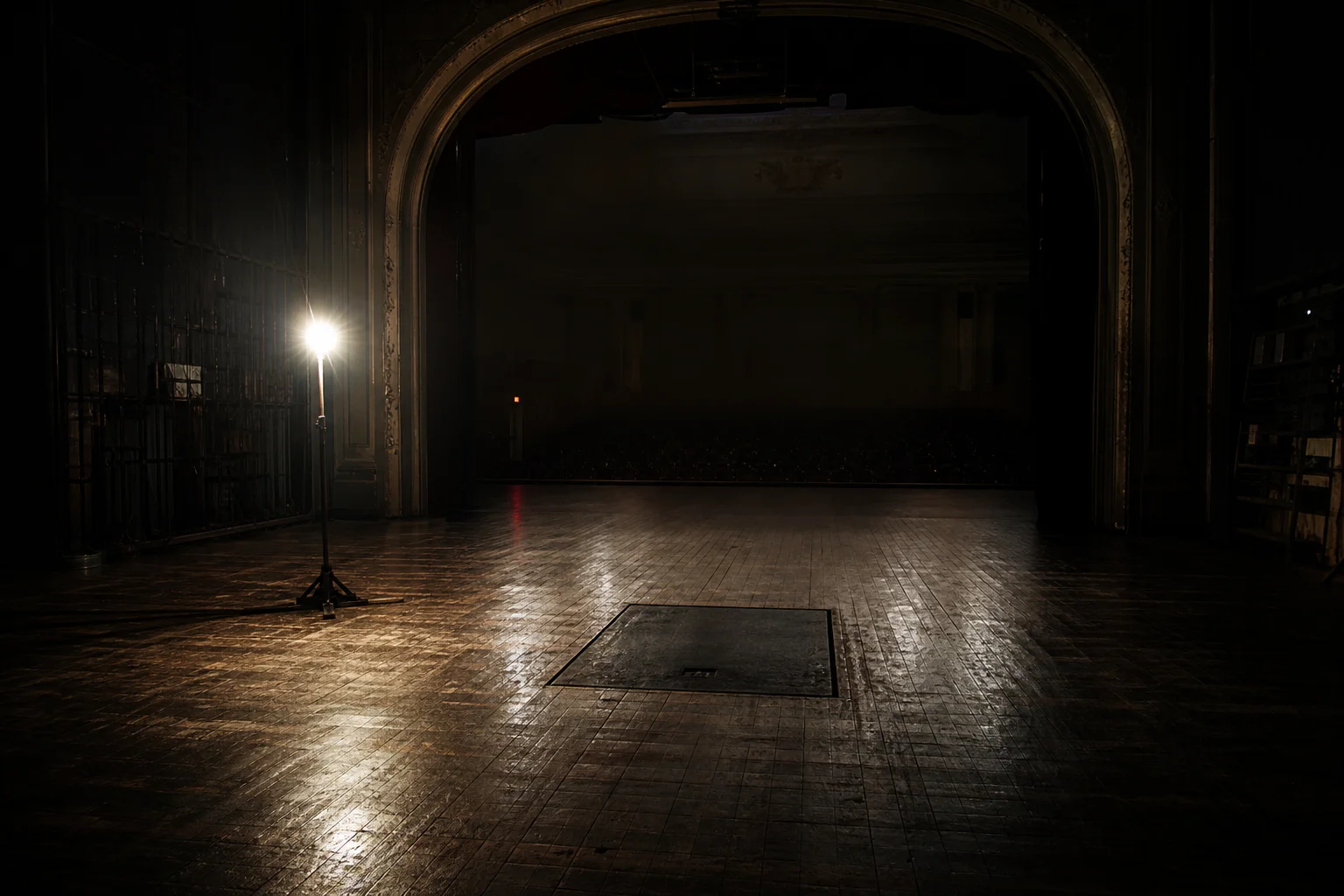
The final dress rehearsal at the Royal Theatre ends with the director motionless on the stage floor. Six individuals remain backstage, each with a meticulously maintained alibi and a private record of small, desperate actions taken in the preceding hour.
 Initial Crime Scene
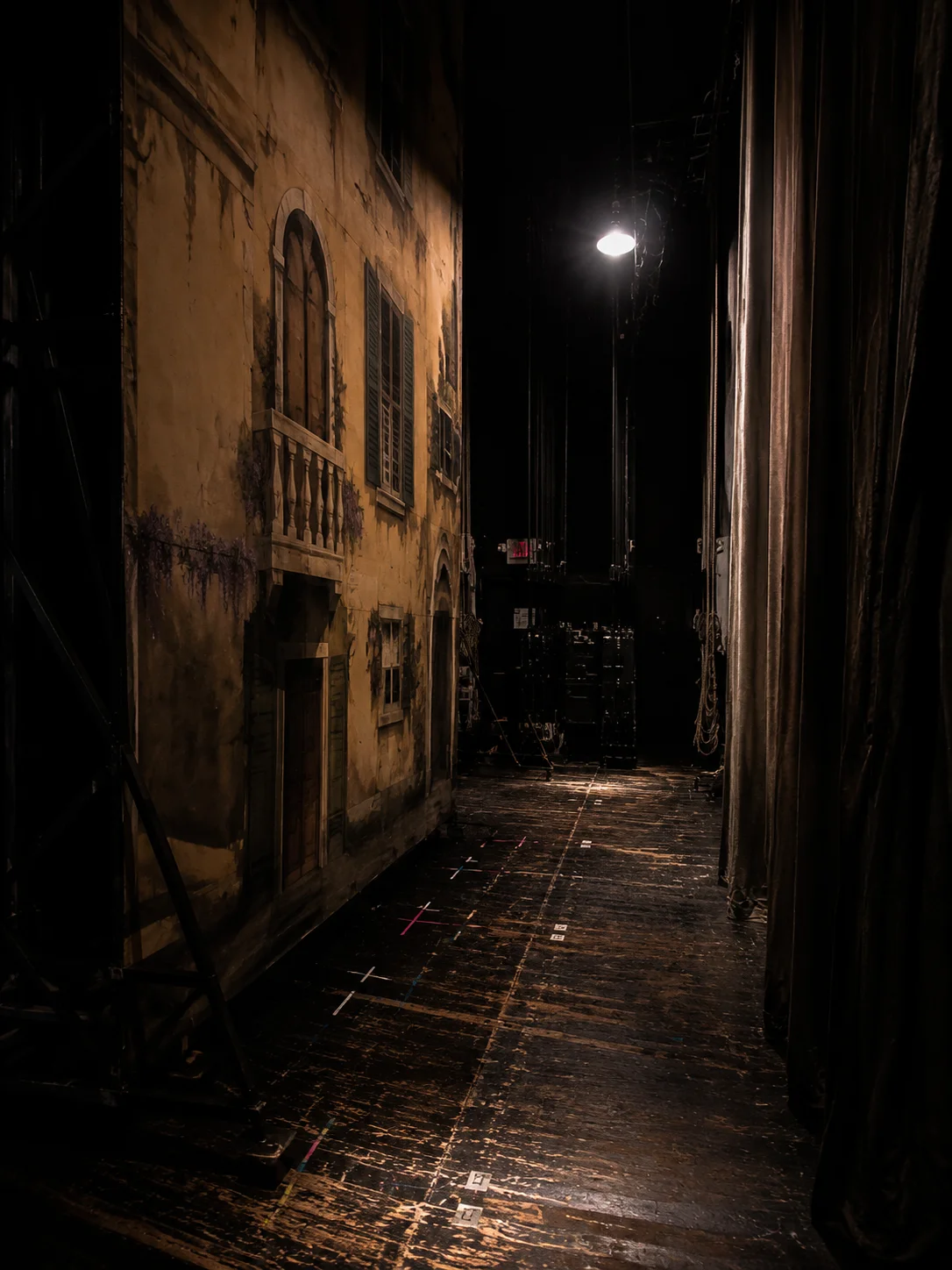
The air is thick with the scent of dust-heavy stage curtains and the faint, acrid odor of burned paper from the director's office. A single hot work light cuts through the gloom, illuminating the precise alignment of taped 'spike marks' on the worn floorboards. To the left, a heavy, freestanding 'Italian Villa' flat looms, its painted facade showing cracked stucco. The silence is broken only by the distant, rhythmic drip of a leaky pipe somewhere in the rigging.
 Crime Scene Environment
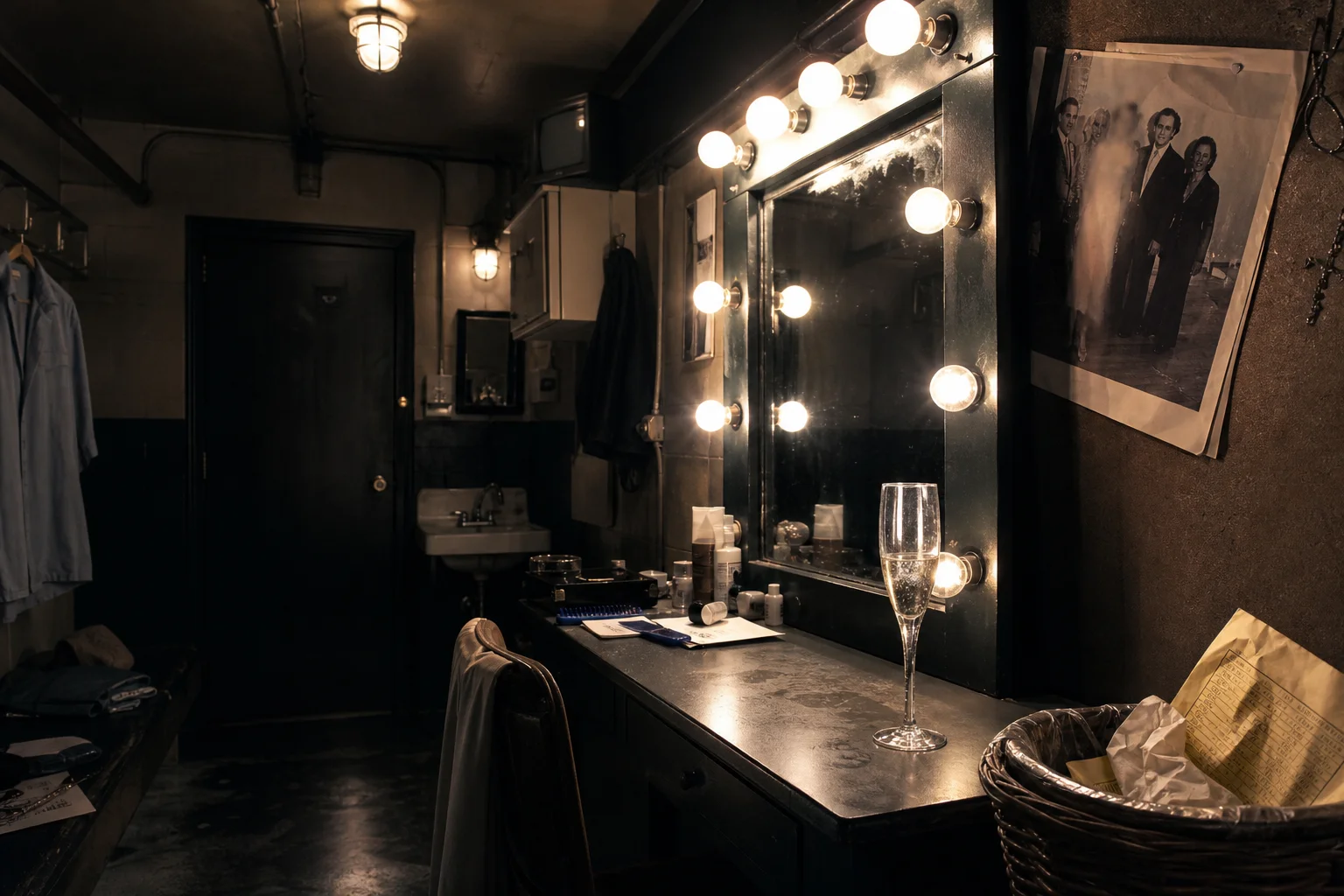
The backstage sandbox operates under the stark glare of a single, overhead work light, creating pools of deep shadow. The air is warm and carries a high humidity, clinging to fabrics and causing faint sweat stains on paper. Acoustic density is low; sounds are muffled by the heavy stage curtains and absorbed by the layered wood and canvas of the set pieces, fostering a sense of claustrophobic intimacy.
 Investigation Constraints
Analog-only backstage systems. Communication is via rotary payphones, handwritten notes, and face-to-face whispers. Locks are simple brass-key mechanisms. There are no digital logs, surveillance cameras, or mobile devices. The primary 'system' is the meticulously handwritten call sheet, prop list, and costume ledger.
✦ Related Cases ✦