Whispers in the Ashworth Grate
An independent investigator is summoned to a stately manor following the discovery of its patriarch deceased in his study. A weekend gathering of family and associates, each with their own professional and personal standing, is now under scrutiny. The objective is to disentangle the circumstances surrounding the death by examining the physical environment and the accounts of those present.
 Initial Crime Scene
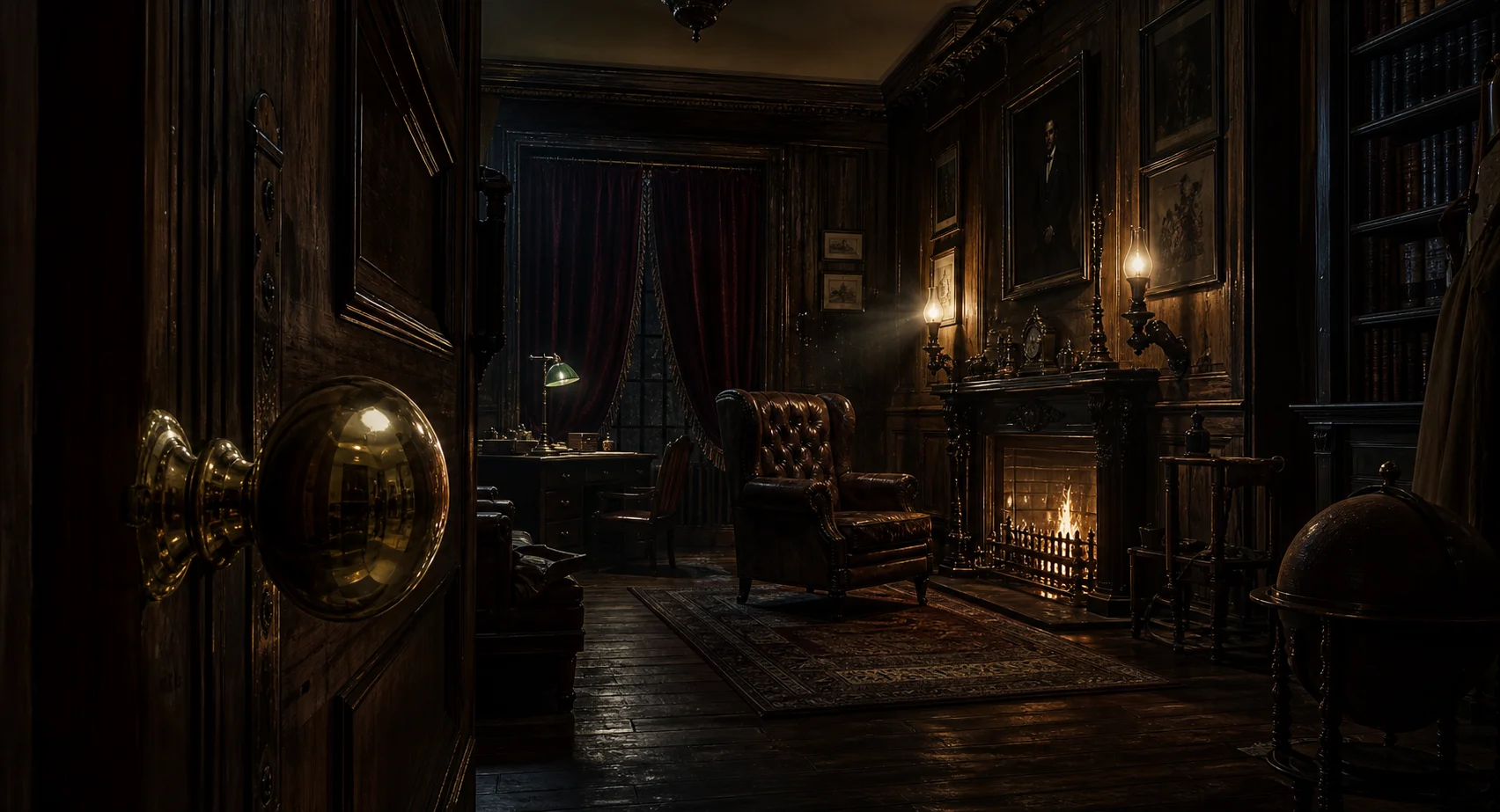
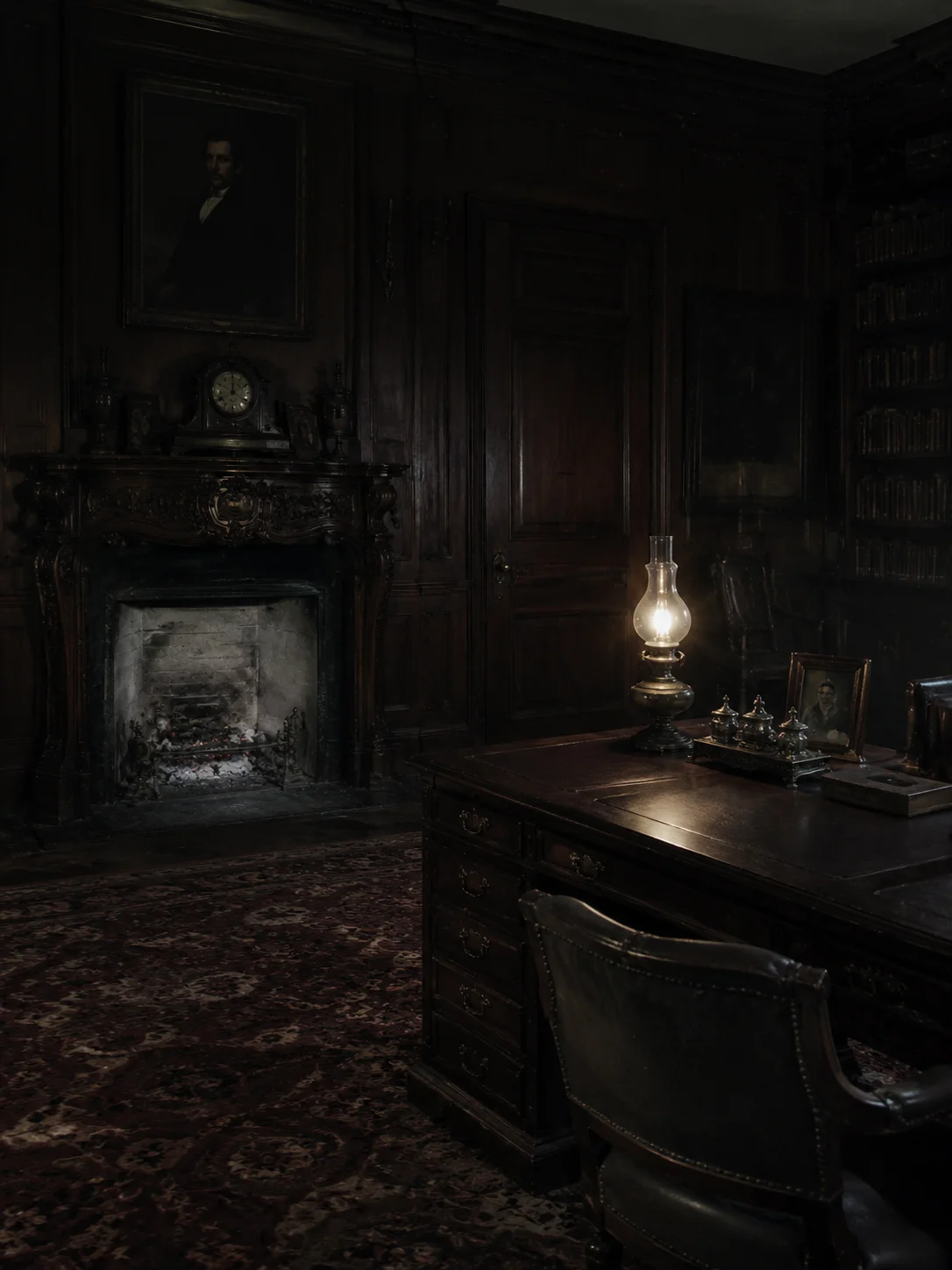
The scent of cold pipe tobacco and old leather hangs in the air, thick and stale. A single gas lamp on the desk casts a weak, yellowish pool of light across the intricate floral pattern of the Axminster carpet. Your gaze is drawn to the heavy mahogany paneling, the silent, dust-moted air, and the deep bed of fine, grey-white wood ash sitting cold and undisturbed in the fireplace grate.
 Crime Scene Environment
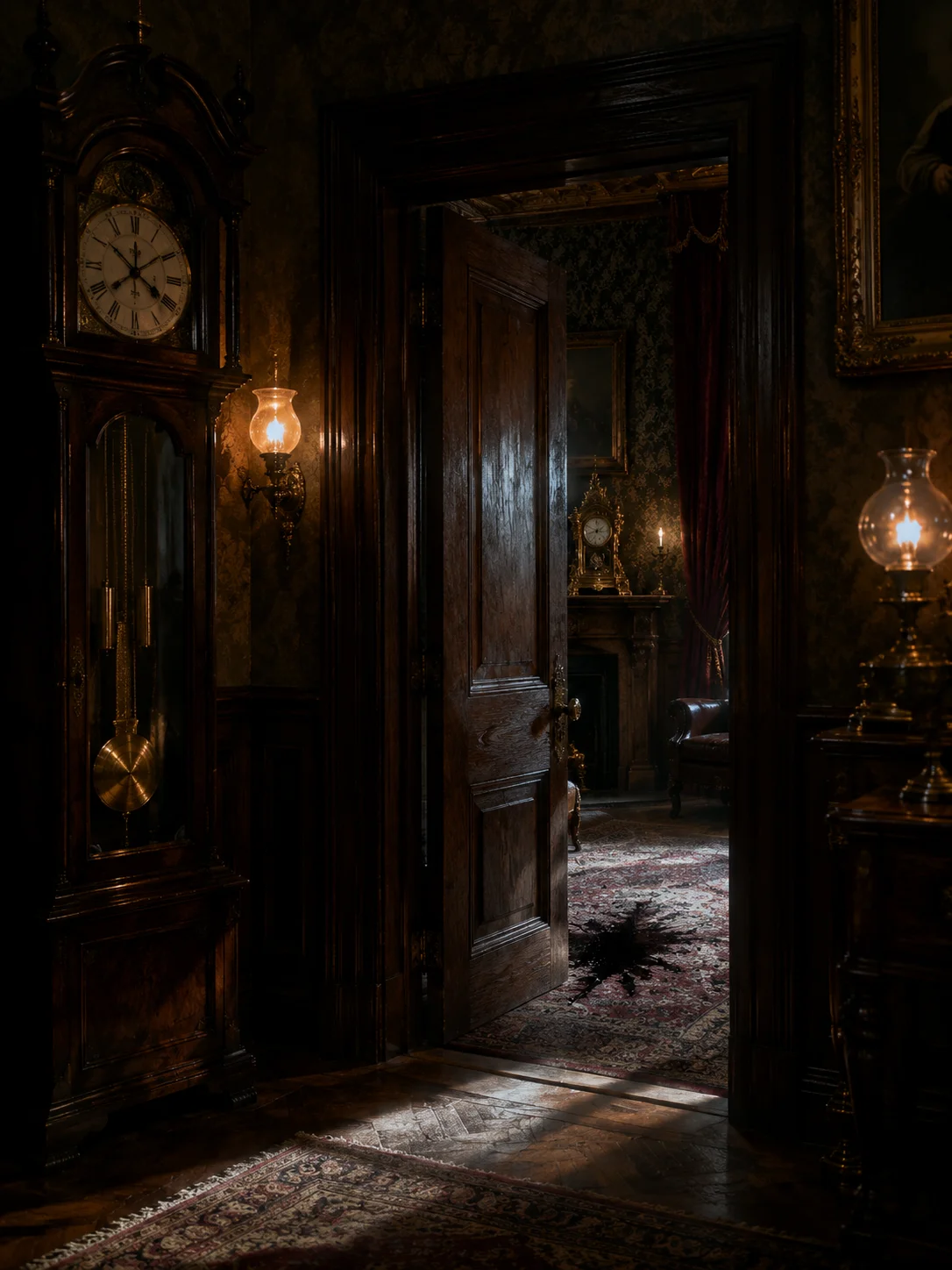
The environment is characterized by weak, yellowish gaslight illumination, a cool and humid atmosphere that carries the smell of old paper, and a low acoustic density where the ticking of a mechanical clock is the most prominent sound against the stifled quiet of the household.
 Investigation Constraints
Gas lamps, candlelight, coal-fired heating, manual locks with physical keys, handwritten ledgers, posted mail, early telephone calls requiring operator connection, horse-drawn transport, mechanical clocks, and a rudimentary pneumatic tube system for internal household messages.
✦ Related Cases ✦