A Stable of Broken Patterns
The discovery of a deceased stallion in its stall prompts an independent investigation into the Bellingham Manor estate. The examination of the scene and subsequent interviews reveal a complex social fabric woven with inherited obligations, professional anxieties, and personal secrets.
 Initial Crime Scene
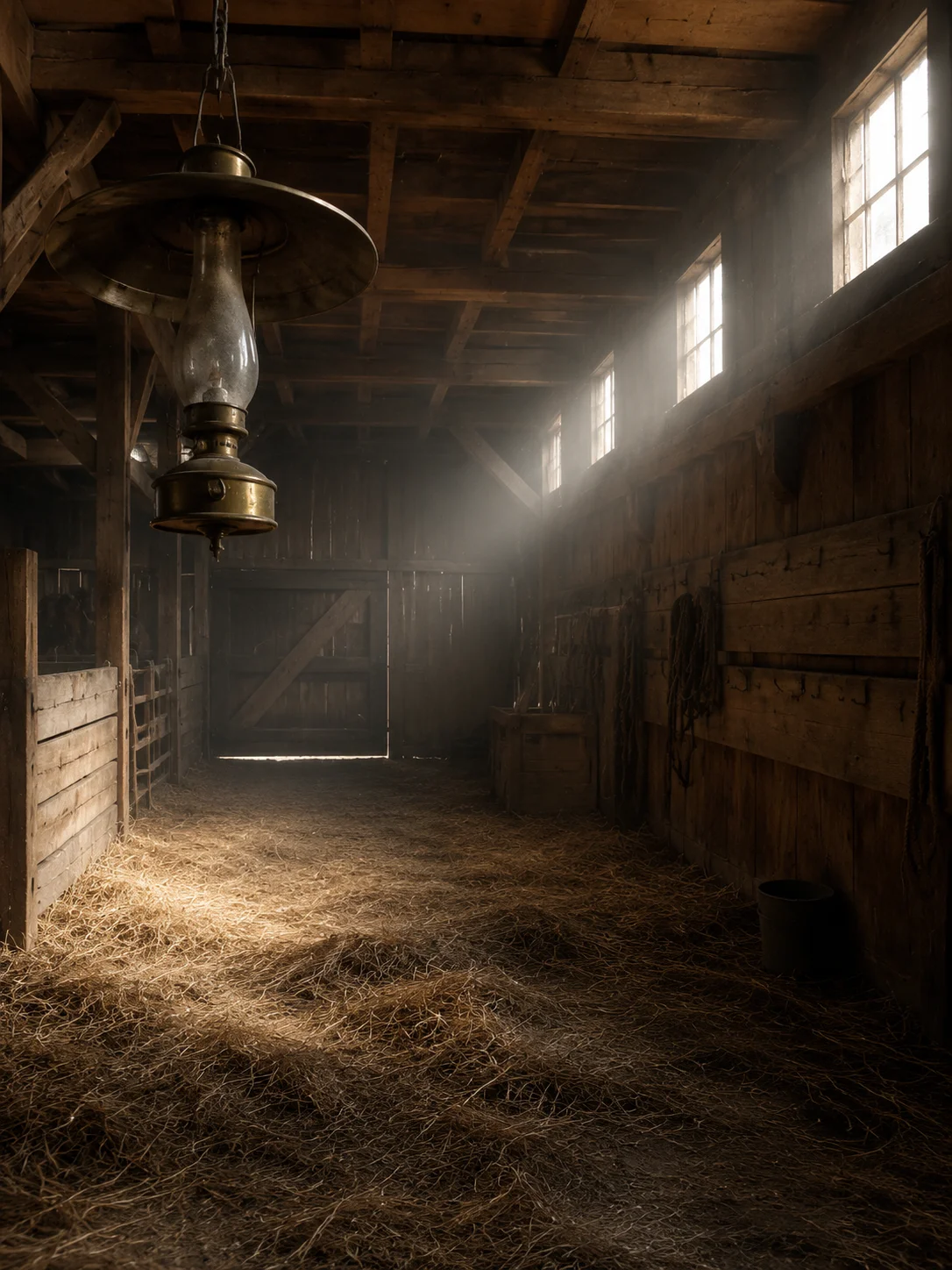
The scent of cold straw and linseed oil hits first, a dry, dusty counterpoint to the sweet decay of disturbed hay. From the high windows, pale morning light cuts through motes of dust, illuminating the long timber frame of the stable block. A distant rook caws, the sound swallowed by the stillness. Your gaze falls on a brass oil lamp hanging inverted from a hook, its glass chimney clouded with soot, and on the uneven pattern of fresh straw in the main stall.
 Crime Scene Environment
The environment is a cool, still pocket of air within the timber-framed stable, lit by diffused morning light from high windows. The humidity is low, contributing to the dry, dusty quality of the air that carries the smells of hay, leather, and oil. Acoustic density is minimal, dominated by the occasional shift of a horse and the amplified silence between sounds.
 Investigation Constraints
Victorian-era tools only: handwritten ledgers and diaries, wax seals, mechanical pocket watches, basic veterinary tools, oil lamps, simple door locks with physical keys, telegrams for external communication. No internal telephones or electrical systems.
✦ Related Cases ✦