A Study in Brass and Parchment
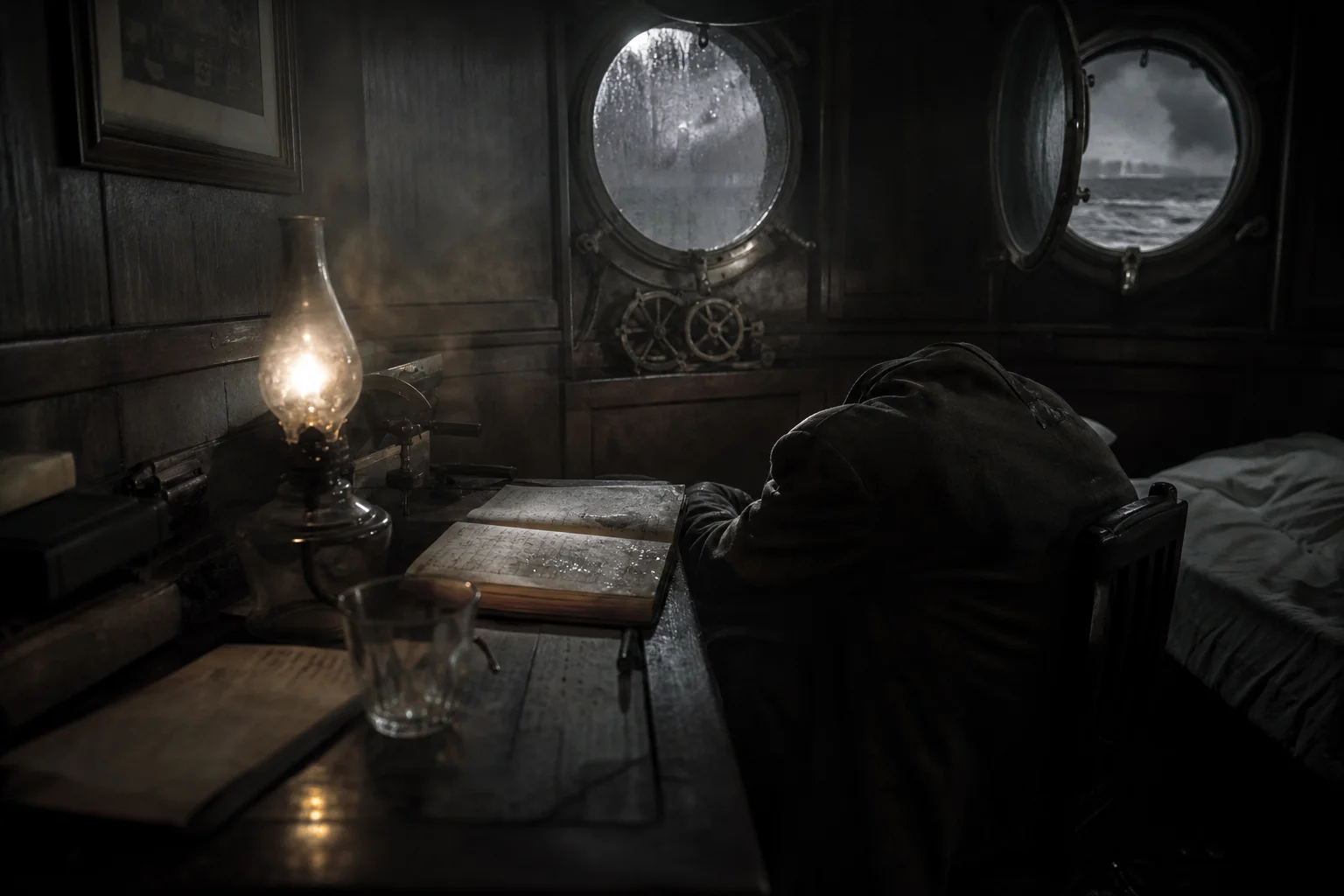
An investigation aboard the merchant vessel 'The Corsair' following the discovery of its captain deceased and a page removed from his logbook. The ship's owner, his first mate, and several society guests find their professional and personal affairs subject to scrutiny. The circumstances involve maritime law, old family lines, and the pressures of maintaining a certain standing.
 Initial Crime Scene
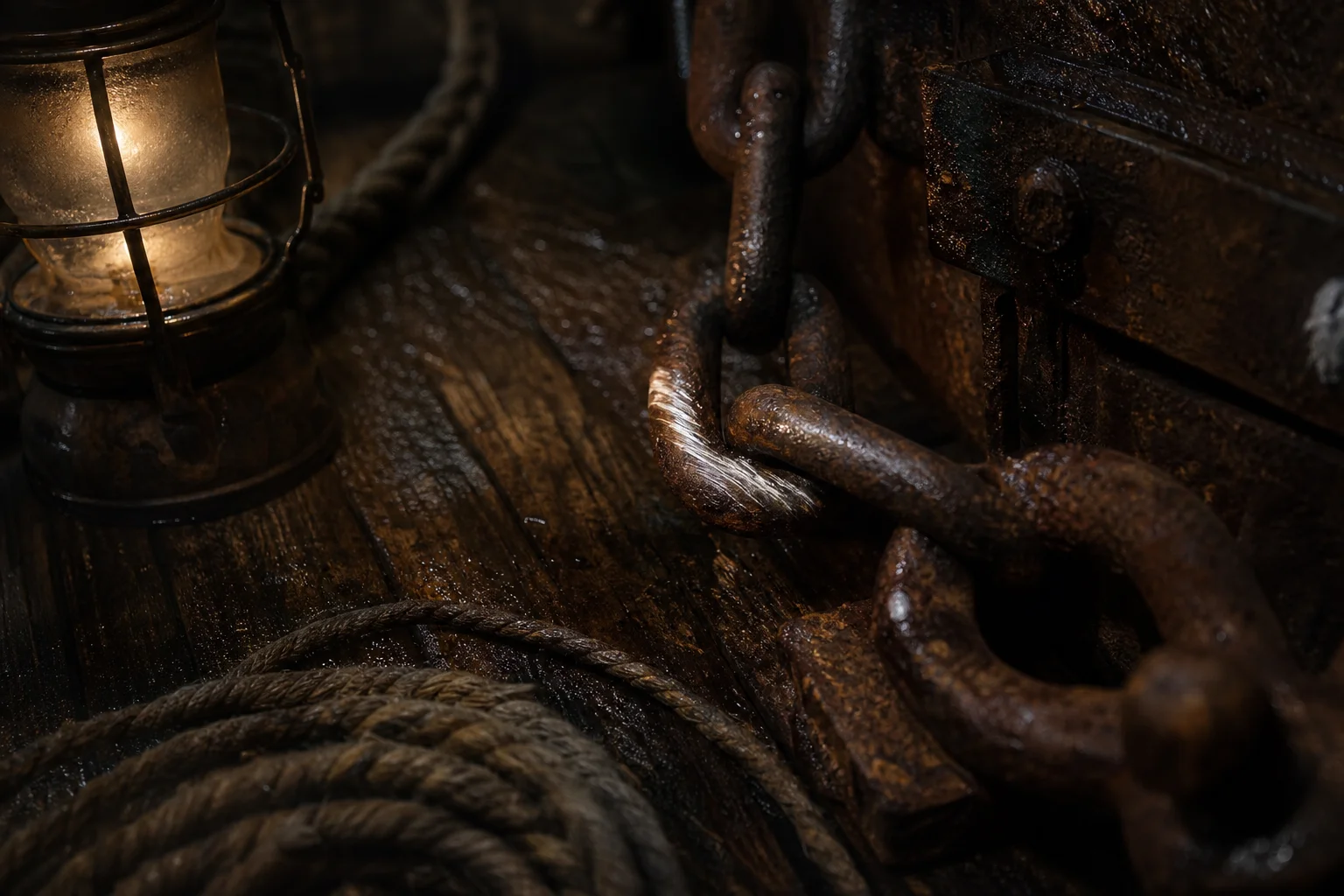
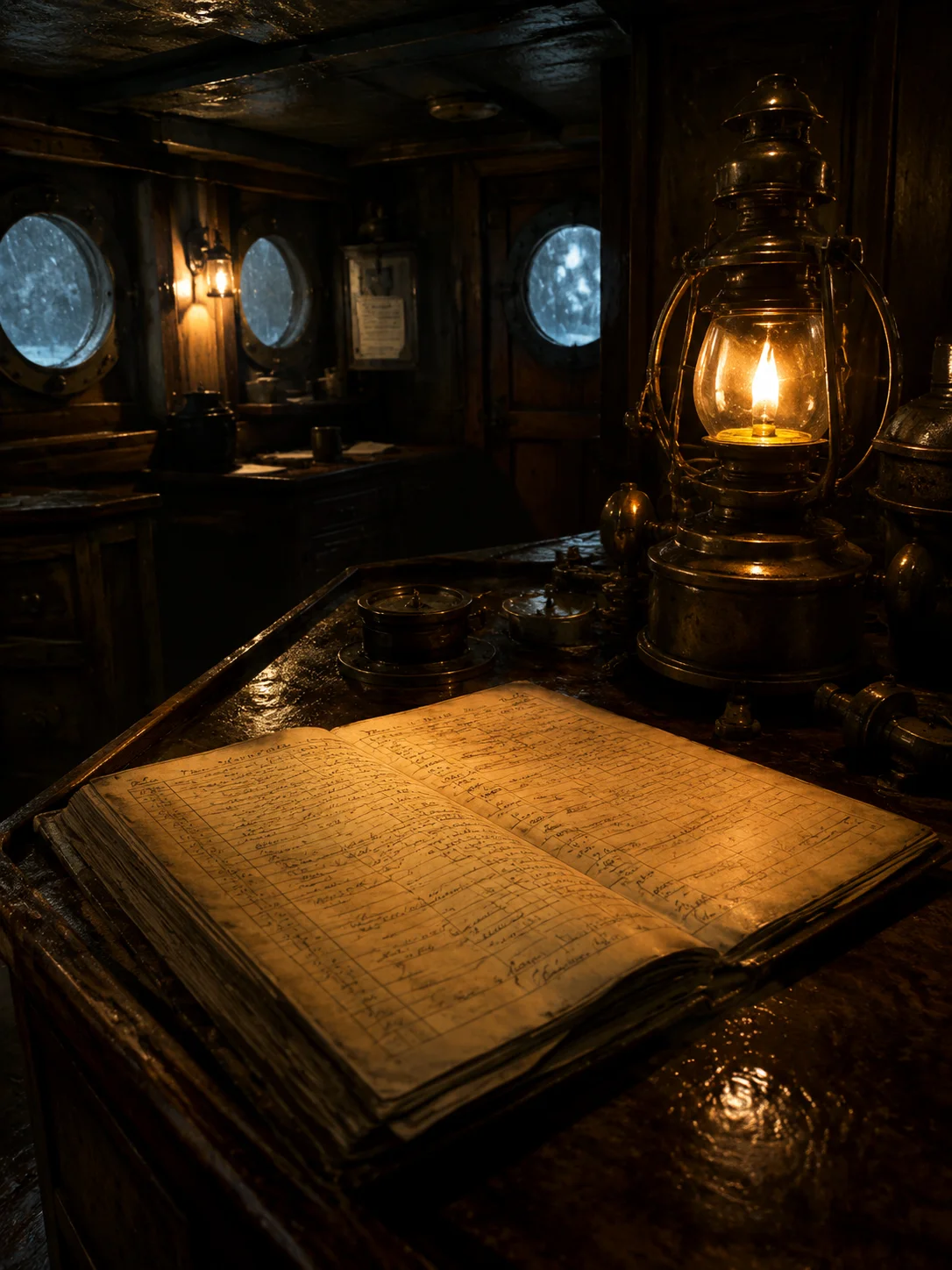
The first breath of the cabin is a thick, musty scent of old wood and brine, undercut by the faint sweetness of spilled brandy. Your ears catch the rhythmic, high-pitched creak of the gimbal-mounted lamp swaying in its brass housing. Directly ahead, a logbook lies open on a navigation table, its yellowed parchment page stark under the lamplight. To your left, salt-corroded brass fittings gleam dully against the dark wood paneling. The deck beneath your boots is scuffed, its grain patterns worn smooth in high-traffic areas.
 Crime Scene Environment
The lighting profile is a warm, unsteady glow from oil lamps, creating deep, shifting shadows that exaggerate the movement of the ship. The air is cool and carries a high humidity, leaving a faint, damp film on all surfaces and the scent of salt-stained wood. Acoustic density is low, dominated by the constant, low groan of the hull, the whisper of rigging, and the isolated, sharp sounds of individual objects—a ticking chronometer, a settling bulkhead.
 Investigation Constraints
Late 19th-century maritime technology. Hand-cranked telegraphs, brass chronometers, sextants, hand-written logbooks with ink and nib, mechanical ship's bells, oil lamps, mechanical door latches, wax seals, handwritten ledgers, signal flags, and manual sailing rigging. No electronic or digital systems exist.
✦ Related Cases ✦