The Ledger of the Tempest Queen
An investigation is initiated following the discovery of a deceased individual within a secured stateroom aboard a transatlantic steamship. The inquiry involves multiple passengers and crew members whose testimonies and personal documents reveal a series of disconnected professional concerns, financial discrepancies, and interpersonal tensions aboard the vessel.
 Initial Crime Scene
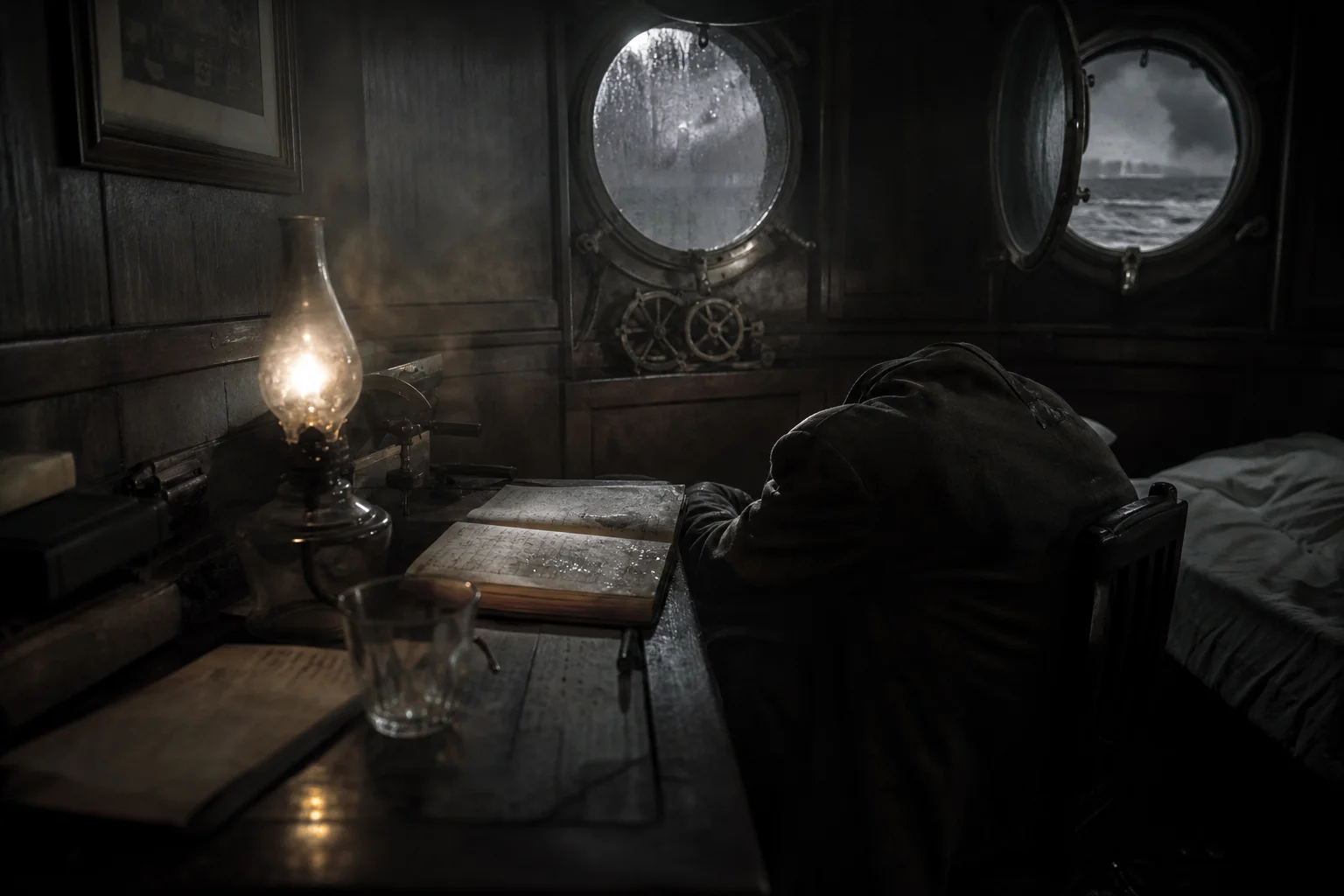
A sharp, chemical scent—bitter almonds—cuts through the pervasive odor of brandy and damp wool. The distorted echo of an order shouted through a brass voice tube reverberates from the deck above. Your gaze lands on a crystal glass with an oily film rimming its interior, resting near a slumped form on an oak desk. To your left, the brass locking gears of a porthole are salt-encrusted, and a leather-bound logbook lies open, its pages water-stained and ink-smeared.
 Crime Scene Environment
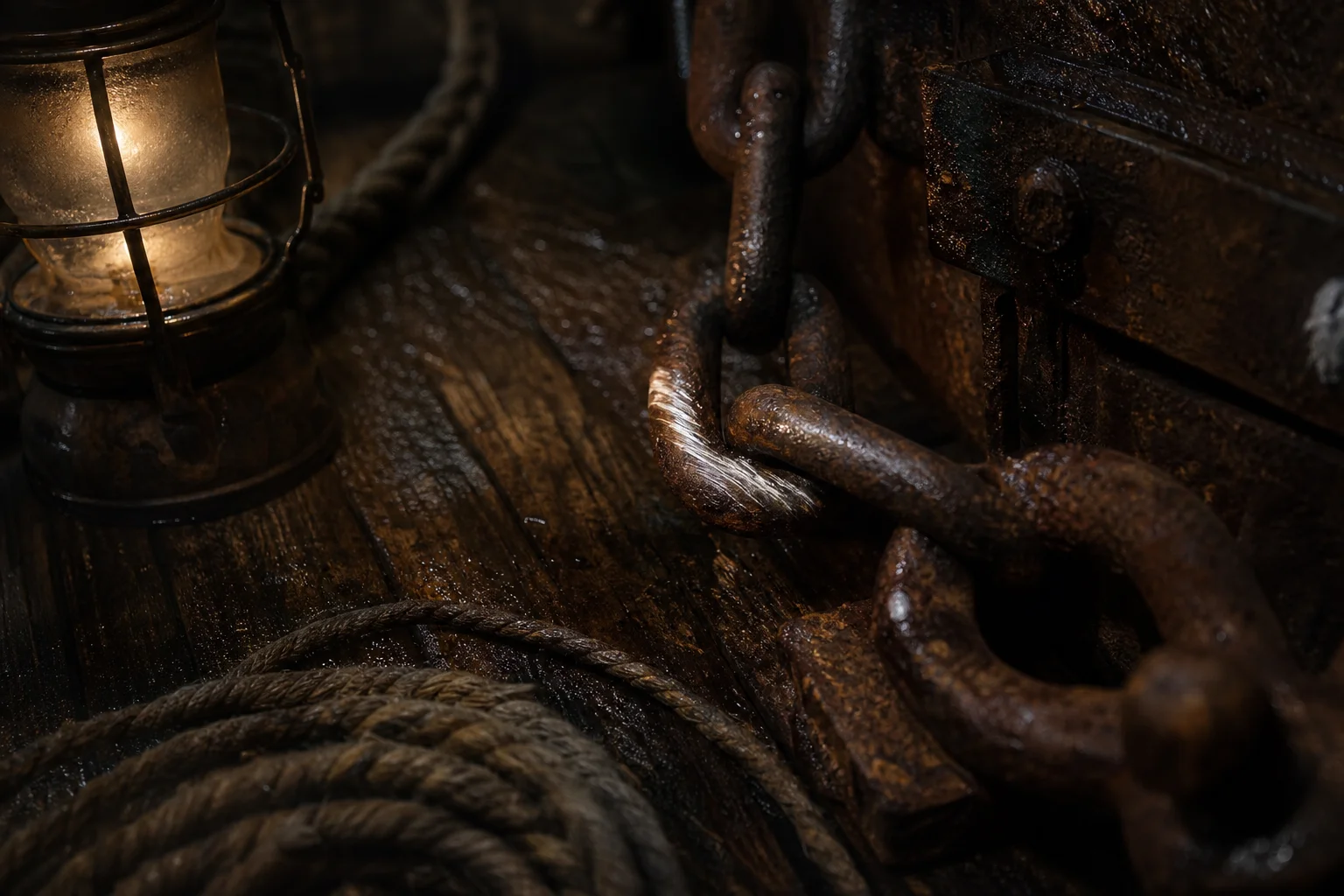
Lighting is provided by a single, sputtering oil lamp, casting long, wavering shadows and creating a dim, smoky profile. The air carries a heavy humidity, a damp chill that clings to wool and wood, permeated by the constant, low acoustic density of creaking timber, hissing pressure tubes, and the deep, rhythmic groan of the hull.
 Investigation Constraints
Early 20th-century maritime technology: analog pressure gauges, mechanical telegraphs, paper-based ship's logs and manifests, wax-sealed letters, oil lamps, mechanical door locks, manual winches for lifeboats, and the ship's internal pneumatic tube mail system for communication between decks. No electricity beyond basic lighting.
✦ Related Cases ✦