Diagnostic Artifact
A high-resolution MRI scan of a hospital philanthropist produced a corrupted data fragment during the nightly system purge. A forensic investigator must examine timestamped server logs, biometric access records, and network diagnostic gaps to trace the fragment's origin and the systemic conditions that allowed it to persist.
 Initial Crime Scene
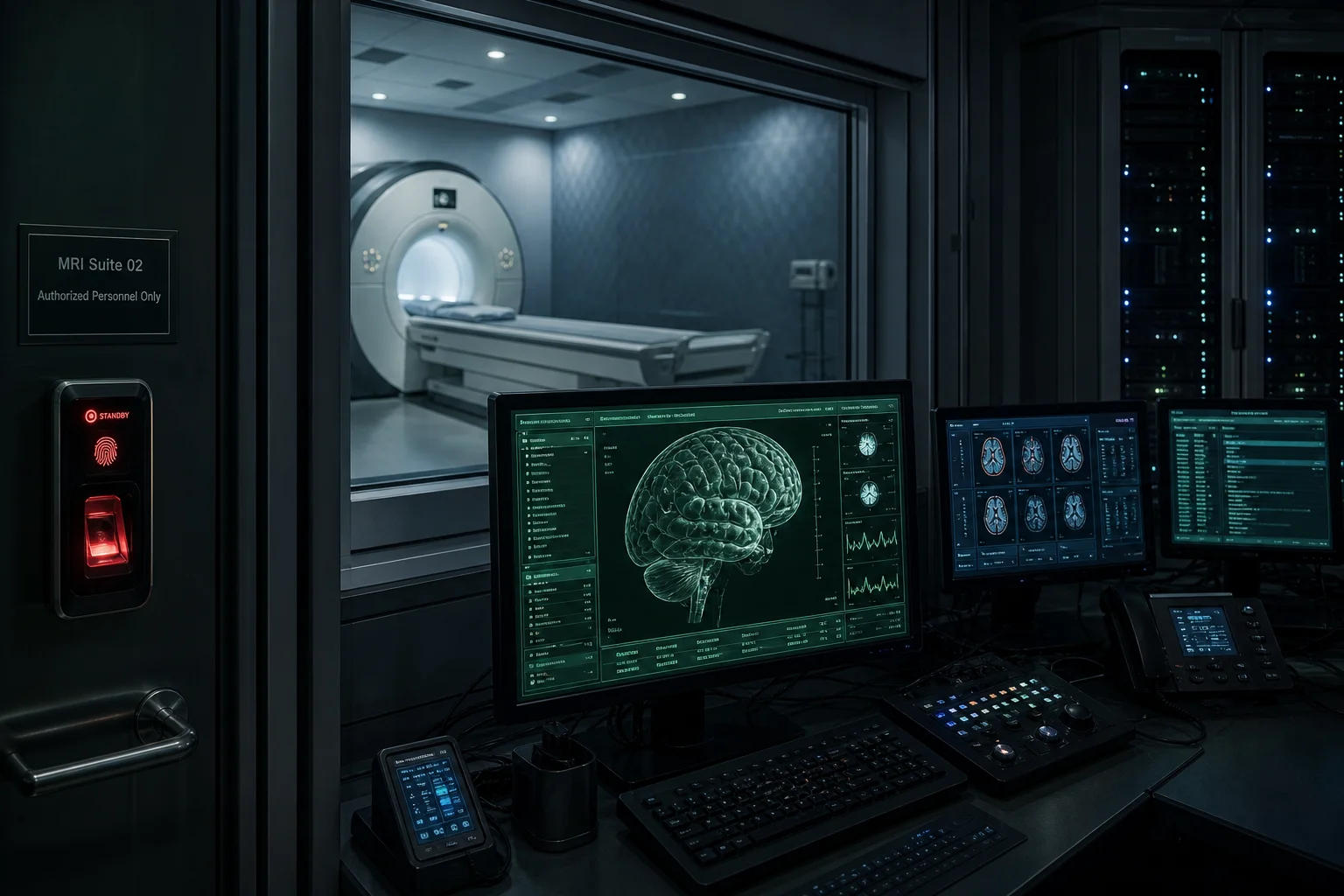
The threshold into the MRI control room yields a low, constant hum of cooling fans and the faint, sharp smell of ozone. The primary monitor casts a greenish glow on a proprietary software interface, its screen frozen on a complex 3D brain rendering. To the left, the biometric door lock's standby light pulses a soft, steady red.
 Crime Scene Environment
Lighting is a sterile, low-level glow from monitors and equipment LEDs. The air is cool and dry, with an acoustic density defined by the constant, white-noise hum of server racks and cooling systems. All surfaces are sterile plastic and brushed metal.
 Investigation Constraints
High-resolution MRI scanners with proprietary diagnostic software; encrypted hospital information systems (HIS) with tiered access logs; biometric door locks in sensitive areas like the server room and pharmacy; internal secure messaging platforms with message deletion/retention policies; digital audit trails for pharmaceutical inventory (e.g., controlled substance dispensing cabinets); professional-grade network packet sniffers for IT diagnostics.
✦ Related Cases ✦