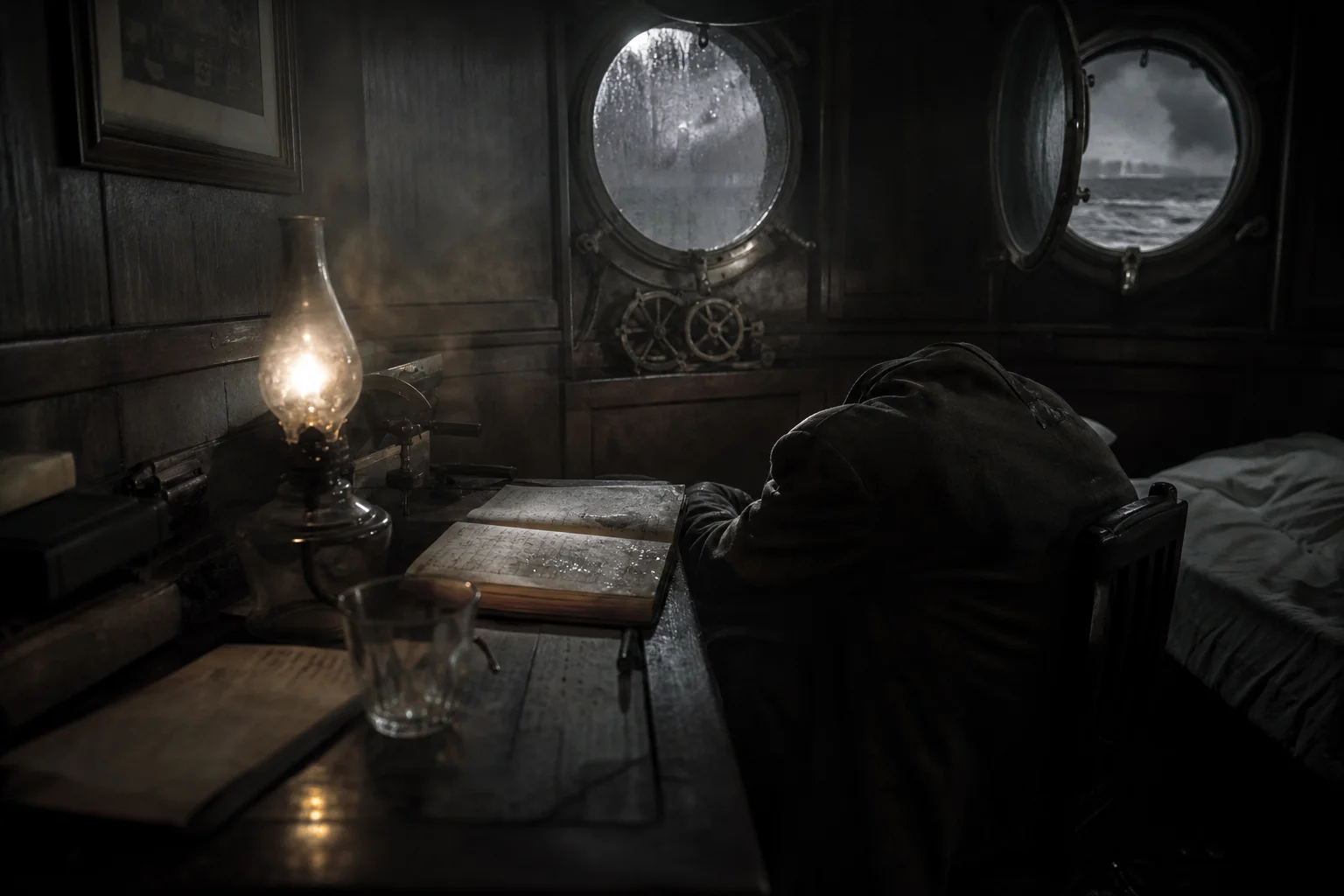
Salt-Crusted Chronicles
An investigator is summoned to a moored luxury yacht following an incident involving its owner. The inquiry reveals a complex network of financial records, maritime procedures, and personal accounts among the vessel's permanent crew and guest.
 Initial Crime Scene
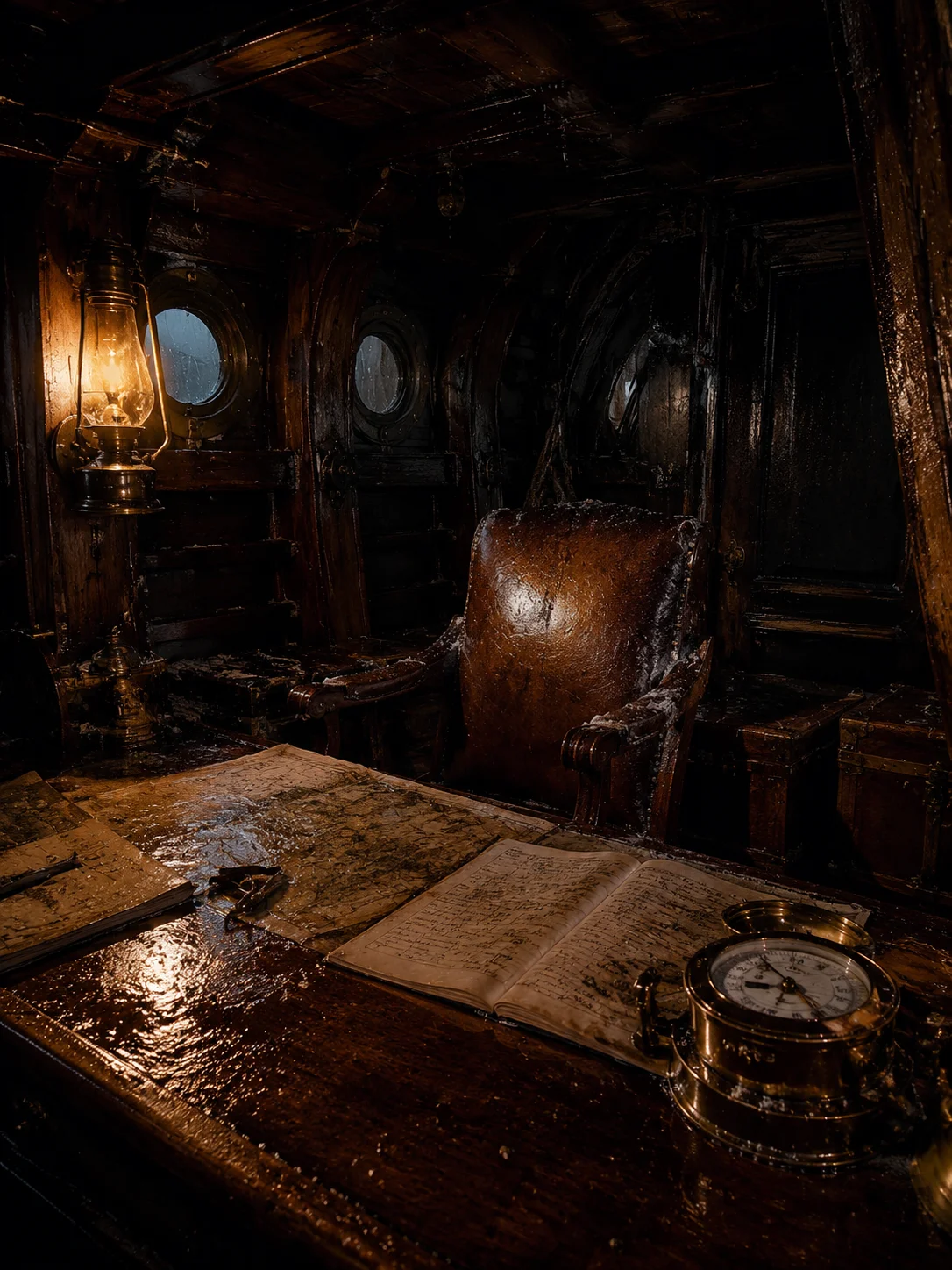
The door swings inward, releasing a wave of air thick with the scent of brine and kerosene. A rhythmic creaking emanates from the hull timbers. Lamplight glints off a brass chronometer, casts long shadows over water-stained ledger pages spread on an oak table, and catches the salt-crusted leather of an empty chair.
 Crime Scene Environment
The sandbox is defined by low, flickering kerosene lamplight and a constant, claustrophobic dampness. The acoustic density is a layered profile of the hull's continuous groan, the distant clang of a bell buoy, and the silence of empty spaces. The air is heavy with the smell of old wood, tar, and the ever-present brine.
 Investigation Constraints
Age of Sail to early Steam Transition Era (c. 1880s). Tools: sextants, compasses, mechanical chronometers, kerosene lanterns, brass telescopes, hand-cranked telegraphs. Communication: message in a bottle, port-side notice boards, lighthouse signal lamps, handwritten manifests. Locks: heavy iron padlocks, cabin deadbolts, simple combination locks on strongboxes. Computation: manual ledger books, tide tables, nautical almanacs.
✦ Related Cases ✦