The Albatross Log
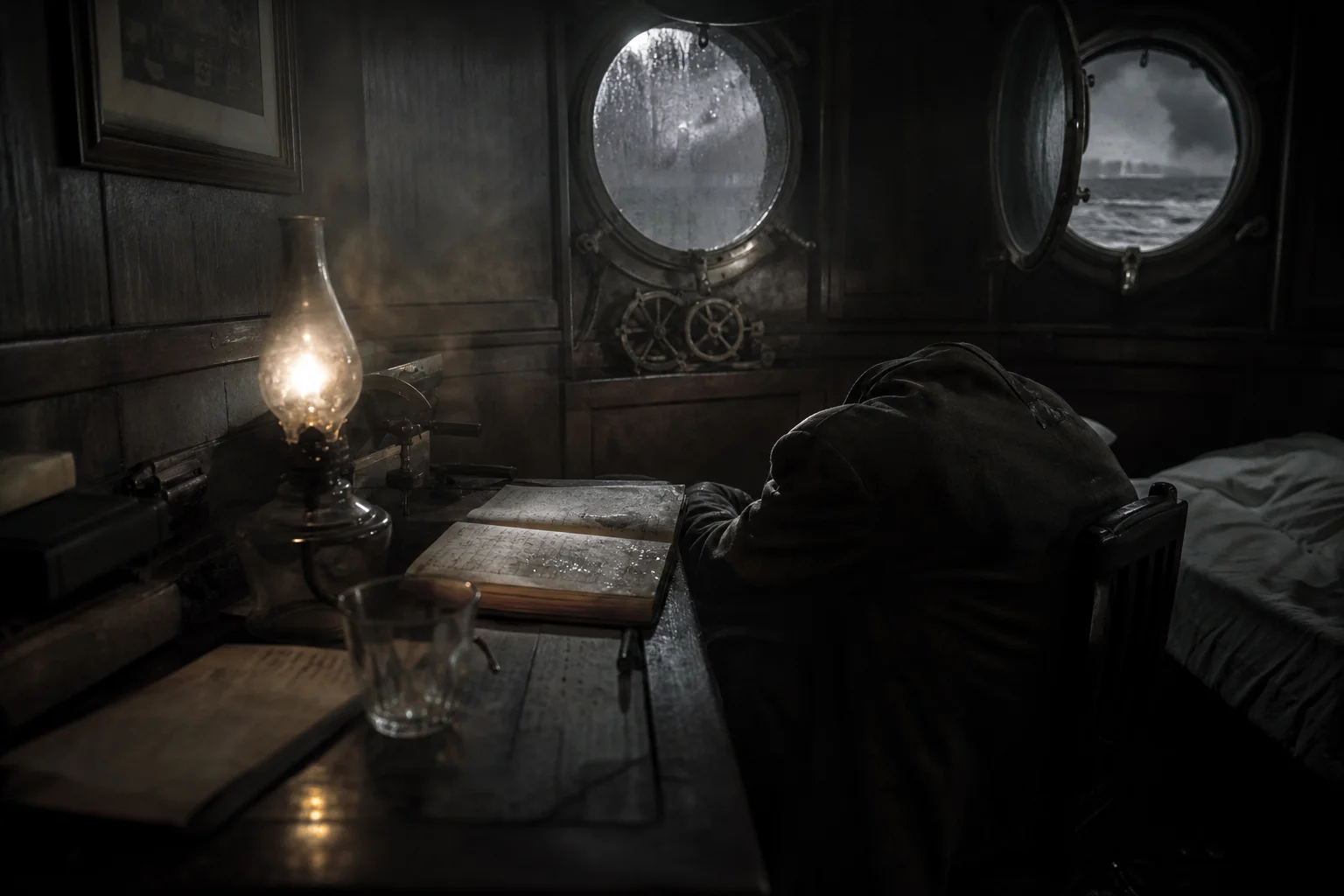
A merchant vessel 'The Albatross' rests in a quiet harbor. A page has been removed from the captain's official log. An independent investigator is tasked with examining the physical evidence and crew statements aboard to establish the sequence of events surrounding the log's alteration.
 Initial Crime Scene
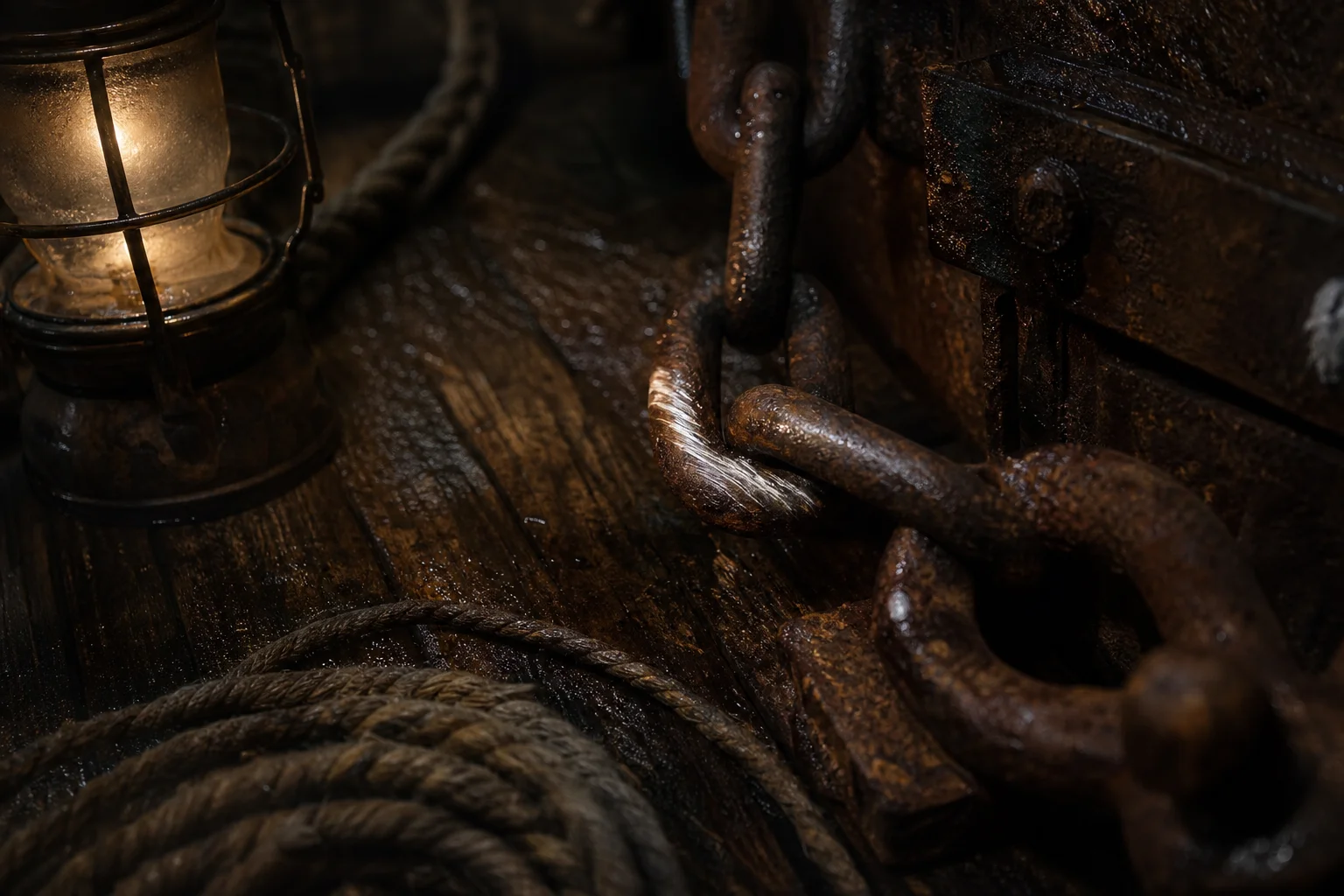
The plank door groans open into a lantern-lit twilight. The air hangs heavy with the scent of salt, tar, and bilge water clinging to the wood. A low, rhythmic creak emanates from the ship's hull. Your eyes adjust to catch the grain and ink-stains of an open logbook on a scarred chart table, the tarnished gleam of brass fittings, and the deep shadows pooling in the corners.
 Crime Scene Environment
The environment is a lantern-lit space with low, swinging pools of light creating stark contrasts. The humidity is high, the air thick and still, carrying a constant, muffled acoustic density of creaking timber and distant water.
 Investigation Constraints
Era: 1890s-1910s. Technologies: Quill pens and iron-gall ink, mechanical pocket watches, glass-and-brass nautical instruments (sextants, compasses), wax seals, manual log books, paper correspondence, lanterns, basic mechanical locks, no electrical communication beyond physical mail. Data is stored on paper, in ledgers, or on the surface of polished brass.
✦ Related Cases ✦