The Anomalous Drawer
An independent investigator enters a hospital following a reported procedural anomaly in the morgue. Conflicting staff testimonies, discrepancies in physical logs, and trace evidence of systemic stress emerge. The investigation must disentangle overlapping administrative and personal liabilities to isolate the source of the initial mislabeling event.
 Initial Crime Scene
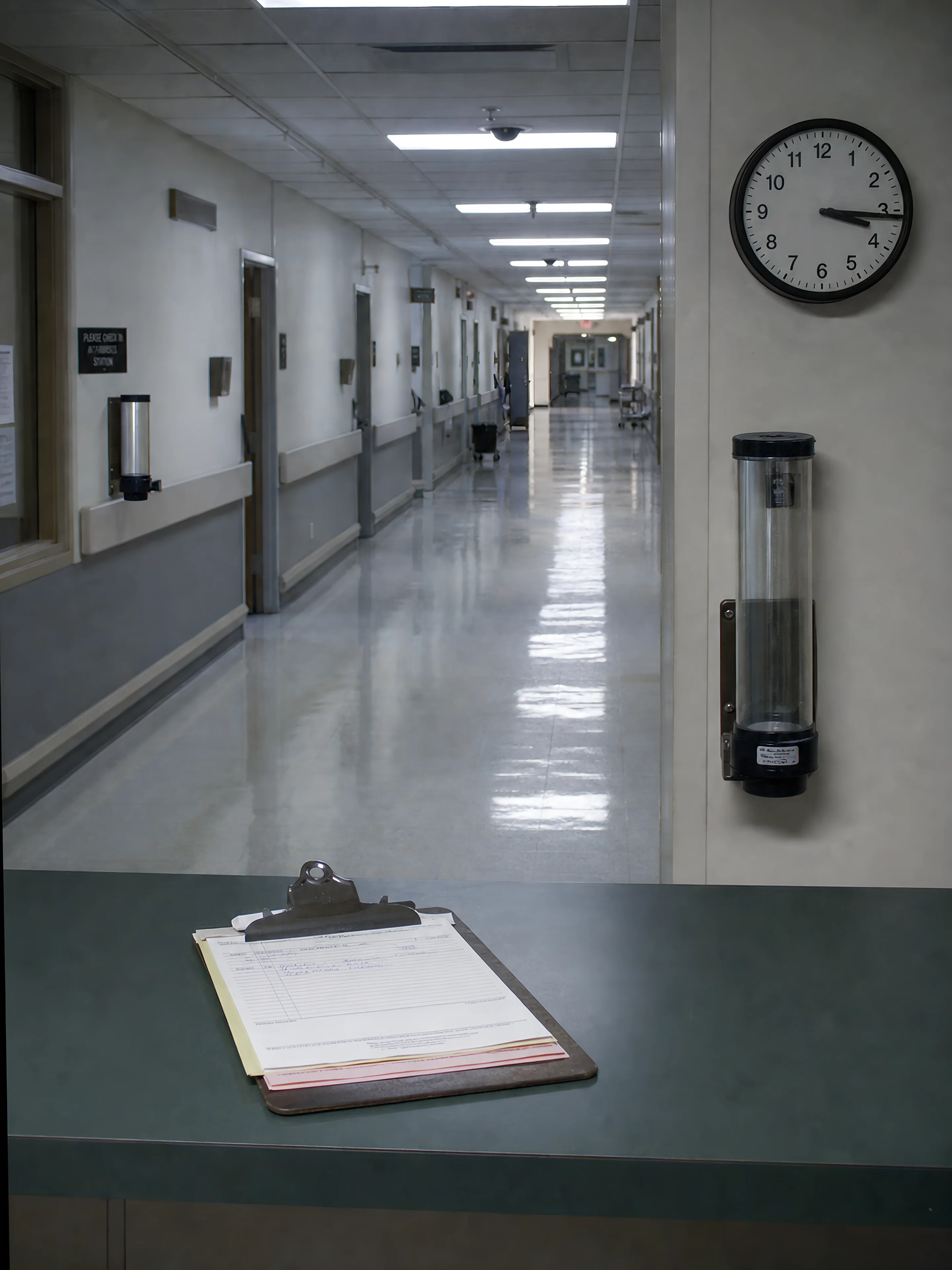
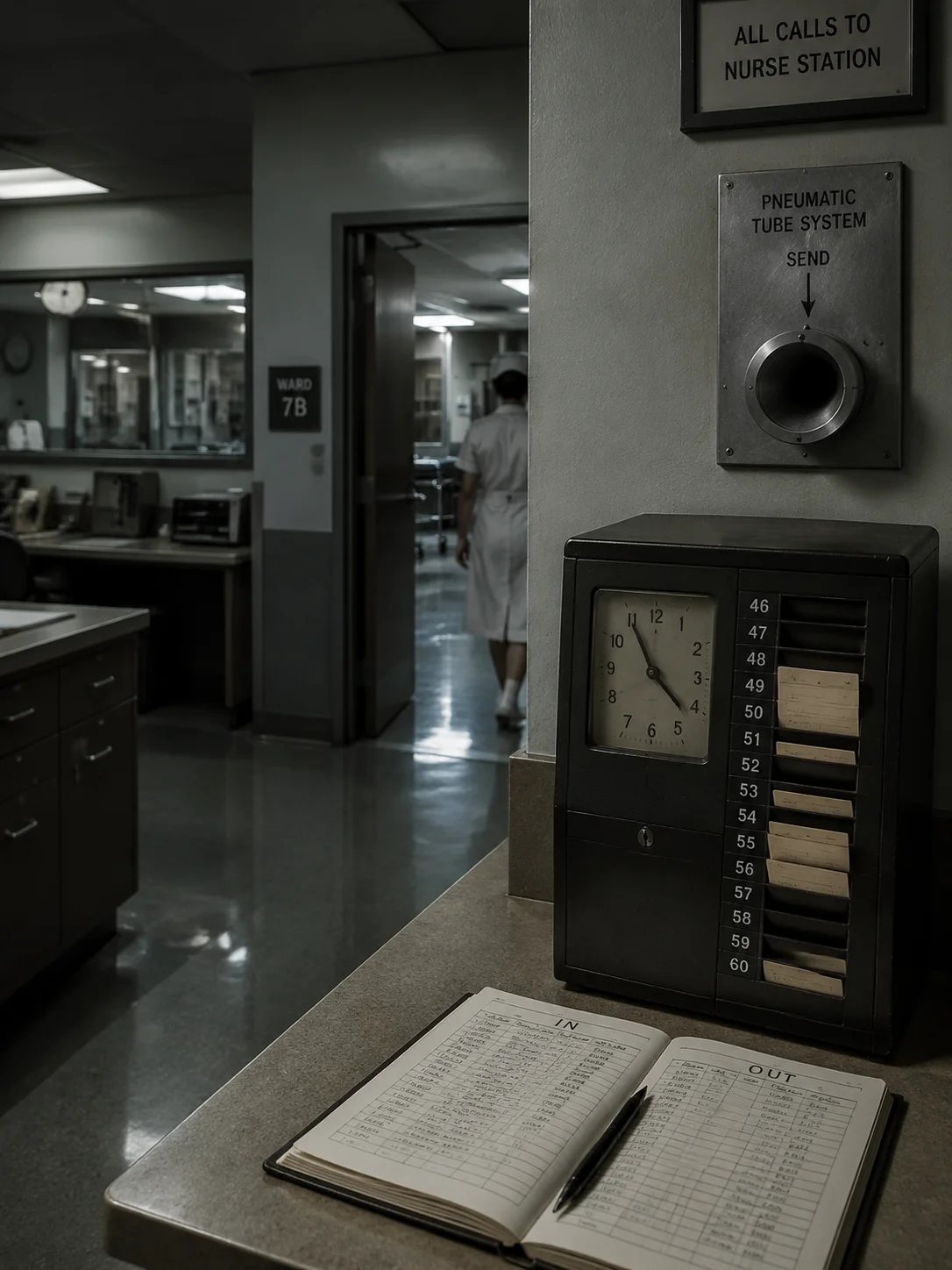
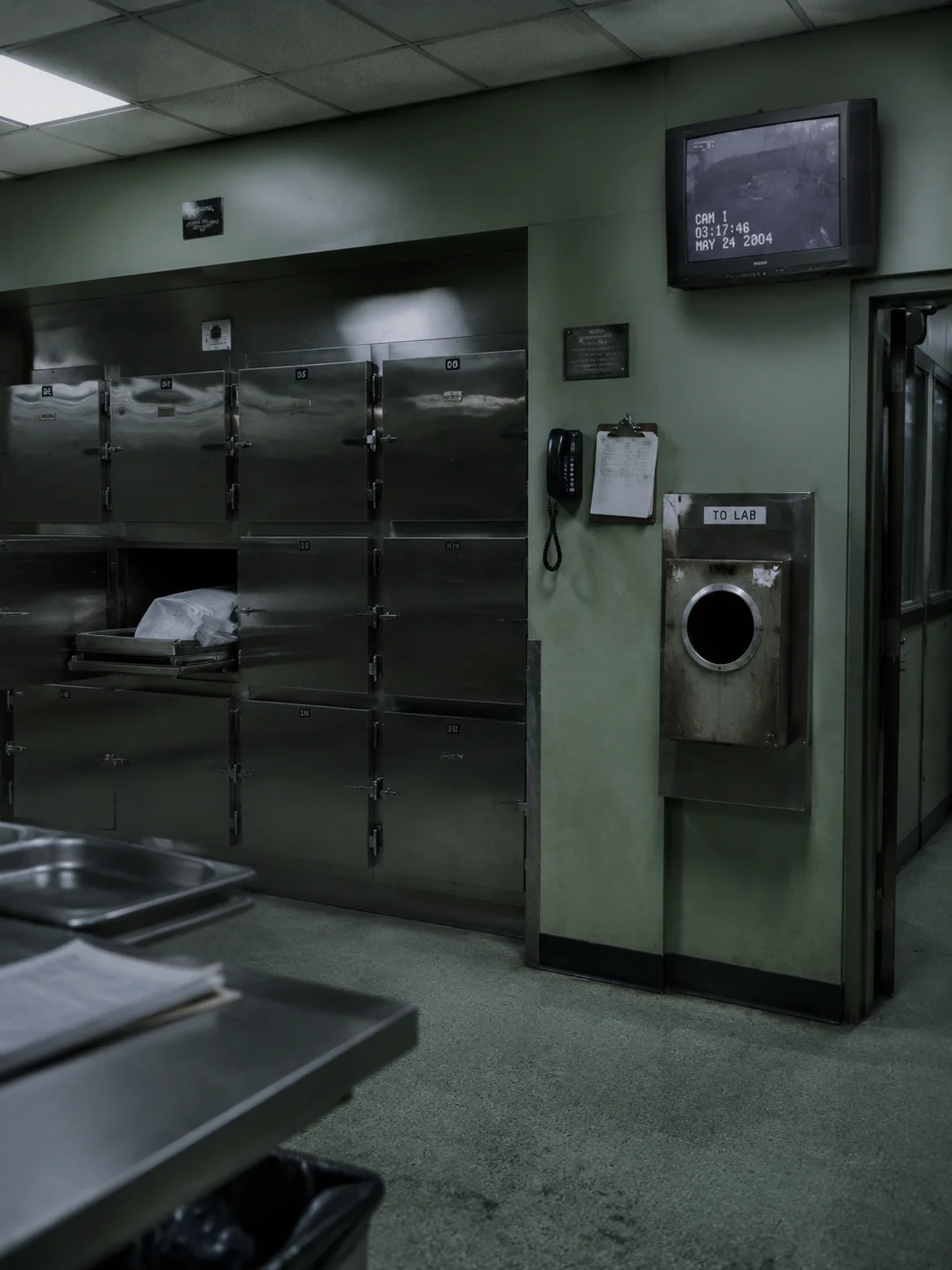
The first thing that hits is the formaldehyde, sharp and chemical, layered over the sterile bite of cleaning solvent. From behind the stainless steel drawers comes the constant, low hum of the refrigeration unit, a mechanical pulse in the cold air. Your gaze catches the dated, pixelated timestamp crawling forward on a looping VHS tape monitor, the faint sheen of sticky residue on a pneumatic tube capsule in a wall receiver, and the institutional green paint on the corridor walls, scuffed near the baseboards.
 Crime Scene Environment
The lighting is a clinical, unforgiving fluorescent glare from ceiling fixtures, casting sharp, continuous shadows. The air is cool and dry, maintained at a stable low temperature with high humidity control in the morgue. Acoustic density is high with ambient mechanical hums: the morgue refrigeration compressor, the whir of VHS tape mechanisms, and the distant, muffled echo of paging system tones through the corridors.
 Investigation Constraints
Late 1990s/early 2000s hospital systems: pneumatic tube delivery for samples, basic digital patient records on local servers, paper-based autopsy logs, analog CCTV with VHS tape loops, telephone paging systems, fax machines, basic email on hospital intranet, pharmaceutical barcode scanners, chemical analysis equipment, and electronic door access logs for restricted areas like the morgue and pharmacy.
✦ Related Cases ✦