The Anomaly in the Schedule
The sudden, unexplained death of a prominent industrialist in his private study prompts an independent investigation into the meticulously ordered Finch household. The inquiry must navigate a labyrinth of strict domestic schedules, family ledgers, and the carefully maintained propriety of each resident, all while the household's underlying anxieties begin to manifest in subtle, physical disturbances to the environment.
 Initial Crime Scene
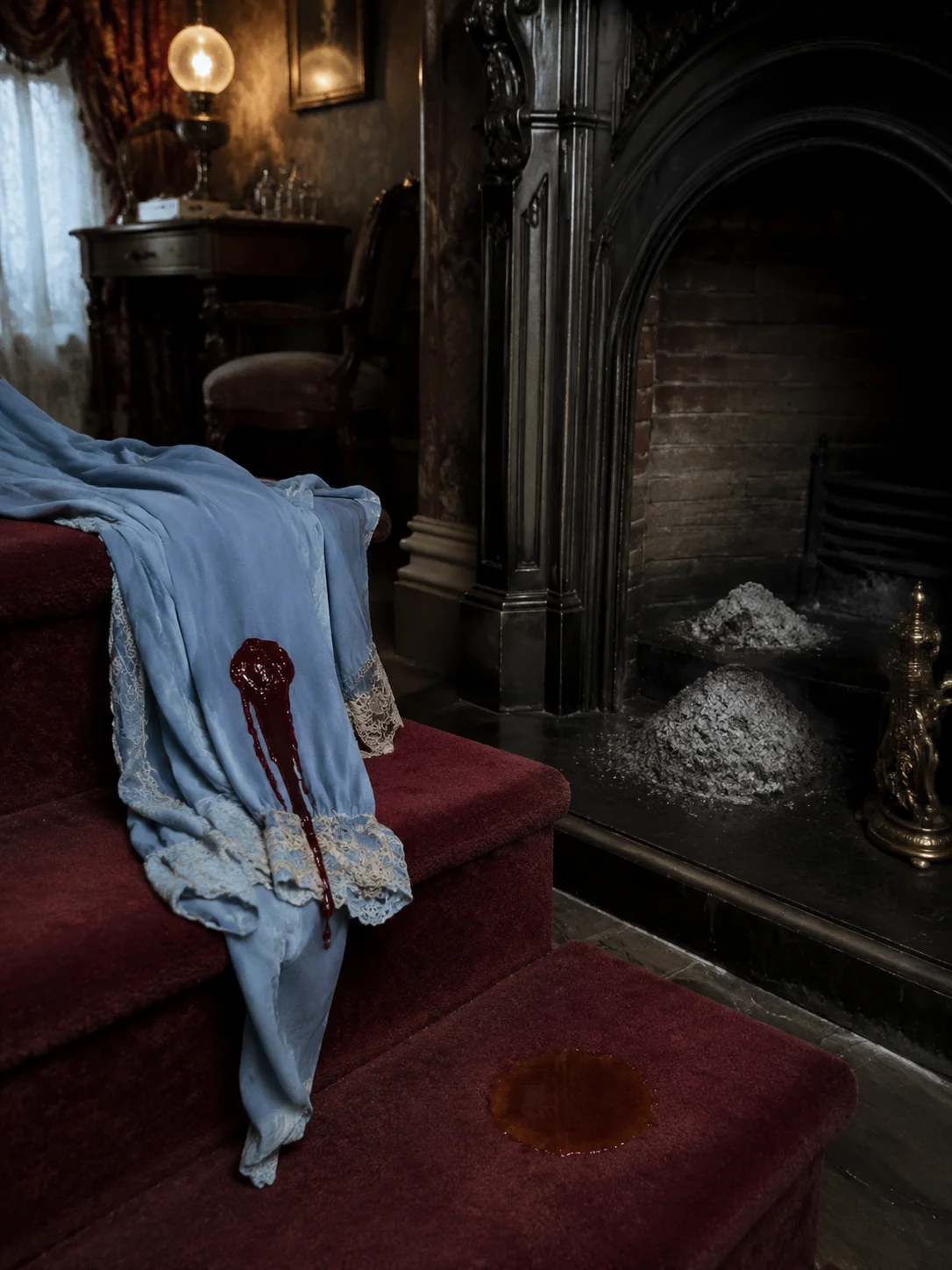
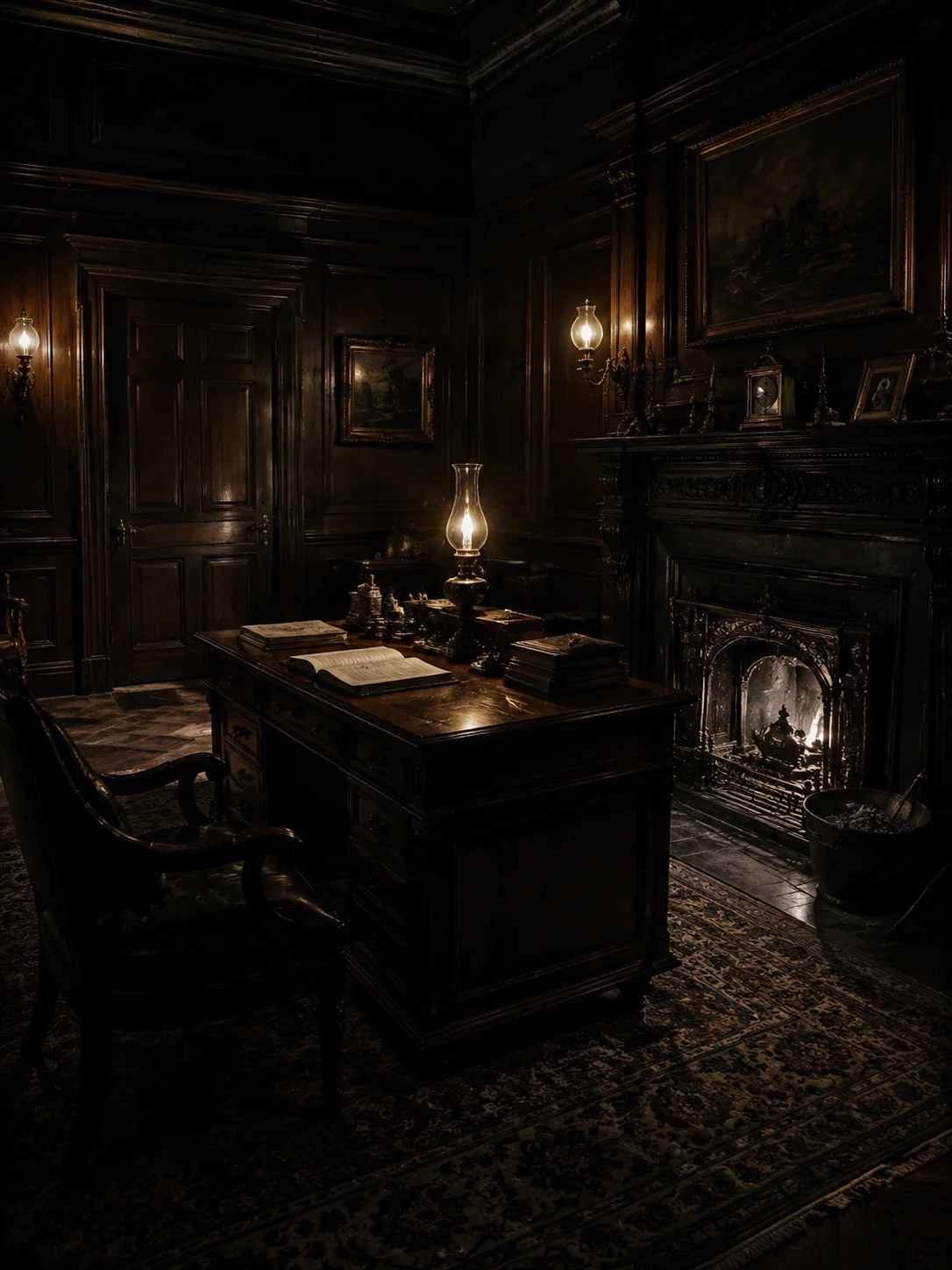
The scent of lemon oil polish and old coal dust is sharp in the air as you step into the study, the heavy oak door clicking shut behind you. A single oil lamp on the massive mahogany desk casts long, distorted shadows across the dark oak paneling. Your gaze is immediately drawn to the fireplace grate, its ironwork gleaming with an unnatural intensity under the light, a stark contrast to the thin, grey ash settling in the coal scuttle nearby.
 Crime Scene Environment
Lighting is low and directional, provided by oil lamps and guttering gas sconces, creating deep pockets of shadow in the high-ceilinged rooms. The air is cool, dry, and still, carrying a faint, persistent chill that seeps from the stone foundations. Acoustic density is low; sounds are muffled by thick carpets, heavy drapes, and the pervasive, deliberate quiet of a house operating on a rigid schedule.
 Investigation Constraints
Communication is by handwritten letter, telegraph, or personal carriage. Security relies on physical locks (warded, pin-tumbler), household staff observation, and the master's desk key. Records are kept in leather-bound ledgers, household account books, and personal diaries. Time is tracked by mantel clocks, pocket watches, and the scheduled arrival of the morning post and daily newspaper.
✦ Related Cases ✦