The Cart's Silent Lock
A hospital internal audit uncovers a fatal discrepancy. A nurse's medication cart, secured by a mechanical key lock, was accessed during a period when the corresponding key sign-out binder shows no authorized check-out. The investigation examines the intersecting timelines of staff on duty, their documented activities, and the integrity of physical and digital record-keeping systems.
 Initial Crime Scene
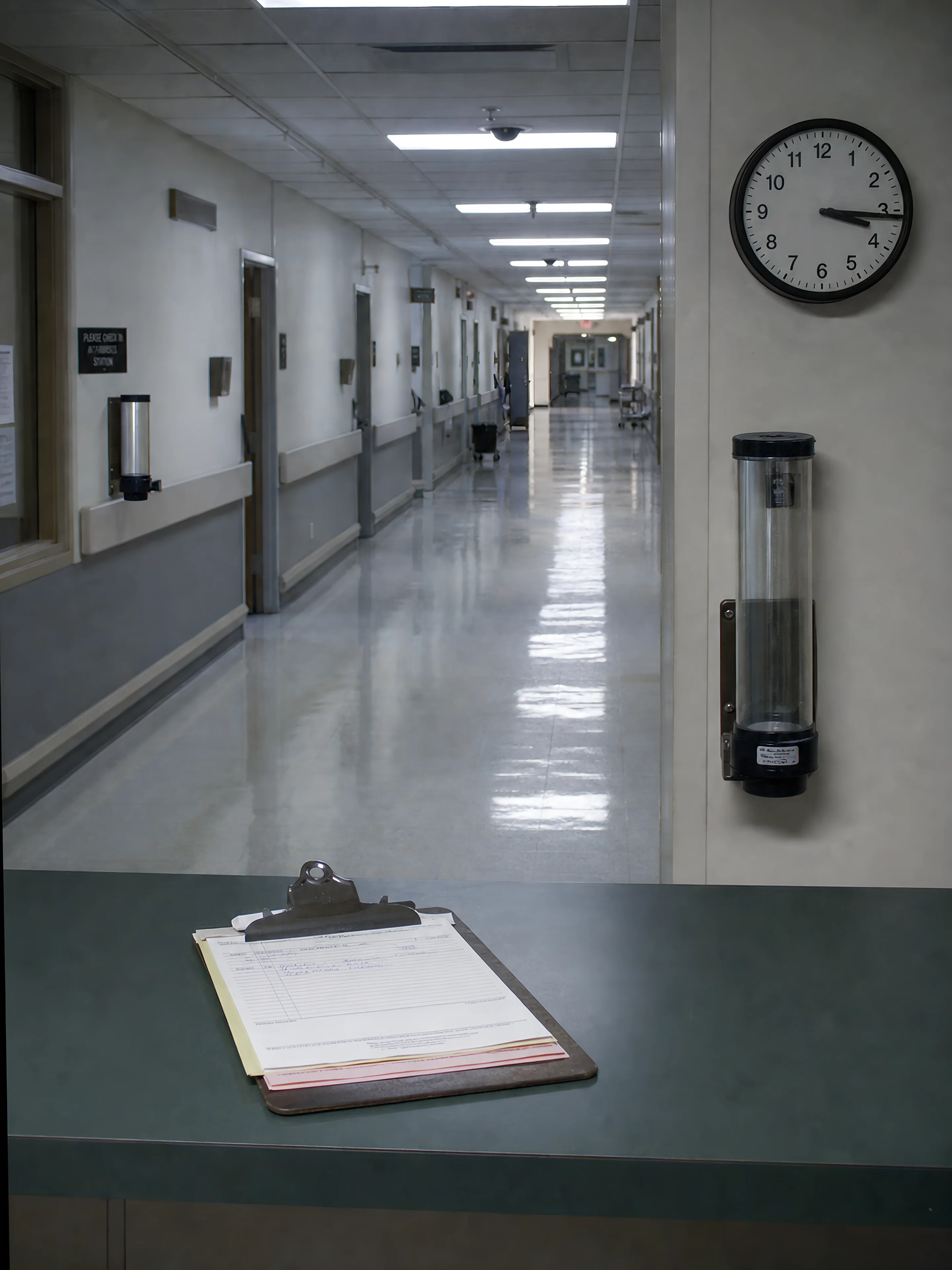
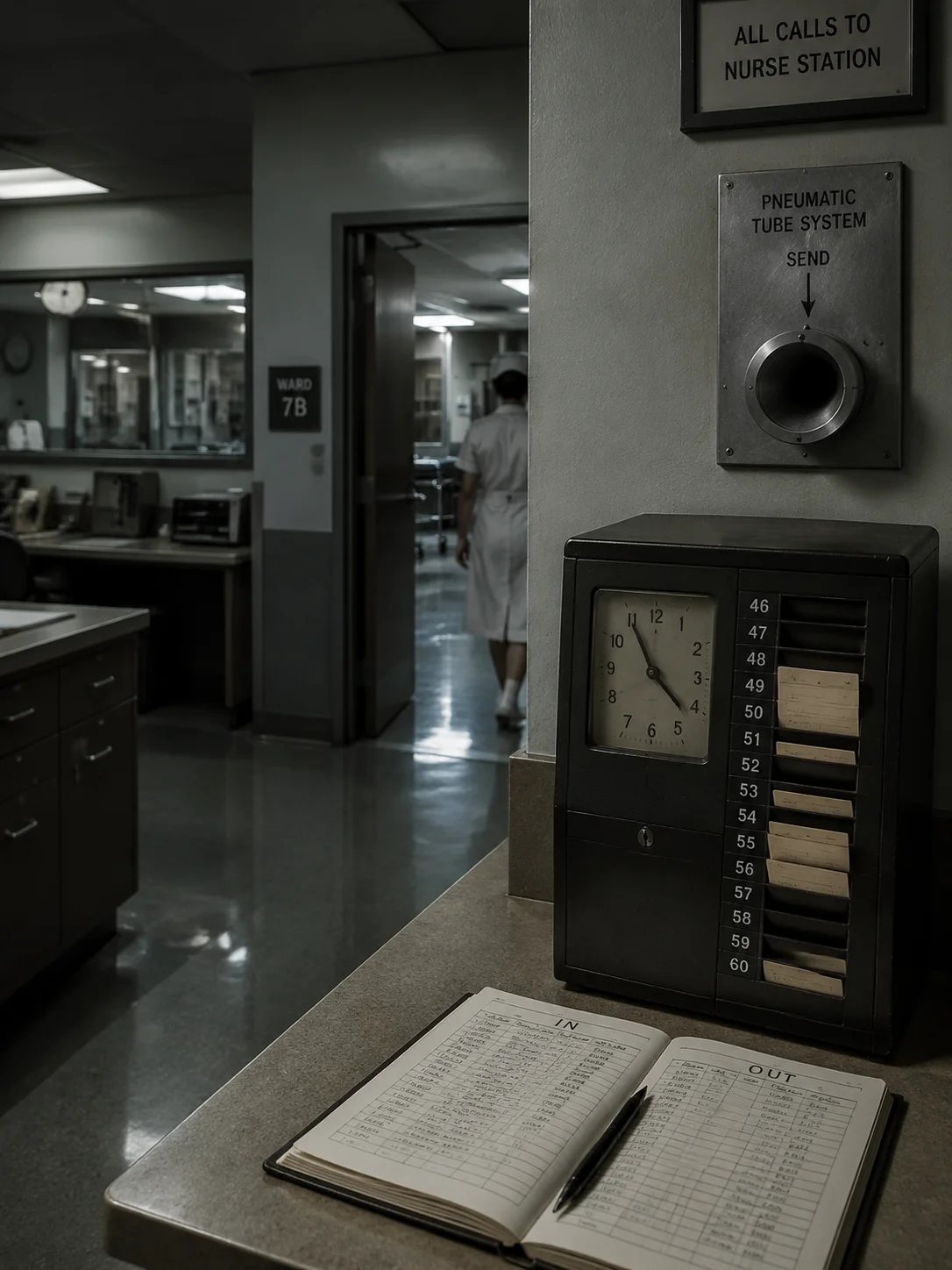
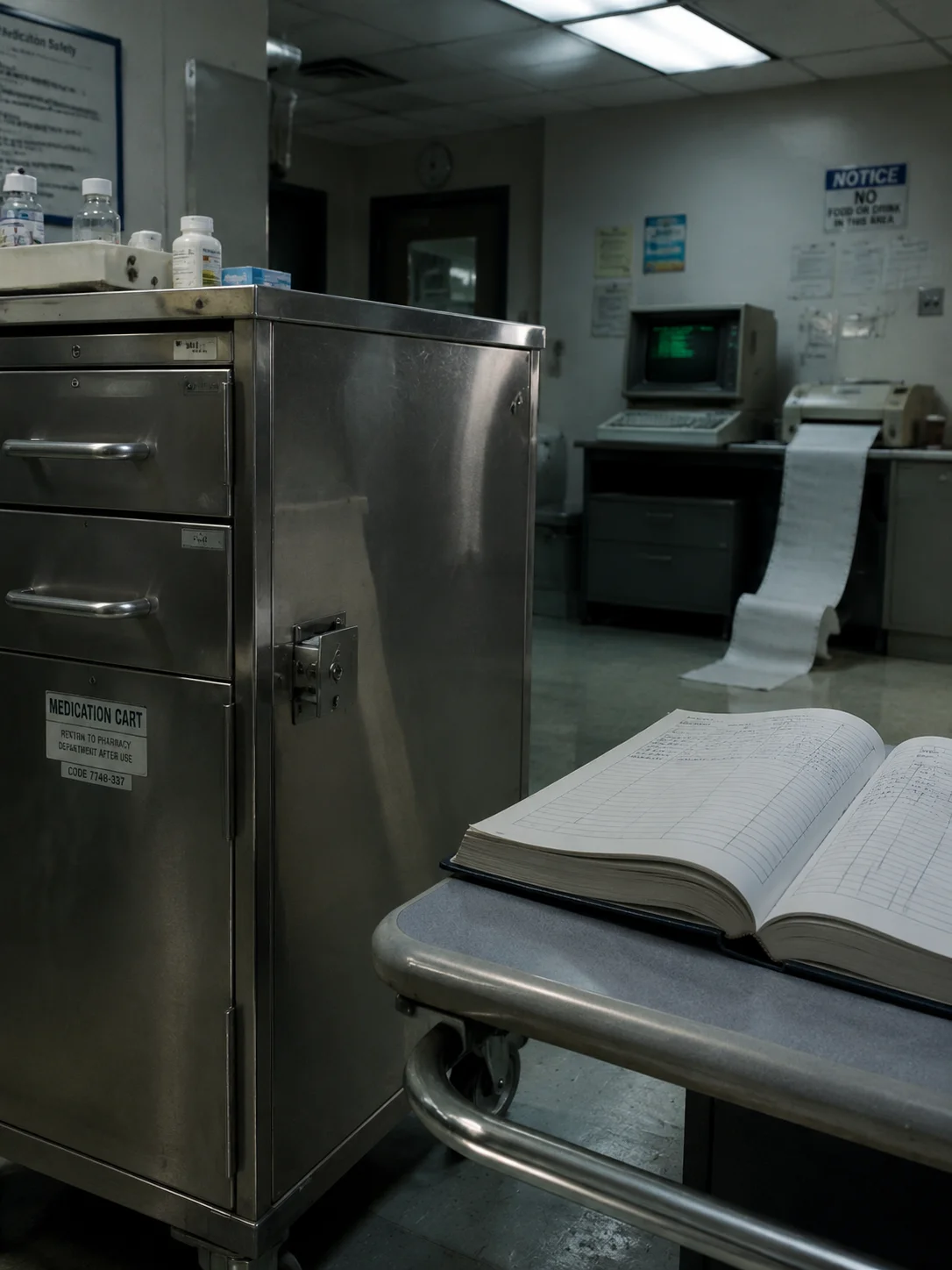
The acrid smell of antiseptic and stale coffee hangs heavy in the air. A low, constant hum emanates from a glowing green-cursor mainframe terminal. Fluorescent light glints off the steel frame of a medication cart, its mechanical key lock visibly retracted. A thick, bound logbook lies open on a U-shaped desk, columns of handwritten entries stark under the light. The continuous-feed paper of a printer lies curled on the floor nearby.
 Crime Scene Environment
The lighting profile is uniform, sterile fluorescent. The humidity/temperature profile is dry and cool, maintained for medical storage. The acoustic density is a low hum of electronics, punctuated by the distant, irregular beep of a paging system and the rustle of paper.
 Investigation Constraints
Late 1990s hospital technology. Keycard access logs for medication rooms and supply closets (time-stamped, not real-time), pager systems for communication, analog fax machines, paper-based patient charts with carbon-copy order forms, basic hospital inventory database (mainframe terminal access for supervisors), security camera systems with VHS tapes reviewed manually. No digital locks; medication carts use mechanical key locks with numbered keys logged in a sign-out binder.
✦ Related Cases ✦