The Cartwright Clinic
An investigator is called to the private Cartwright Clinic following the death of a patient. The official equipment log is complete, but the surrounding network of staff and family accounts contains numerous contradictions that obscure the precise sequence of events.
 Initial Crime Scene
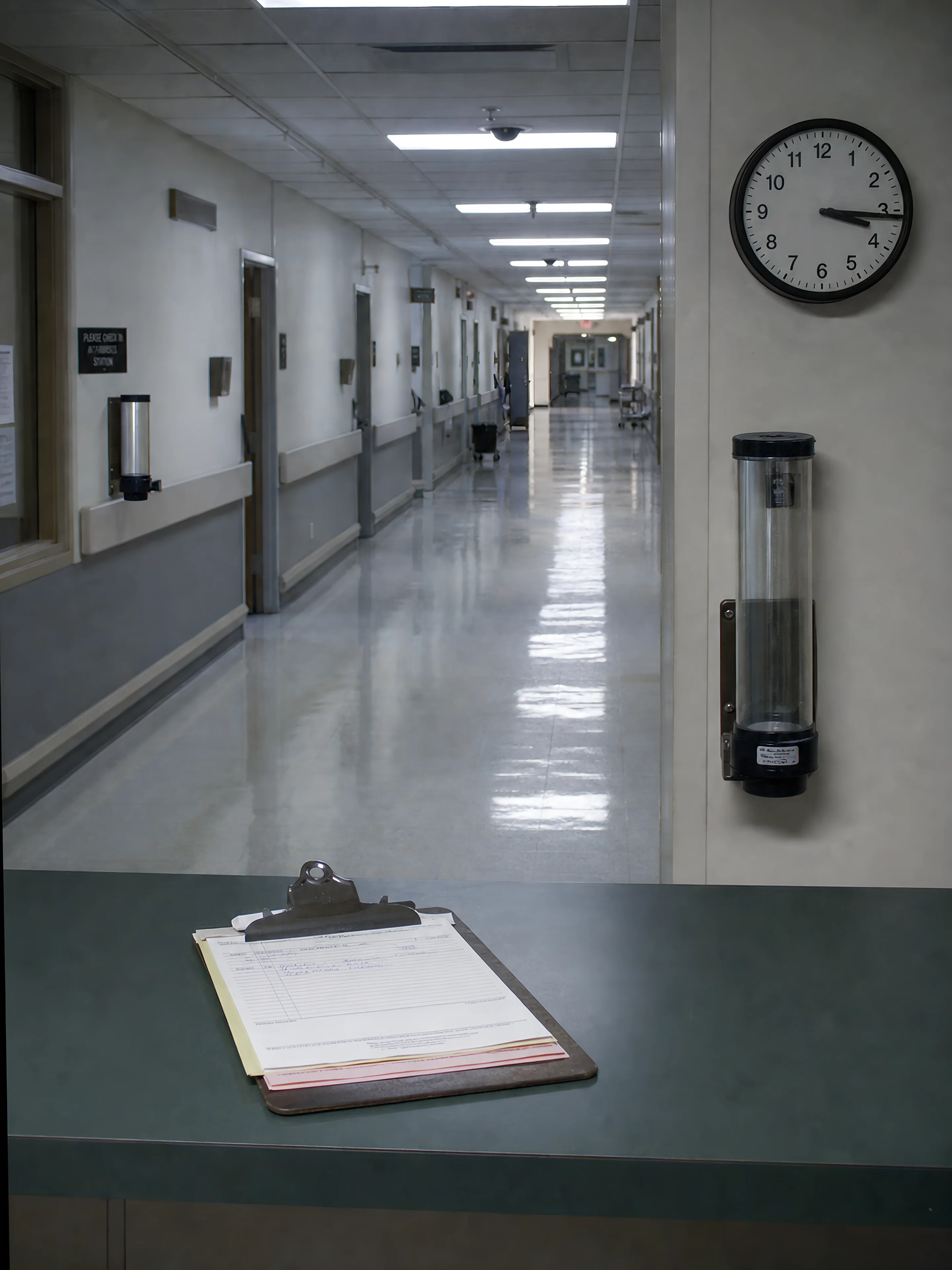
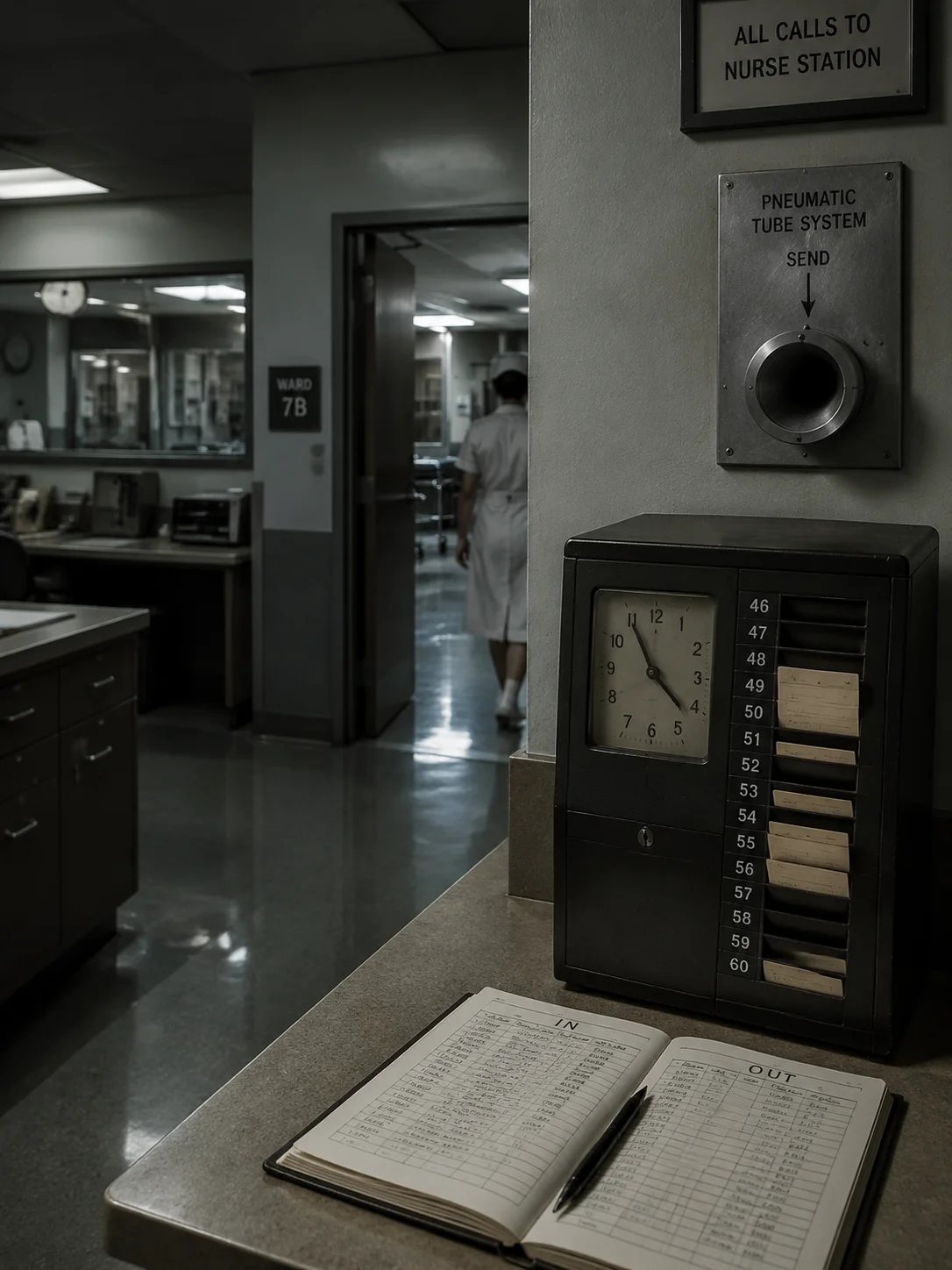
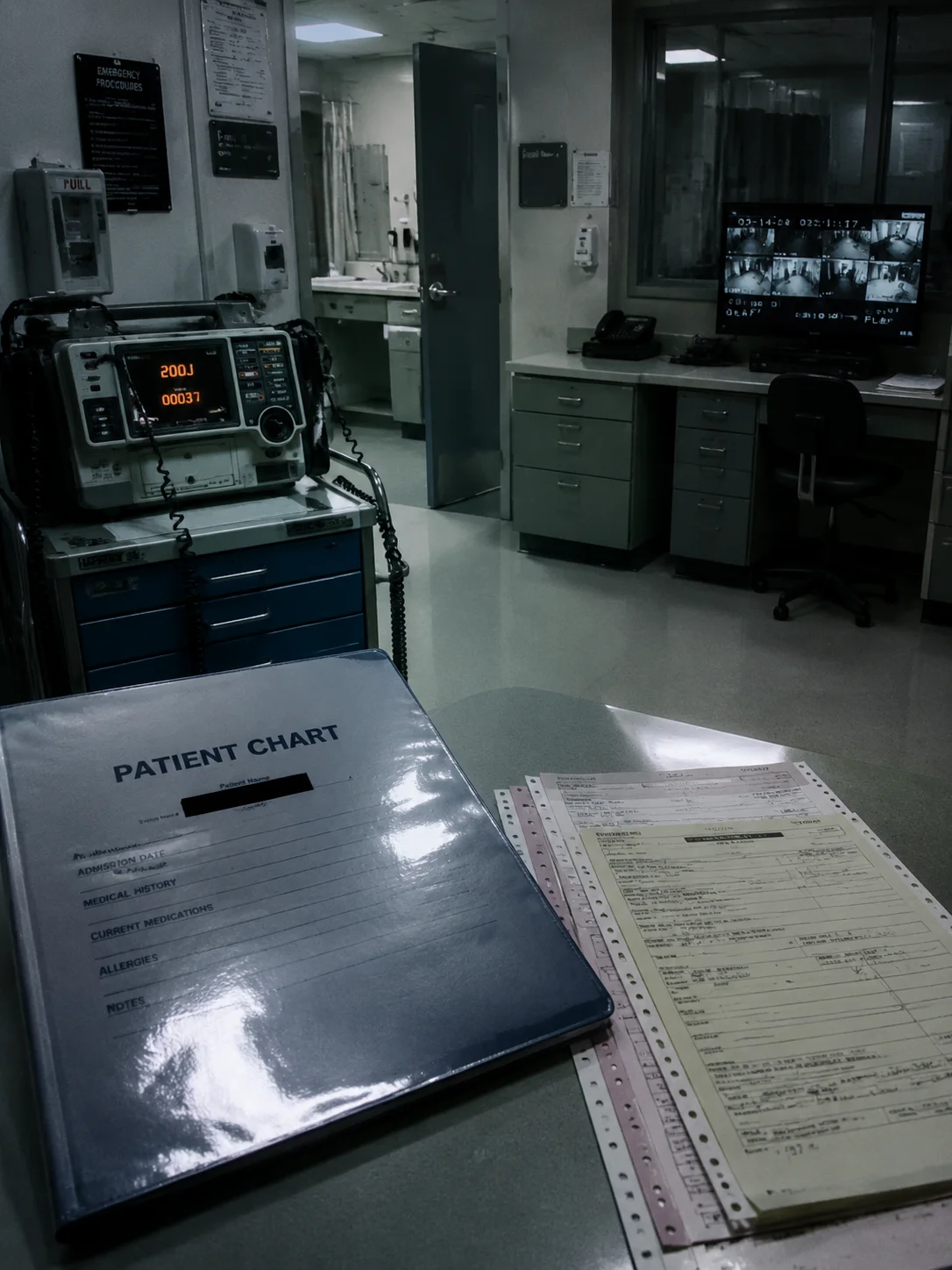
The scent of antiseptic cuts through the air, sharp and nasal. A faint, mechanical click echoes from a distant pneumatic tube terminal. Your eyes register the vinyl-covered patient chart on the counter, the carbon-copy triplicate forms stark under the fluorescent glare. The analog defibrillator cart sits in the corner, its mechanical counter display a silent, numeric witness. A VHS security tape's timestamp counter glows in a monitoring station down the hall.
 Crime Scene Environment
The lighting is a uniform, cold fluorescent. The air is cool and dry, carrying a persistent sterility. Acoustic density is low, characterized by the hum of distant equipment, the soft rustle of starched fabric, and the occasional, sharp click of a mechanical device. The tonal atmosphere is professional, muted, and calculated.
 Investigation Constraints
Analog medical charts, paper-based hospital logs (medication, vitals, equipment), mechanical defibrillator with basic digital counter, landline telephones, pneumatic tube message systems, VHS security tapes, micro-cassette voice recorders, pneumatic locks, manual key access.
✦ Related Cases ✦