The Clermont Protocol
A fatal hematology event at a prestigious clinic triggers a cascade of procedural scrutiny. An independent forensic specialist must untangle conflicting records, testimonial inconsistencies, and environmental anomalies to reconstruct the sequence of events.
 Initial Crime Scene
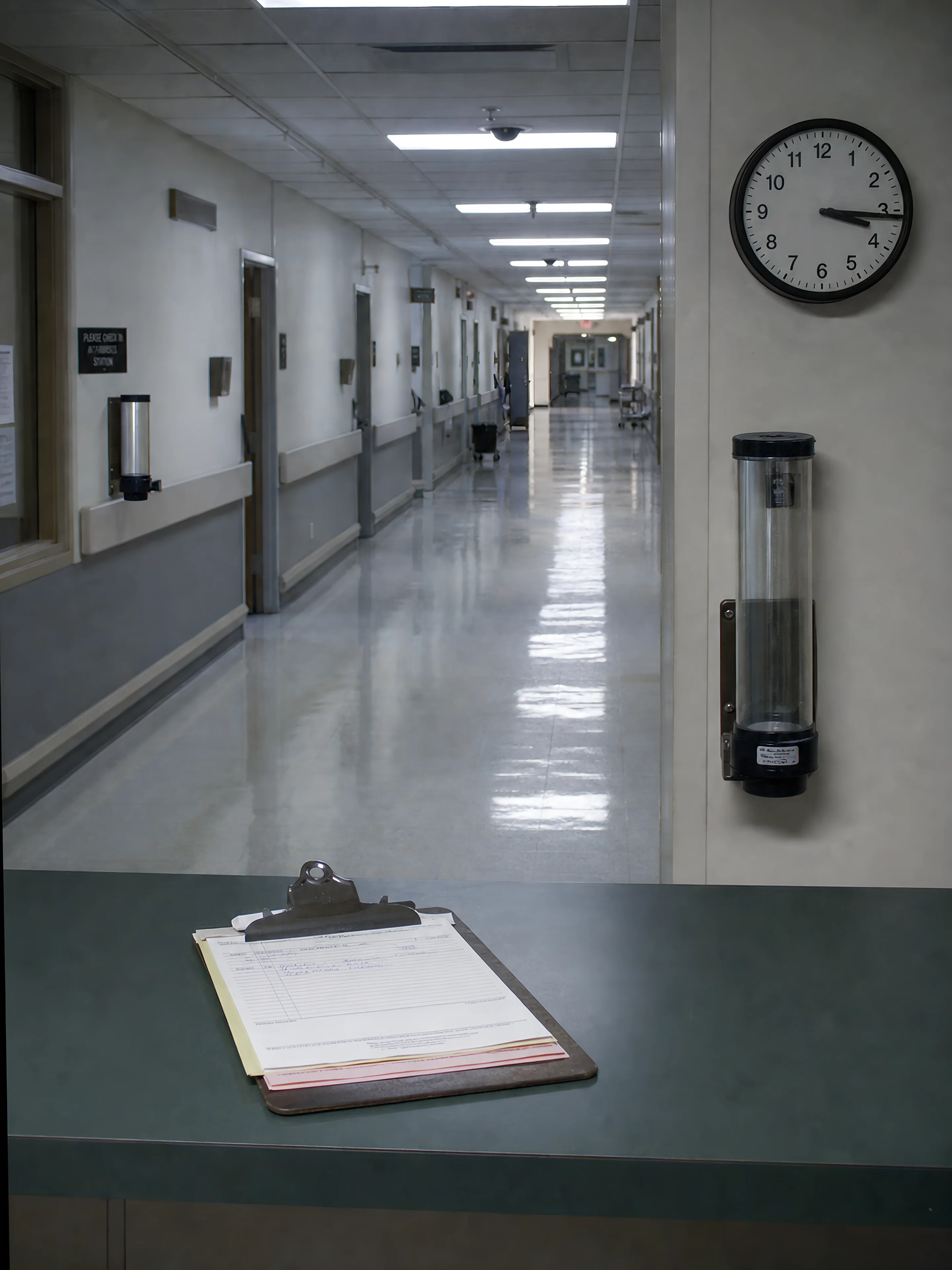
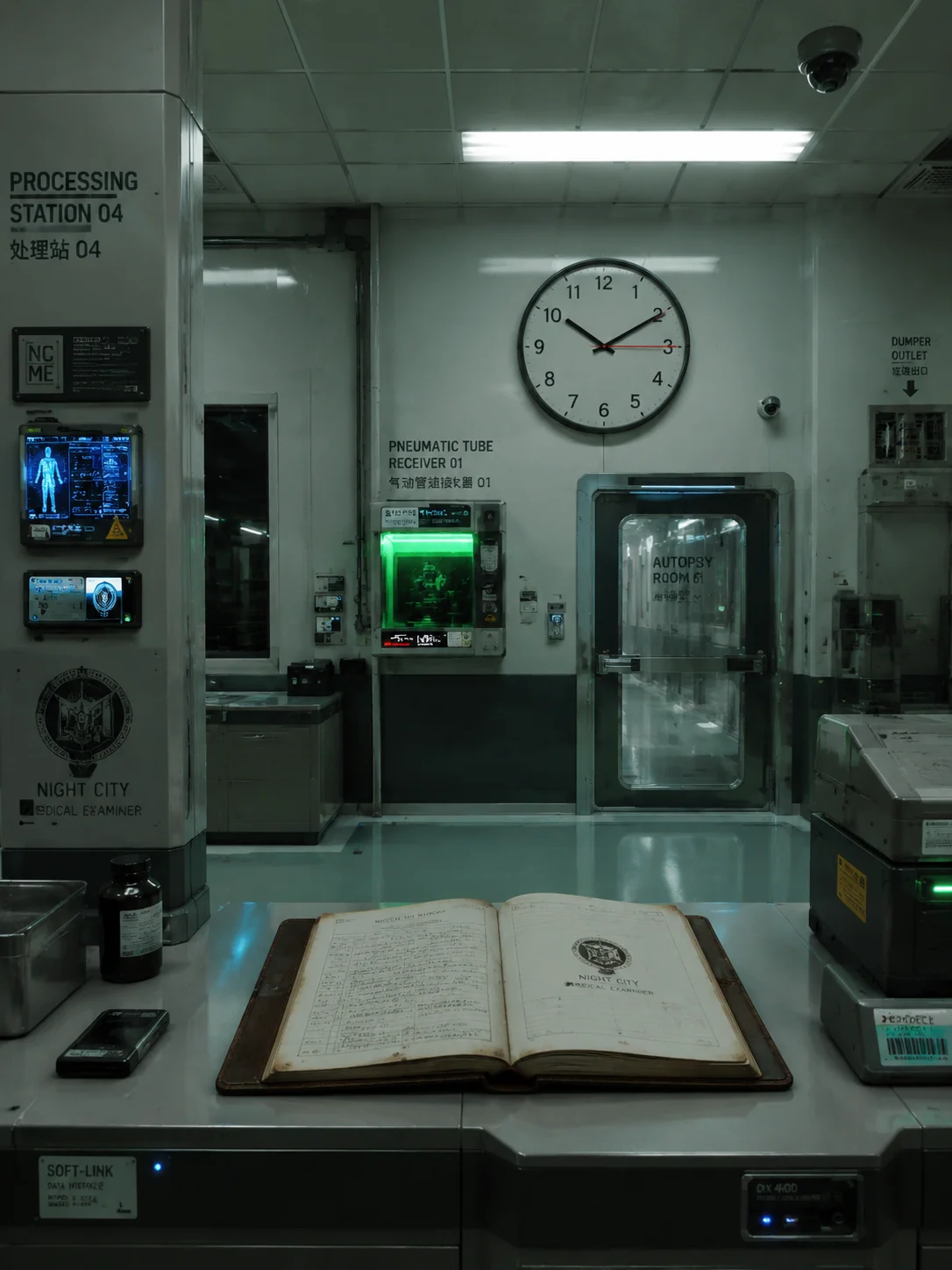
The fluorescent hum vibrates in your teeth as you step onto the sterile linoleum of the processing station. The sharp, chemical scent of disinfectant cuts through the recycled air. You register three visual markers: the open leather-bound logbook on the central counter, the glowing green indicator of the pneumatic tube receiver on the far wall, and the large analog clock, its second hand ticking with audible precision.
 Crime Scene Environment
The environment operates under flat, shadowless fluorescent lighting. Air temperature is cool and regulated, humidity low. Acoustic density is dominated by the persistent, mechanical hum of refrigeration compressors and the rhythmic ticking of analog clocks, with intermittent, muted clicks from pneumatic tube dispatches.
 Investigation Constraints
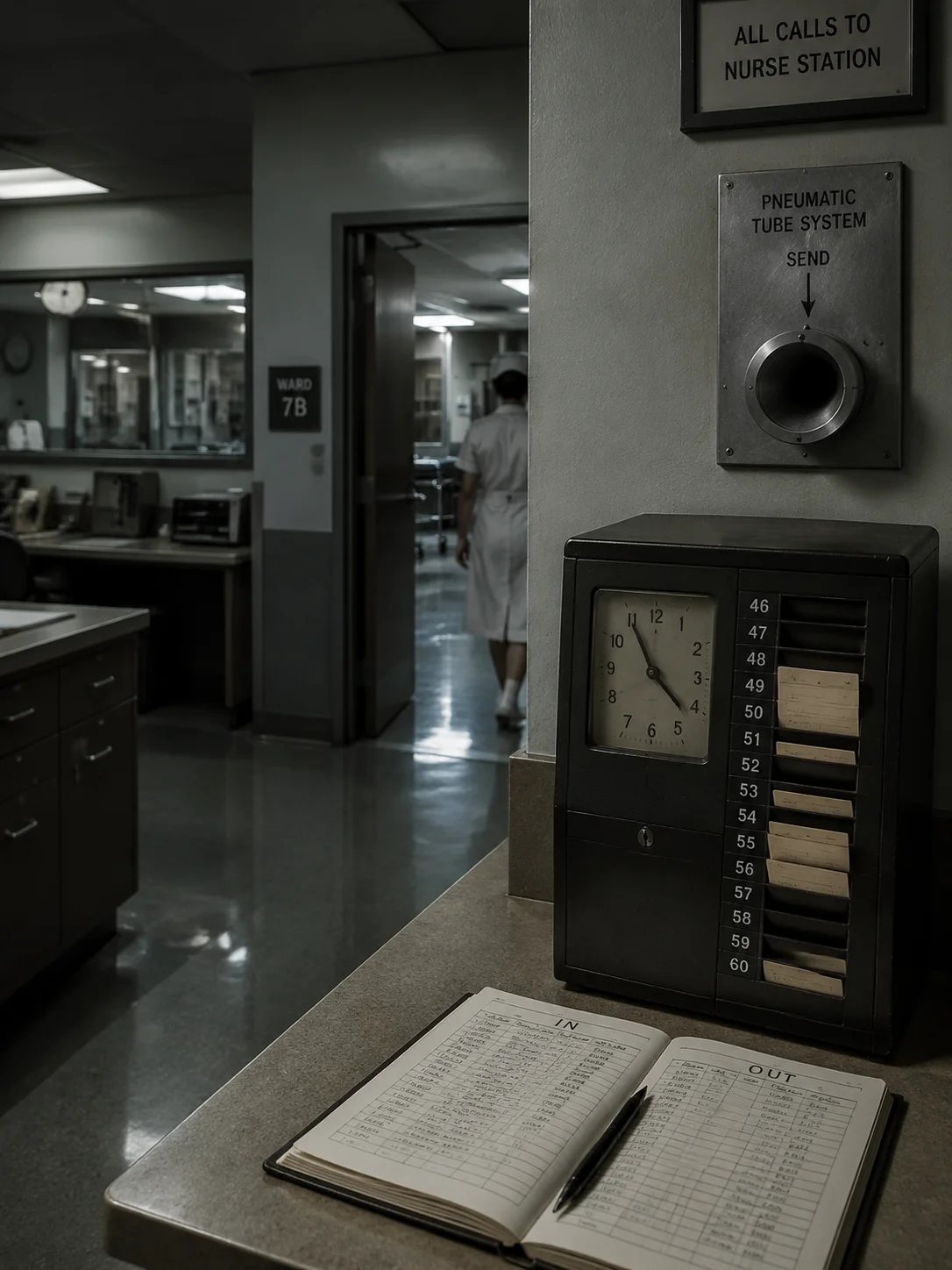
Analog systems dominate: pneumatic tube messaging for lab samples, manual ledger books for patient records, rotary phones, early computer terminals for billing only, paper-based incident reports, and physical key-card access to restricted areas. Forensic analysis relies on microscopy, manual toxicology, and hand-written lab notes. Communication is via typed memos and intercoms.
✦ Related Cases ✦