The Forlorn Lighthouse
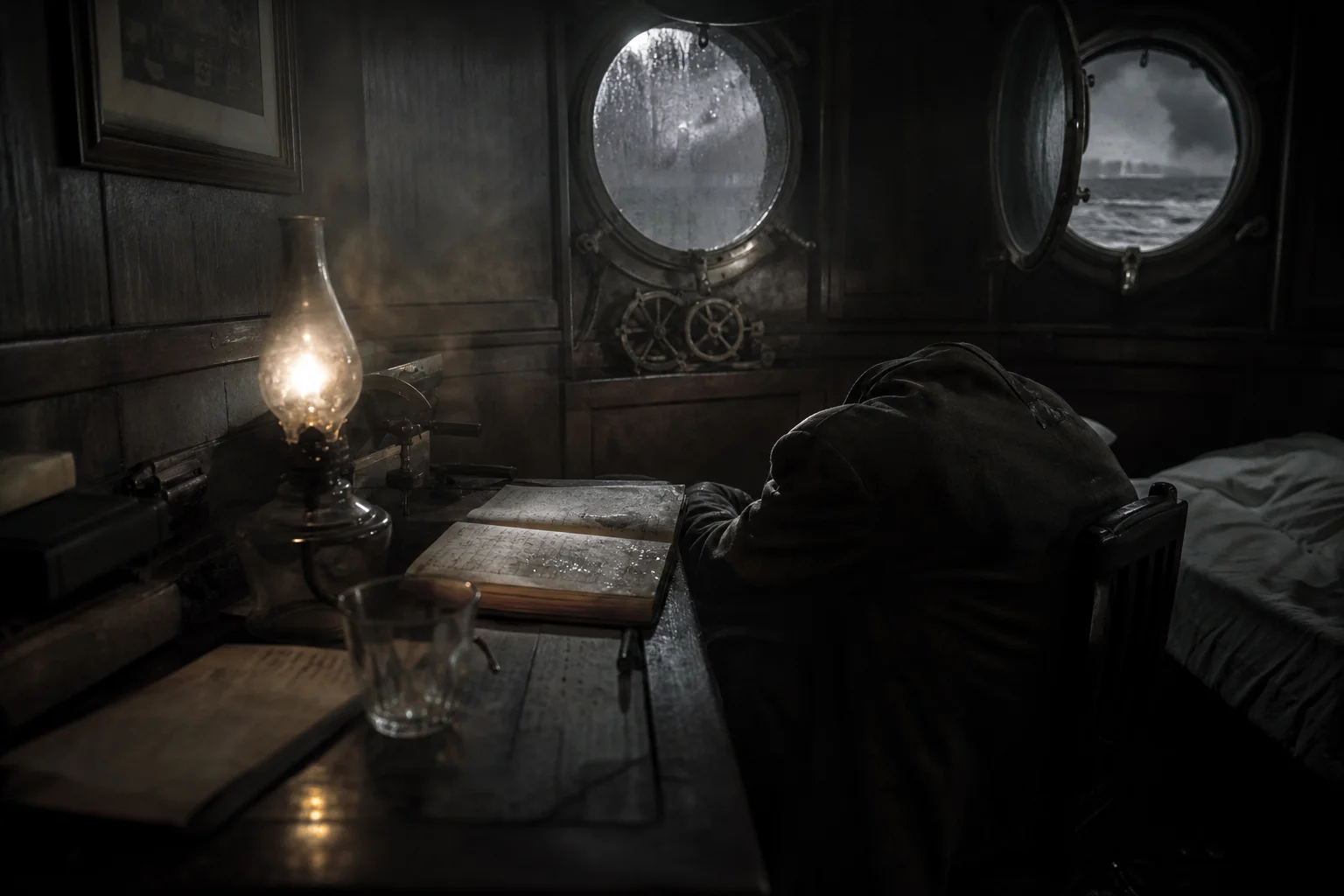
On the isolated, fog-shrouded Blackwood Point lighthouse station, the death of a keeper initiates an investigation into the station's routines, records, and the personal effects left behind. The community is closed and class-conscious, with professional duties and private lives intertwined.
 Initial Crime Scene
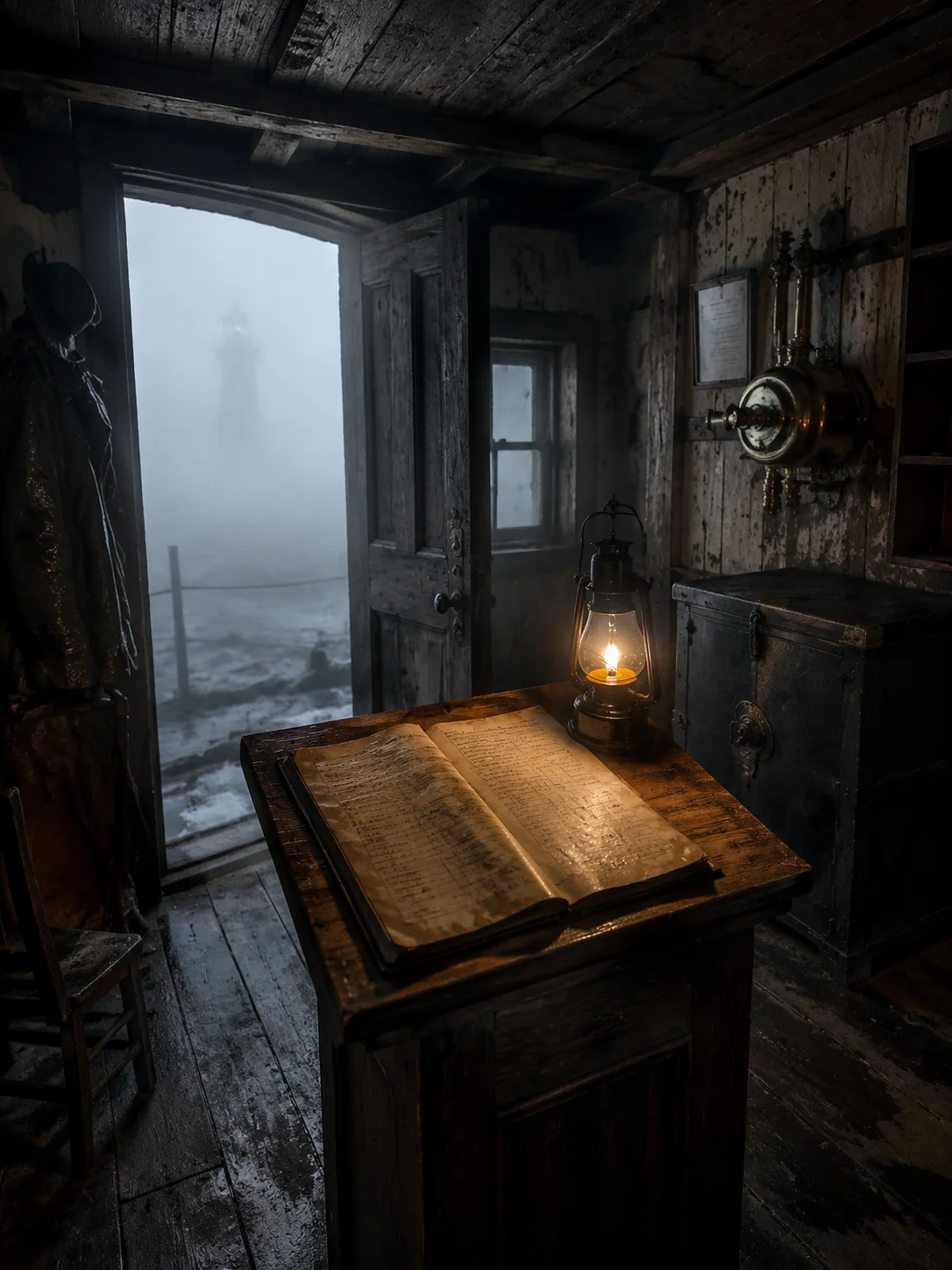
A cold, damp draft greets you from the open door of the keeper's cottage. The sharp scent of kerosene cuts through the heavier, omnipresent smell of salt and brine. From somewhere above, the faint, rhythmic clicking of a clockwork mechanism provides the only consistent sound. Your eyes adjust to the flickering lamplight, revealing the water-stained pages of a large logbook on a central podium, the dull gleam of a massive iron strongbox against the far wall, and the intricate, brass-bound details of a pneumatic message tube nozzle.
 Crime Scene Environment
The lighthouse station is enveloped in a perpetual twilight, pierced by the narrow, focused beams from the kerosene lamps. The air is heavy with a high humidity, carrying a constant, chill dampness that seeps into wool and wood. Sound is muffled by the fog and the thick, salt-bleached walls, creating a hermetic acoustic density where the creak of the structure or the toll of a distant bell is amplified, but human speech feels smothered.
 Investigation Constraints
Late 19th-century nautical technology: kerosene lamps, manual foghorns, brass sextants, heavy iron locks and padlocks, wax-sealed logbooks, pneumatic message tubes between the lighthouse and keeper's cottage, hand-cranked fog bell, mechanical tide charts, and the lighthouse's great lens and clockwork rotating mechanism.
✦ Related Cases ✦