The Gulch's Unsettled Dust
A gambler vanishes from a remote frontier town after a high-stakes card game. An independent investigator is called to examine the physical traces of his last known movements and to question the town's citizens, each of whom maintains a complex social position within the local economy and community hierarchy.
 Initial Crime Scene
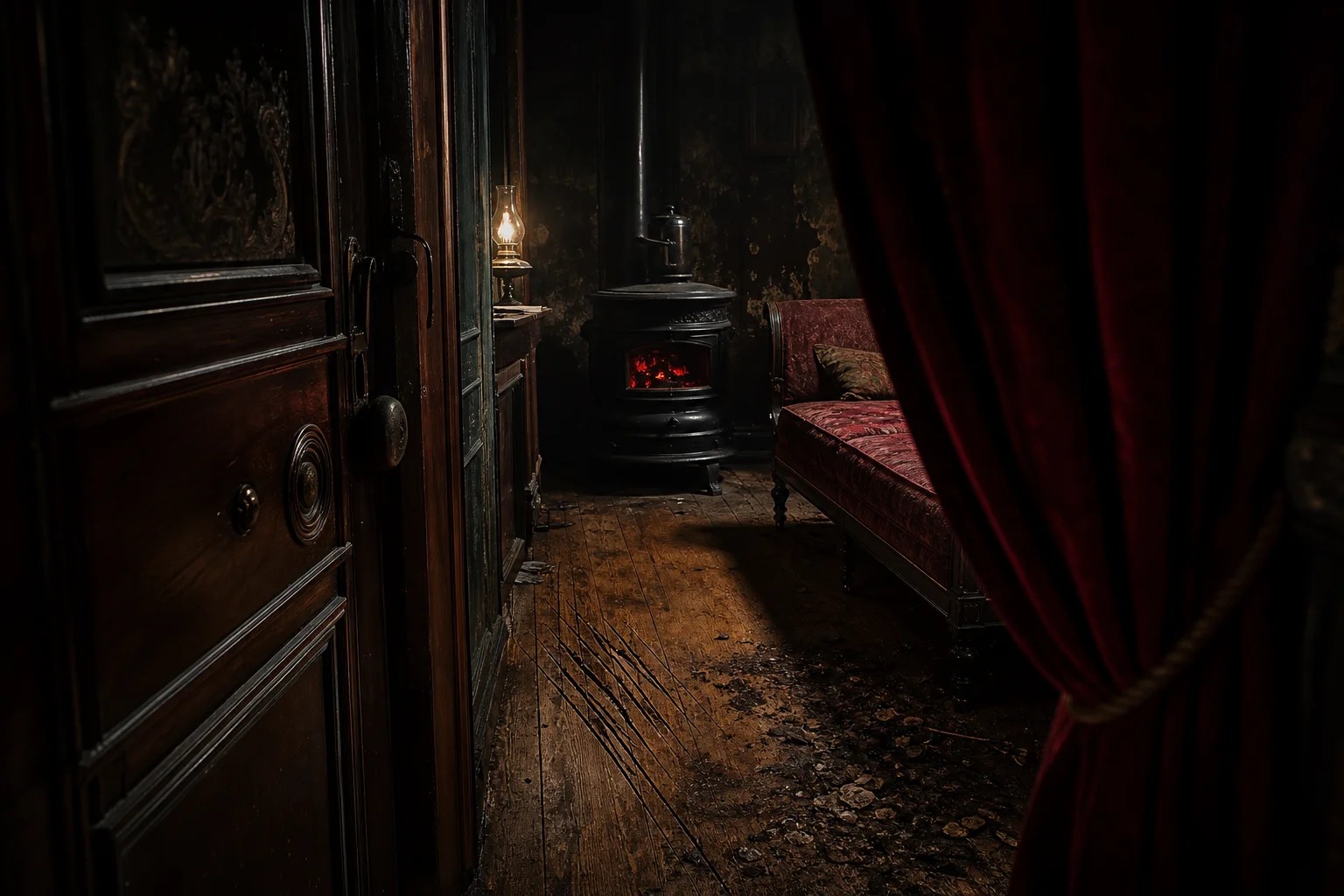
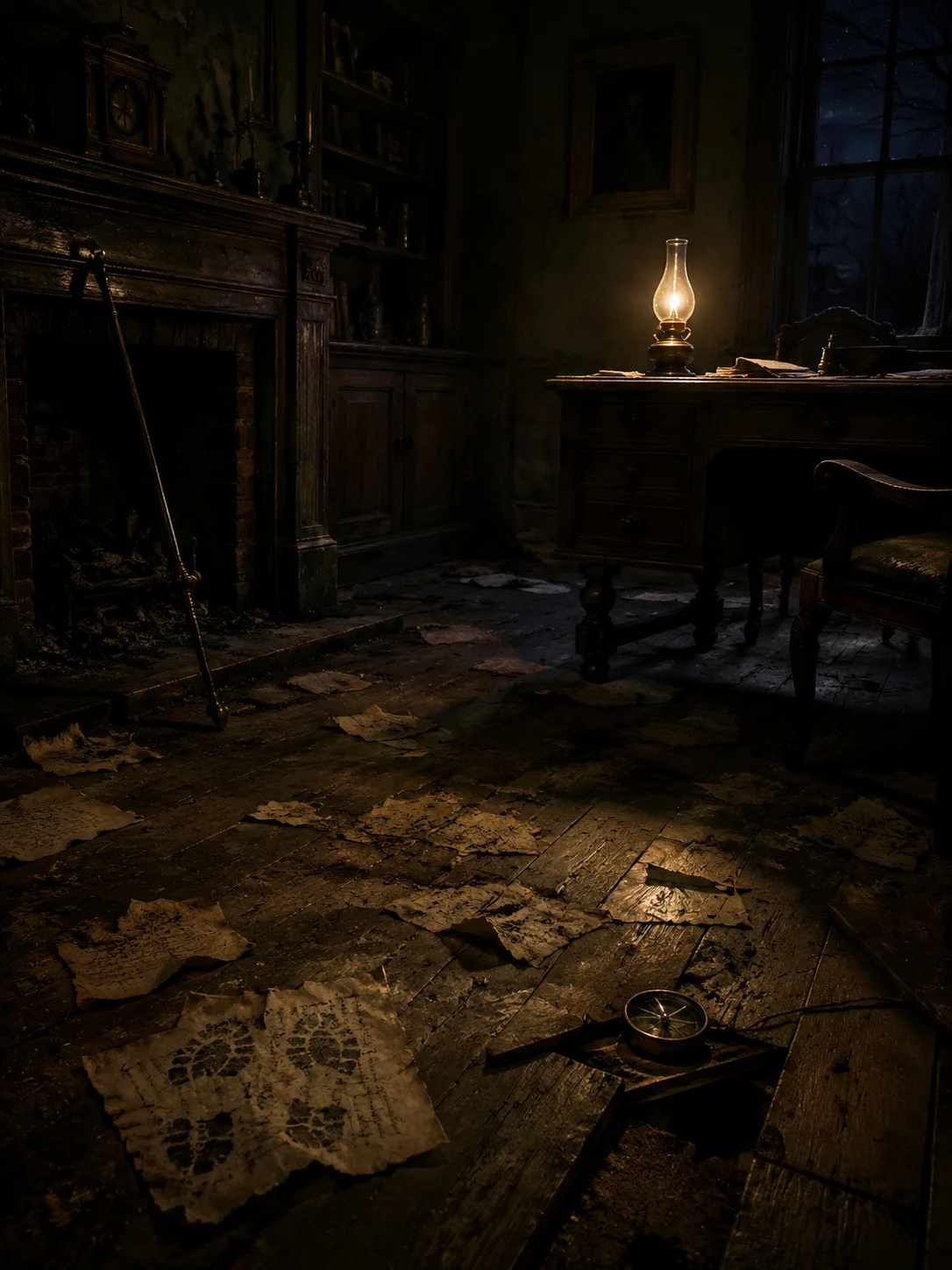
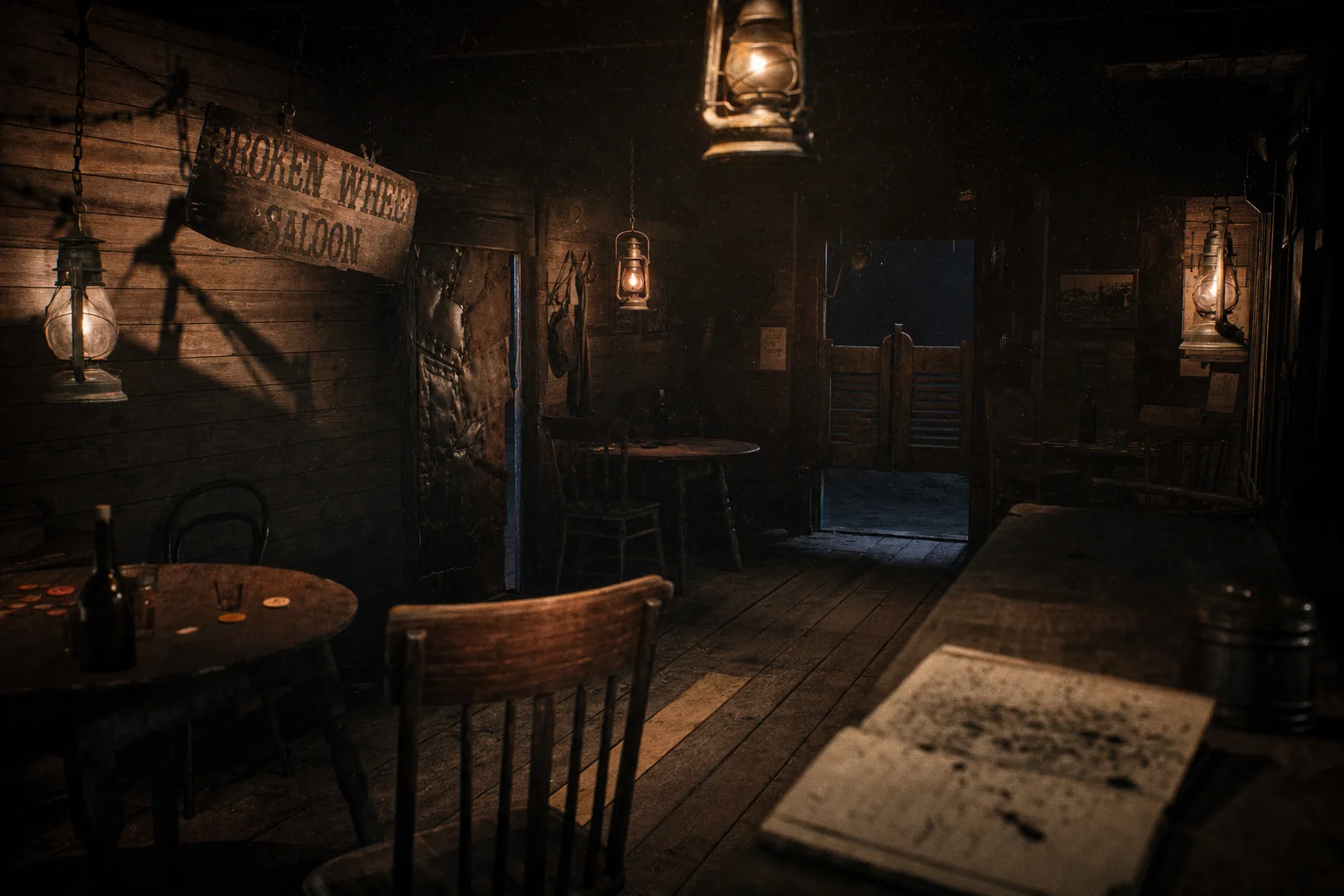
The heavy scent of stale whiskey and coal smoke presses in from the saloon's interior, a thick, oily presence in the air. From somewhere above, the rhythmic creak of a loose sign swings in the ceaseless wind, a dry, wooden complaint. Your gaze adjusts to the flickering, greasy light of oil lanterns, catching the splintered pine of a back door patched with mismatched leather, the fresh, poorly stained plank in a hotel floorboard, and the dark, desiccated stain of coal dust smeared across a ledger page.
 Crime Scene Environment
The pervasive lighting is the dim, flickering glow from oil lanterns, casting long, unstable shadows. The air is dry and gritty, heavy with particulate coal dust and the humidity of human exertion in enclosed spaces. Acoustic density is low, dominated by localized, repetitive sounds: the creak of wood, the scrape of boot leather, the muffled tap of a finger on leather or glass.
 Investigation Constraints
Mid-19th century frontier tech: oil lanterns, cast-iron stoves, telegraph wires (to neighboring towns only), handwritten ledgers, simple mechanical locks, steam-powered mining equipment, basic frontier firearms (revolvers, lever-action rifles). Communication is by personal note or telegraph. Record-keeping is in ledger books, personal diaries, or the local newspaper's typeset pages.
✦ Related Cases ✦