The Harrington Estate Affair
A weekend house party is disrupted by a death. An independent investigator is called to a country estate where guests and staff each maintain their own schedules and private concerns. The investigation examines personal records, household movements, and the physical evidence left behind in various locations.
 Initial Crime Scene
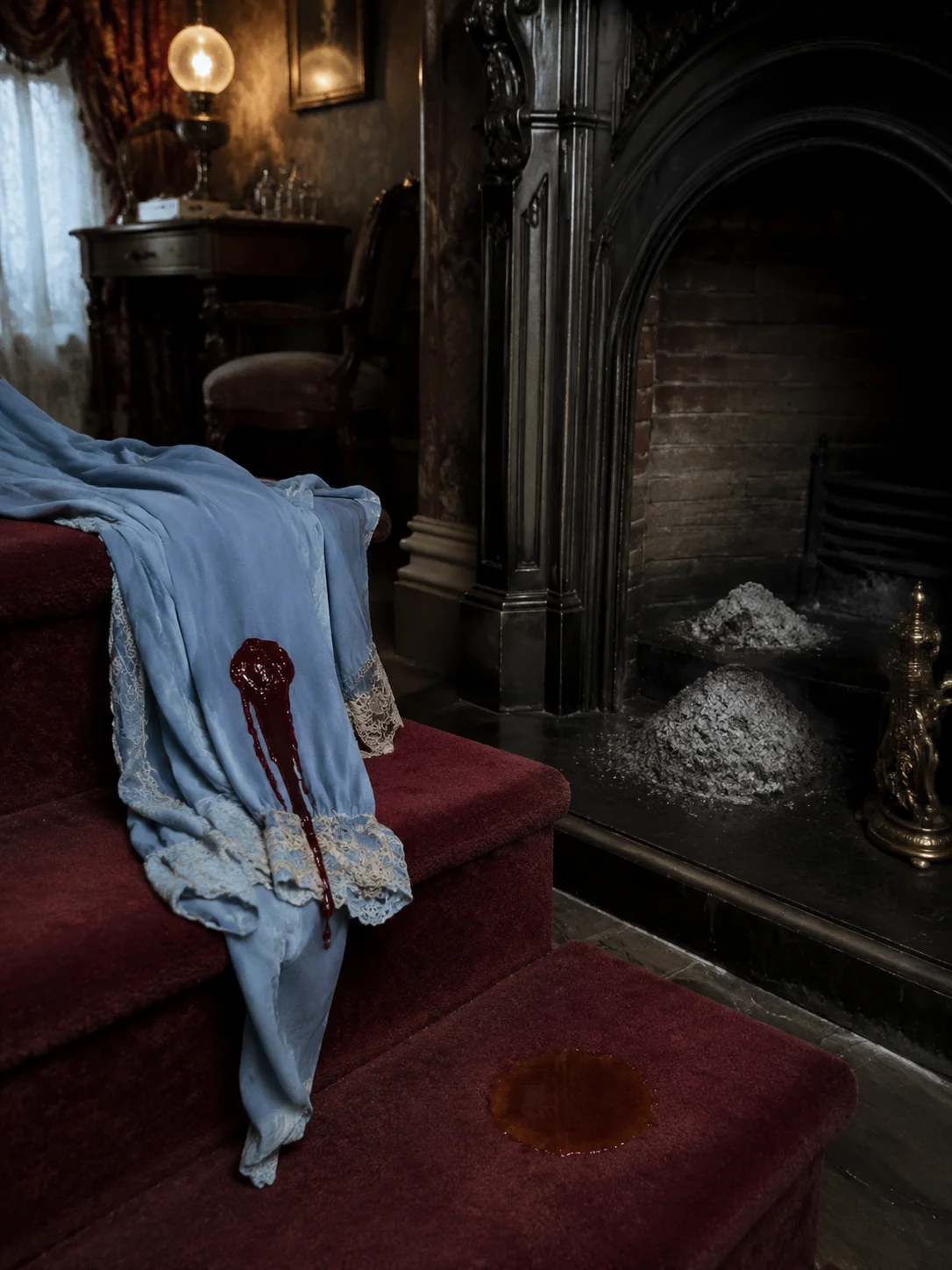
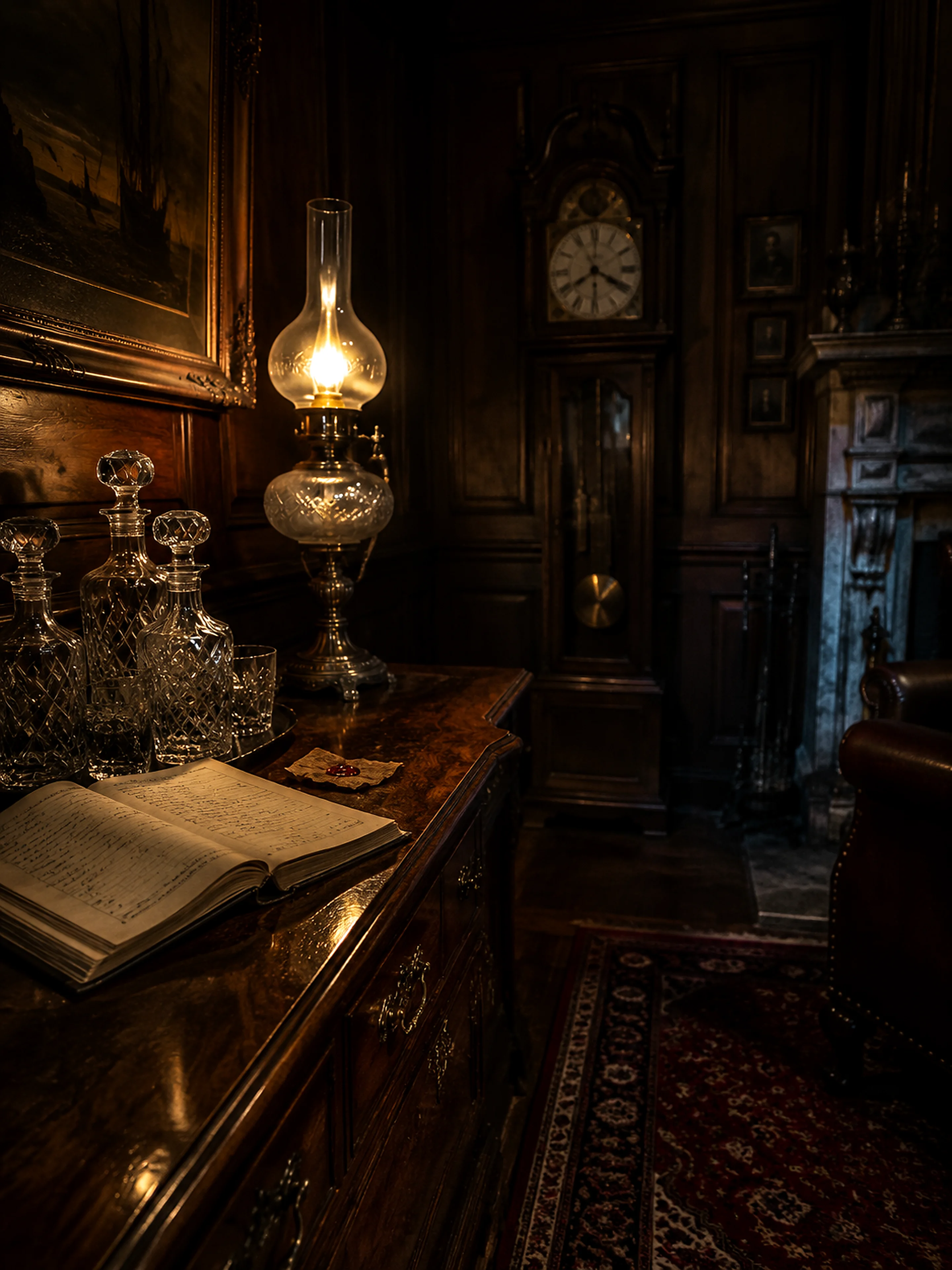
The scent of beeswax polish and old paper hangs thick in the air, cut by a sharp, sweet chemical note. A grandfather clock's pendulum swings with a steady, audible tick in the otherwise silent drawing room. Your gaze falls upon a wax seal impression crumpled near a cold, dampened hearth, then to the polished mahogany surface of a sideboard where a leather-bound ledger lies open, and finally to the cut-crystal decanters catching the light from a single hissing gas lamp.
 Crime Scene Environment
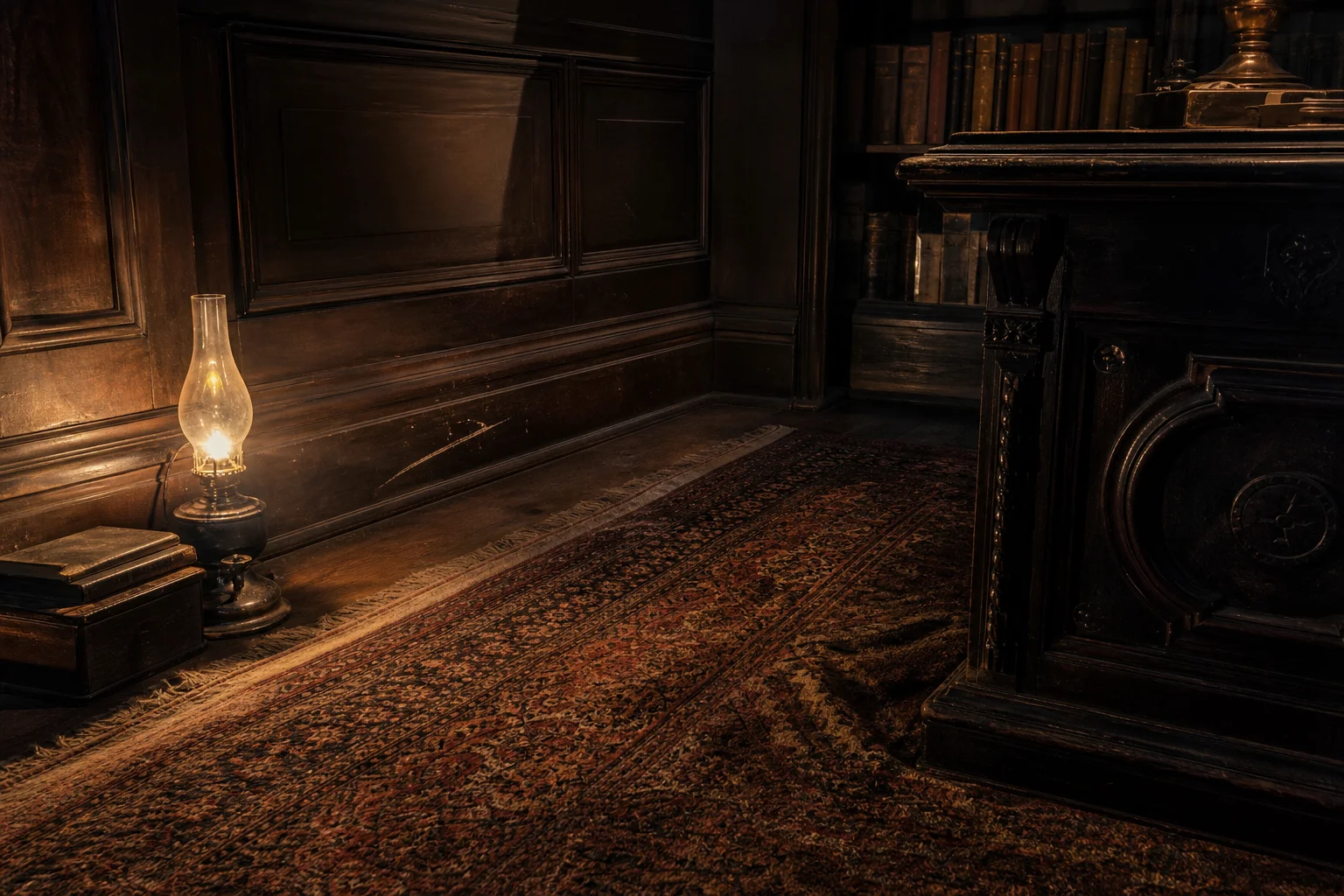
The initial scene is defined by the warm, focused pool of light from a gas lamp, casting long, deep shadows in the wood-paneled space. The air carries a cool, still humidity, with the acoustic density marked by the constant, mechanical tick of clocks and the soft hiss of gas jets.
 Investigation Constraints
Gas lighting, wind-up clocks, mechanical door chimes, hand-wound phonographs, quill-and-ink ledgers, personal telegraph machines, hand-cranked dumbwaiters, wax-sealed letters, mechanical servants' bells, and pocket watches.
✦ Related Cases ✦