The Iron Maid's Anchor Pattern
A salvage dredger is found adrift with its crew missing and its anchor chain severed. The investigation unfolds within the maritime salvage world, requiring navigation of a complex environment of professional duties, financial records, and personal histories.
 Initial Crime Scene
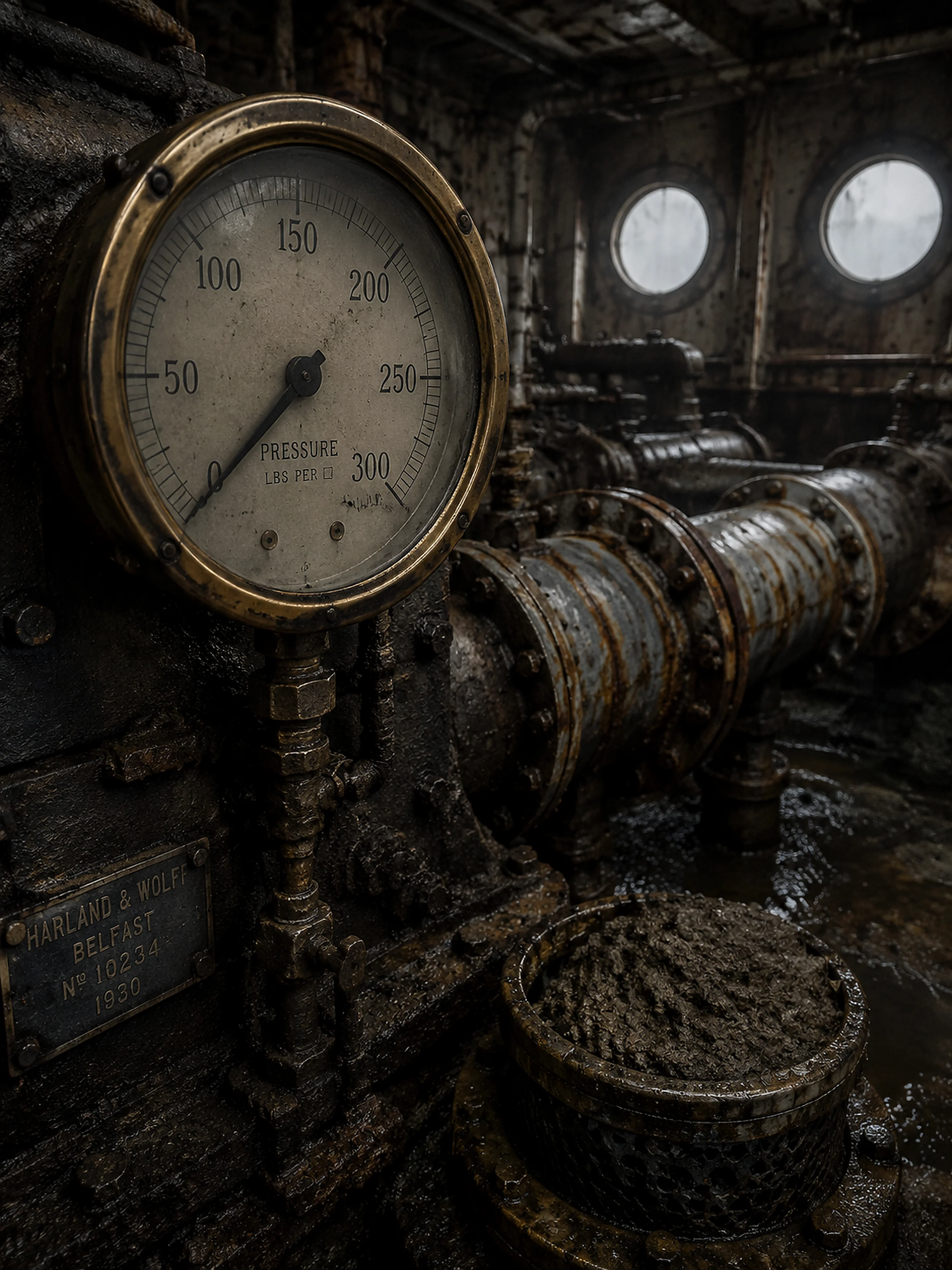
The first breath inside the engine room is diesel and decay, clinging to the damp heat. A distant, rhythmic clang of metal on metal echoes from the boiler feed. Visual focus lands on the layered sediment clogging the bilge pump strainer, the unique rust-vein map sprawling across main steam pipes, and the polished brass bezel of the large pressure gauge, its needle fixed at zero.
 Crime Scene Environment
The sandbox operates under a constant, diffused grey light from fog-shrouded portholes. The air is heavy with high humidity, carrying a persistent damp chill that settles into wool and metal. Acoustic density is low, dominated by the groan of hull stress, the occasional hiss of dormant steam valves, and the distant, muffled moan of a foghorn.
 Investigation Constraints
Late 19th-century maritime technology: telegraph wires, mechanical clock mechanisms, brass sextants, barometers, pressure gauges, coal-fired steam engines, hand-cranked winches, wax-sealed logs, coded flag signals. No electricity, radio, or advanced metallurgy.
✦ Related Cases ✦