The Ivory Protocol
A specialist is summoned to a sealed domestic residence following a socialite's sudden demise. The household's meticulous daily ledger presents a timeline contradiction: a signed, witnessed will appears dated for the day following the recorded death. The investigation focuses on the foundational records and physical traces within the home to isolate the singular, operative truth.
 Initial Crime Scene
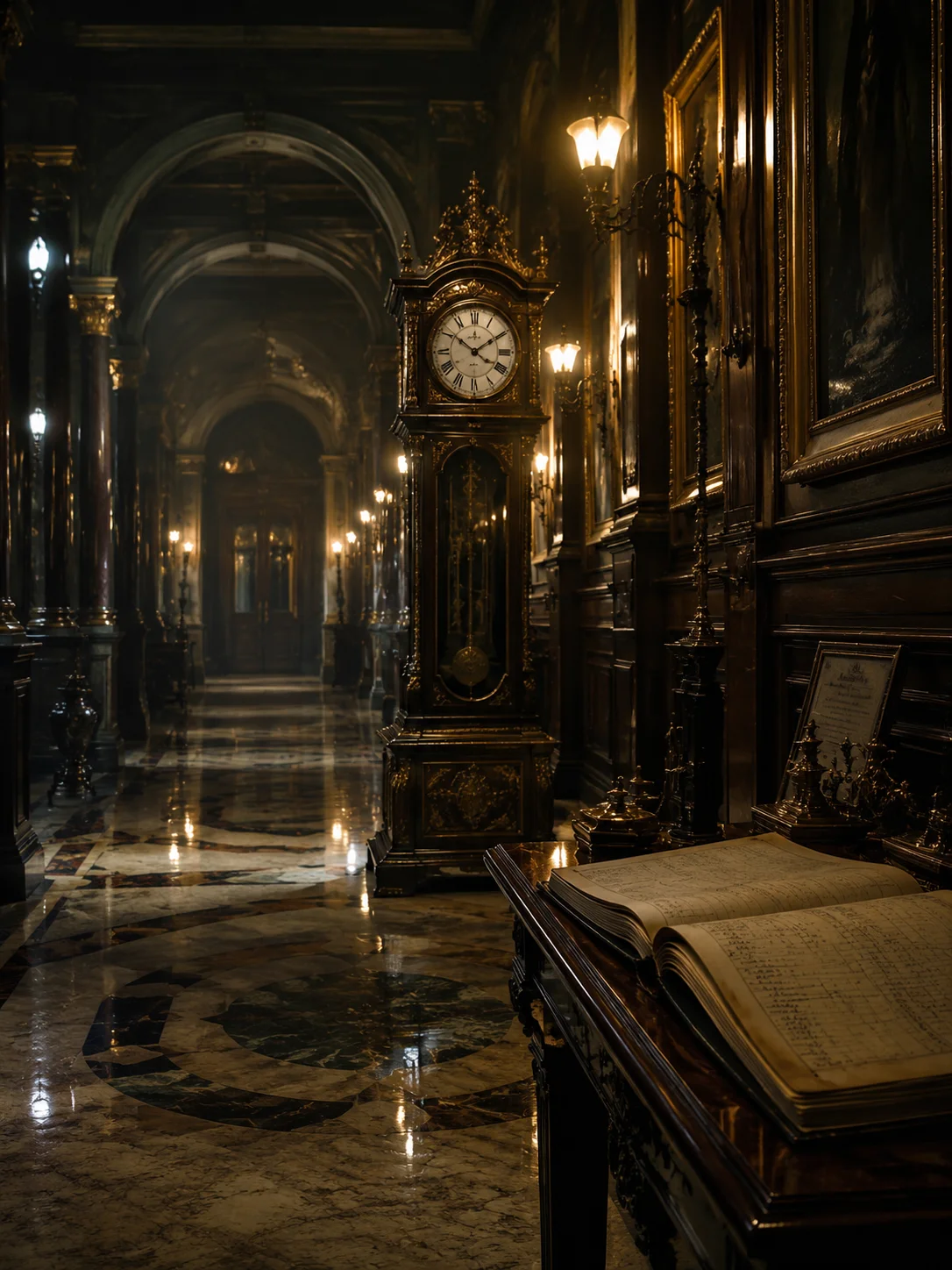
The scent of beeswax polish and a faint, acrid tang from the coal hearth hangs in the tall, paneled space. Your first step echoes on polished marble, the sound absorbed by the still air. Your gaze falls on the gilt-framed hall clock, its pendulum motionless. To its side, a bound ledger rests open on a side table, its vellum pages filled with neat columns. A single, silent dust mote drifts through a beam of gaslight falling across the floor.
 Crime Scene Environment
The sandbox is lit by a network of gaslight fixtures, casting a steady, warm-yellow illumination that creates long, soft shadows. The air is cool and carries a constant, low-level acoustic density: the distant hiss of gas jets, the faint creak of settling wood, and the muffled, occasional clink of metal from adjacent rooms. The humidity is low, leaving the scent of old paper and furniture wax crisp and distinct.
 Investigation Constraints
Tools limited to: household ledgers and daily time-tables (maintained by servants), handwritten correspondence (delivered by post-boy), mechanical clock-winding schedules, servant bell-pull systems, wax seals, lock-and-key jewelry boxes, coal-fired hearths for document disposal, mechanical ticker-tape stock machines in the study, and gaslight illumination.
✦ Related Cases ✦