The Lady Penelope's Ledger
An independent investigator boards the aging steam-sailer 'The Lady Penelope' in the fog-bound North Atlantic. A missing entry in the captain's log coincides with a man overboard. The investigation must map the physical evidence and testimonies of the crew to reconstruct the events of the evening.
 Initial Crime Scene
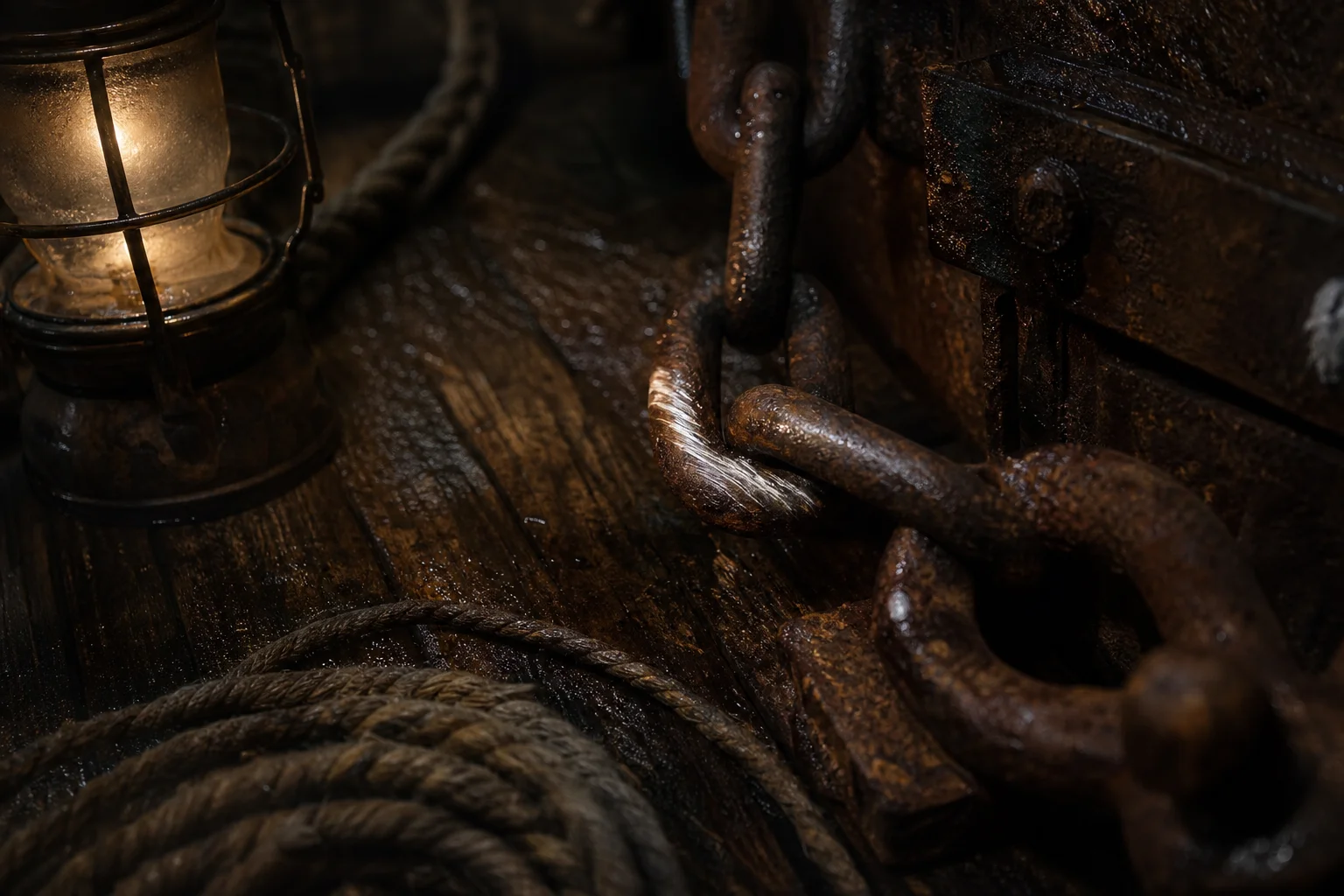
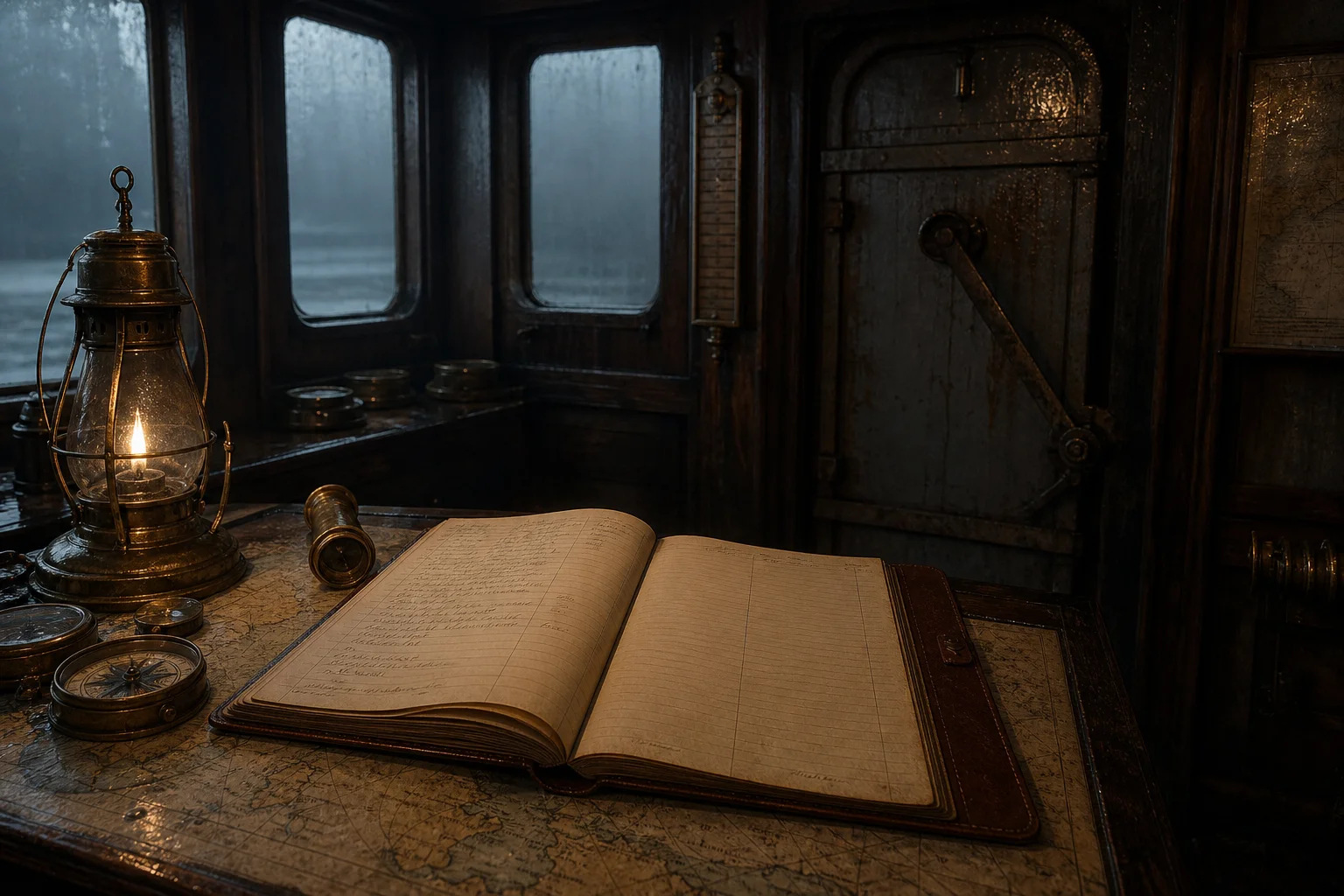
The heavy iron handle of the cargo hatch is fixed at a 45-degree angle. The air smells of tar, hemp, and the cool damp of the hold. Brass instruments gleam under the single oil lamp. The leather-bound captain's log lies open on the chart table, its ruled pages showing a conspicuous gap. The ship's chronometer ticks, a constant, mechanical sound against the creak of timber.
 Crime Scene Environment
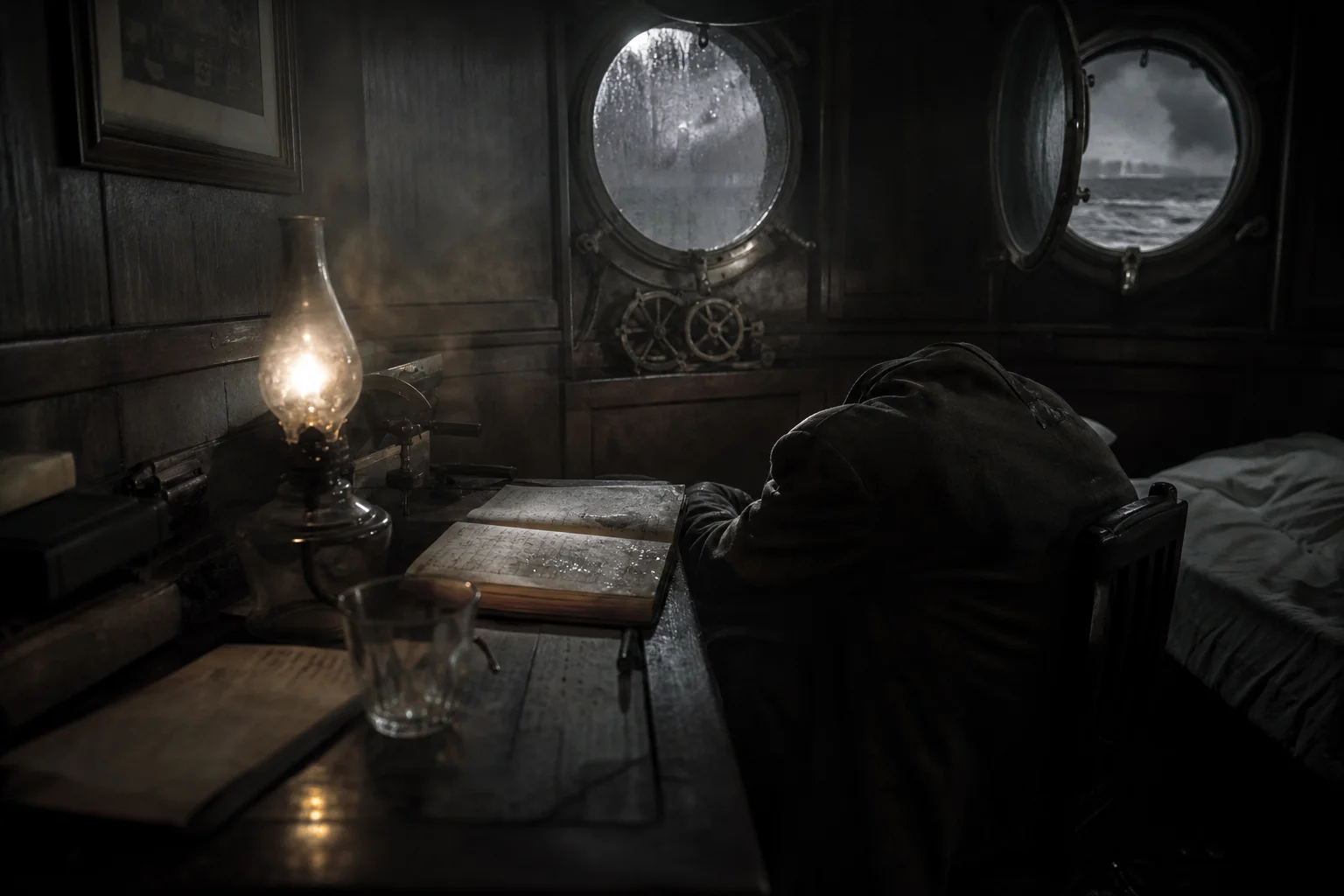
A pervasive, fog-thick gloom under an oil-lamped lighting profile. The humidity is high, with a salt-stained and cool temperature profile. Acoustic density is low, with sounds muffled by the fog, punctuated by the creaking timber of the ship and the distant, rhythmic churn of the sea.
 Investigation Constraints
Late 19th-century maritime technology: brass sextants, barometers, mechanical chronometers, coal-fired boilers, Morse code via signal lamps, handwritten logbooks, pneumatic tubes for internal ship communication, simple pin-tumbler locks, oil lanterns, and glass barometers. No electronics, engines are steam-powered, communication is via physical signal or written note.
✦ Related Cases ✦