The Ledger in the Gilded Wake
An independent investigator boards the opulent yacht 'The Gilded Compass' following the death of its owner, Arthur Vance, ruled an accident. The vessel's isolated world of maritime superstition, class-based debt, and accidental timeline contamination, created by the crew's panicked actions, must be untangled to isolate a single truth.
 Initial Crime Scene
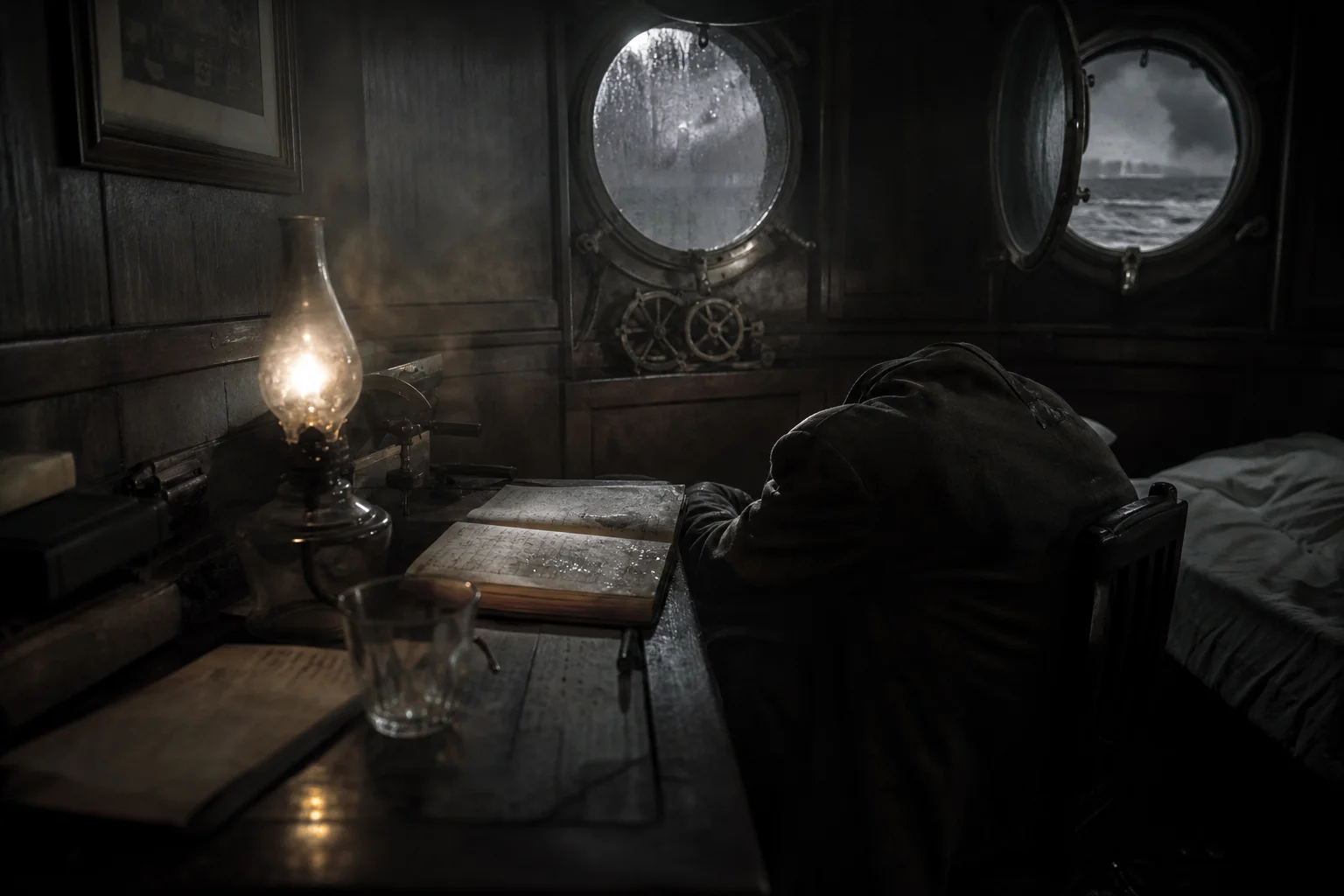
The lantern's sway casts a dizzying, moving shadow across the chart room's deep wood grain, its oily scent mixing with the metallic tang of brass from the chronometer housing. A distant, rhythmic creak from the hull timbers punctuates the silence, competing with the constant, low hum of the wind whipping through the rigging. Salt crystal deposits glitter on the brass fittings of the binnacle. The warp and weft of a stored canvas sail show distinct, mottled strain patterns. Waterline marks in the hull timbers form dark, permanent stains.
 Crime Scene Environment
The lighting profile is a low, yellow lamplight that creates deep, shifting pools of shadow and throws the salt-crusted surfaces into stark relief. The humidity and temperature profile is a constant, damp chill that clings to the skin, with the air heavy with the smell of brine, tar, and old paper. The acoustic density is a layered soundscape of the ship's groans, the whistle of wind in the rigging, and the steady, oppressive tick of the chronometer.
 Investigation Constraints
19th-century sailing technology: sextants, mechanical chronometers, mercury barometers, manual navigation charts, quill pens, wax seals, canvas and rope, hand-cranked bilge pumps, basic firearms (flintlock pistols, muskets). No electricity, telegraphs, or automated systems.
✦ Related Cases ✦