The Night Express Manifest
A private railway compartment on the London-to-Edinburgh express becomes the nexus of intersecting journeys. As the train travels through the night, the assigned spaces and movements of five passengers create a complex physical record, marked by professional duties, personal errands, and the precise logistics of private transport.
 Initial Crime Scene
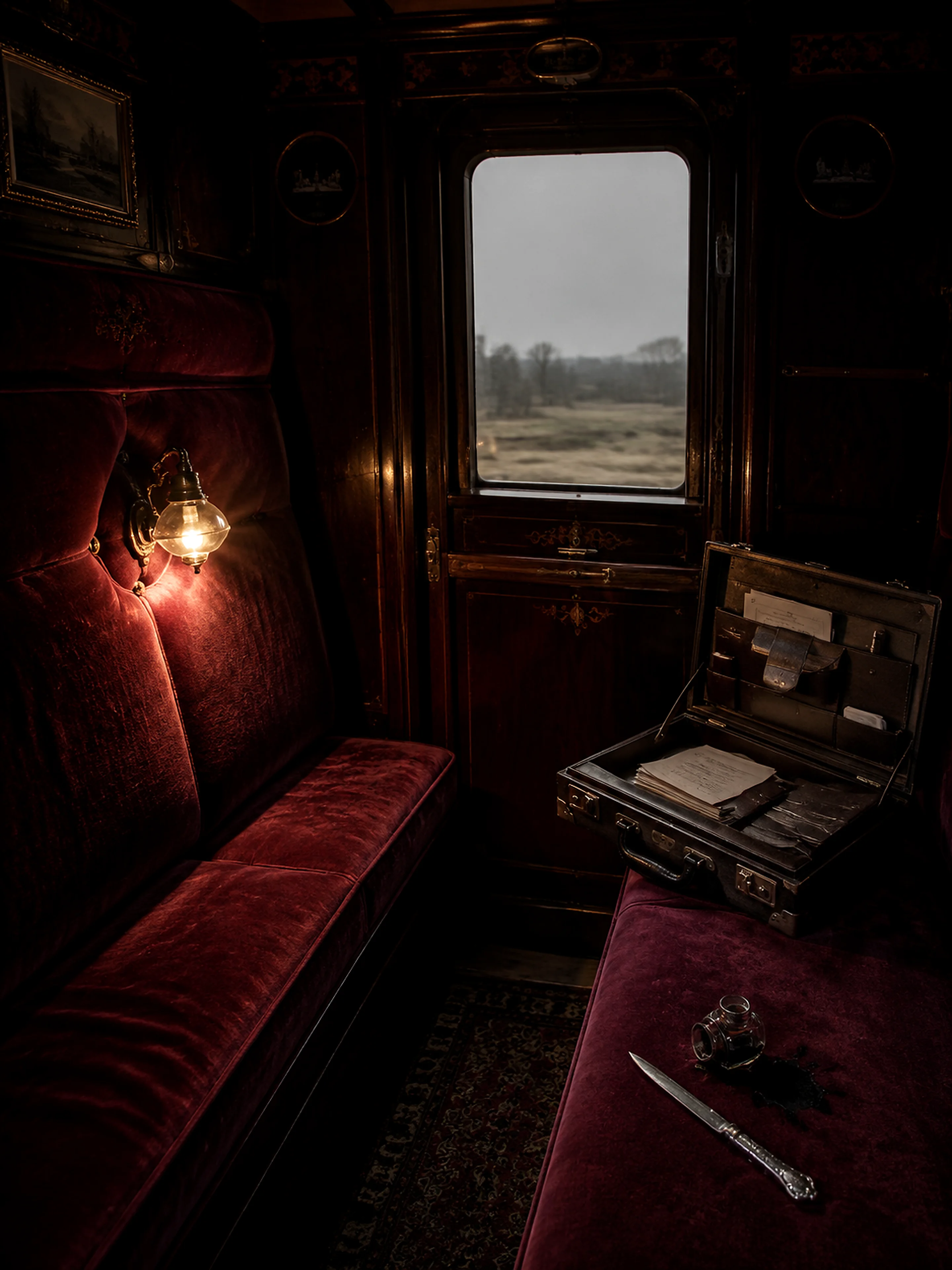
The gas lamp casts a hard, yellow circle on the claret velvet seat. A sharp scent of bay rum and old leather hangs in the still air, undercut by the faint, mineral smell of coal dust from the corridor. The rhythmic, metallic clatter of wheels on track fills the silence. A leather dispatch case sits open on the seat opposite, its contents askew. On the small table, a silver letter opener lies near an overturned inkwell, a dark ring staining the velvet beneath it.
 Crime Scene Environment
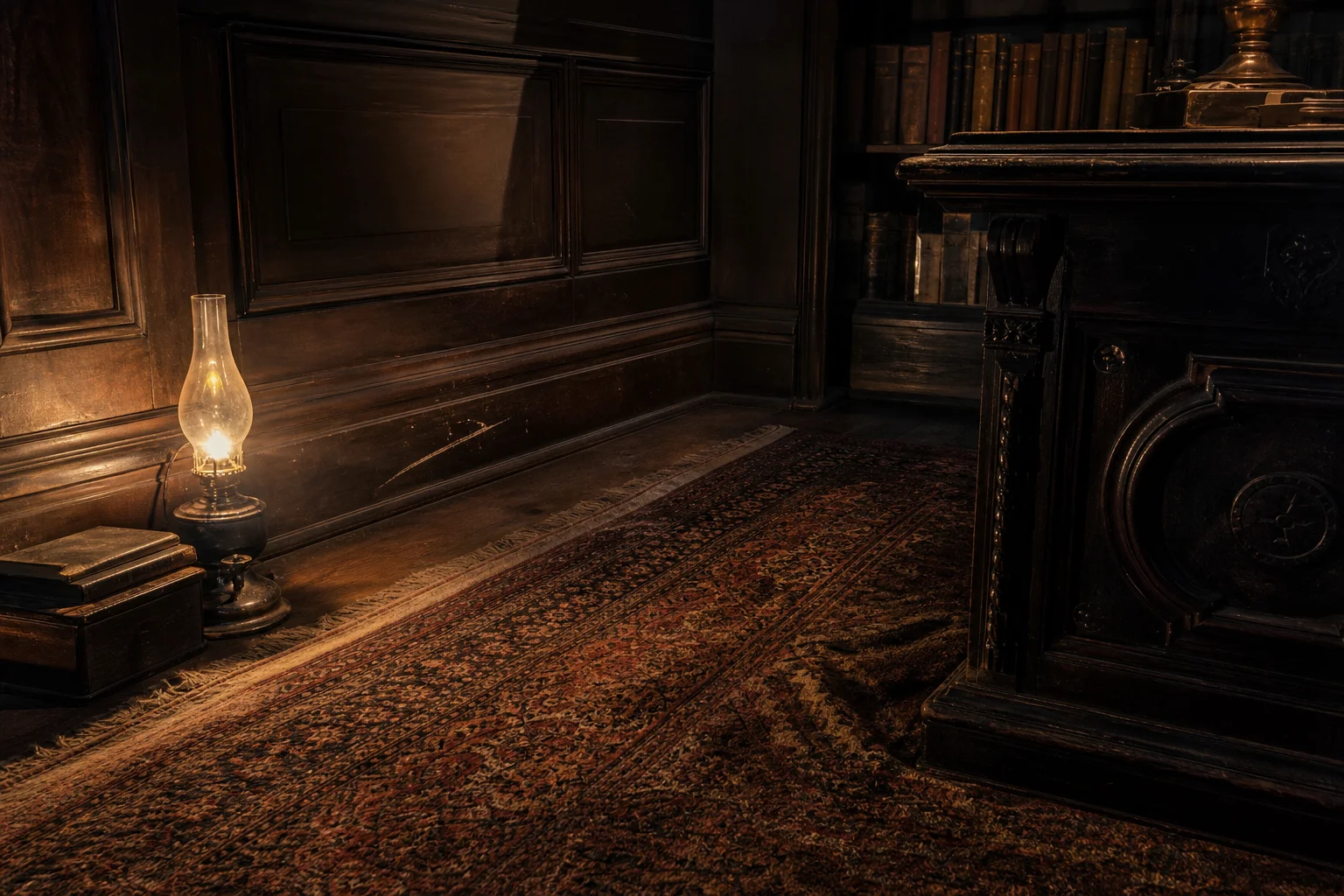
The compartment is enclosed in dark wood paneling, lit by a fixed gas lamp that creates deep, static shadows. The air is cool and dry, carrying the ambient vibration of the moving train. Acoustic density is low, dominated by the constant, rhythmic mechanical noise of the engine and wheels, with distant, muffled sounds from the corridor.
 Investigation Constraints
Edwardian-era mechanical locks (brass key-and-tumbler), handwritten ledger books (compartment assignments, dining car manifests), printed tickets (stub and counterfoil), brass speaking tubes to conductors, clockwork baggage car mechanisms, silver letter openers, wax seals, inkwells and blotting paper, gas lamp fixtures, manual signal telegraphs between stations.
✦ Related Cases ✦