The Nightingale's Secret
A patient dies during a medication administration event in a 3 West ward. The investigation is tasked with untangling conflicting staff statements and a series of non-violent, panicked actions that have contaminated physical evidence.
 Initial Crime Scene
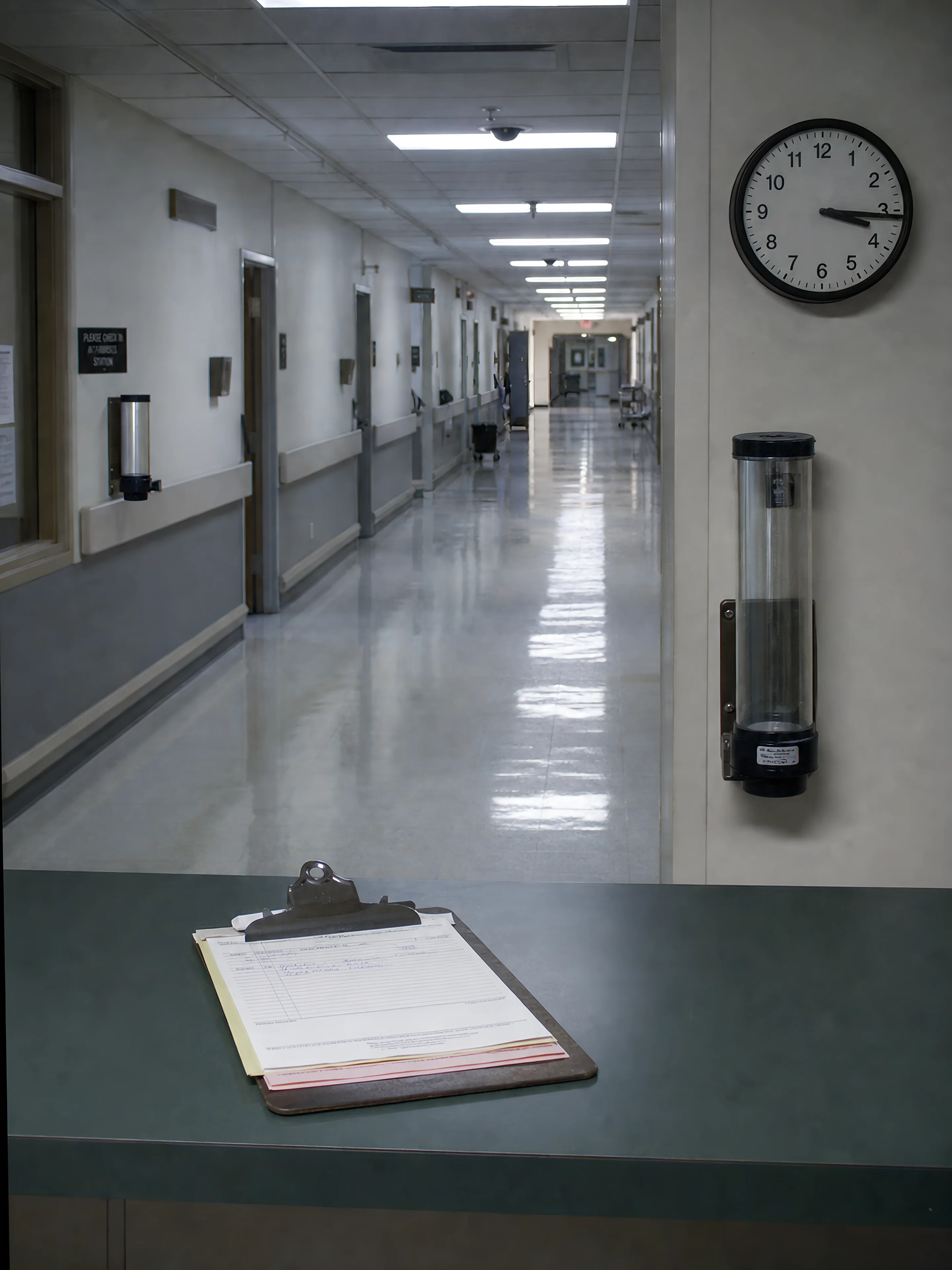
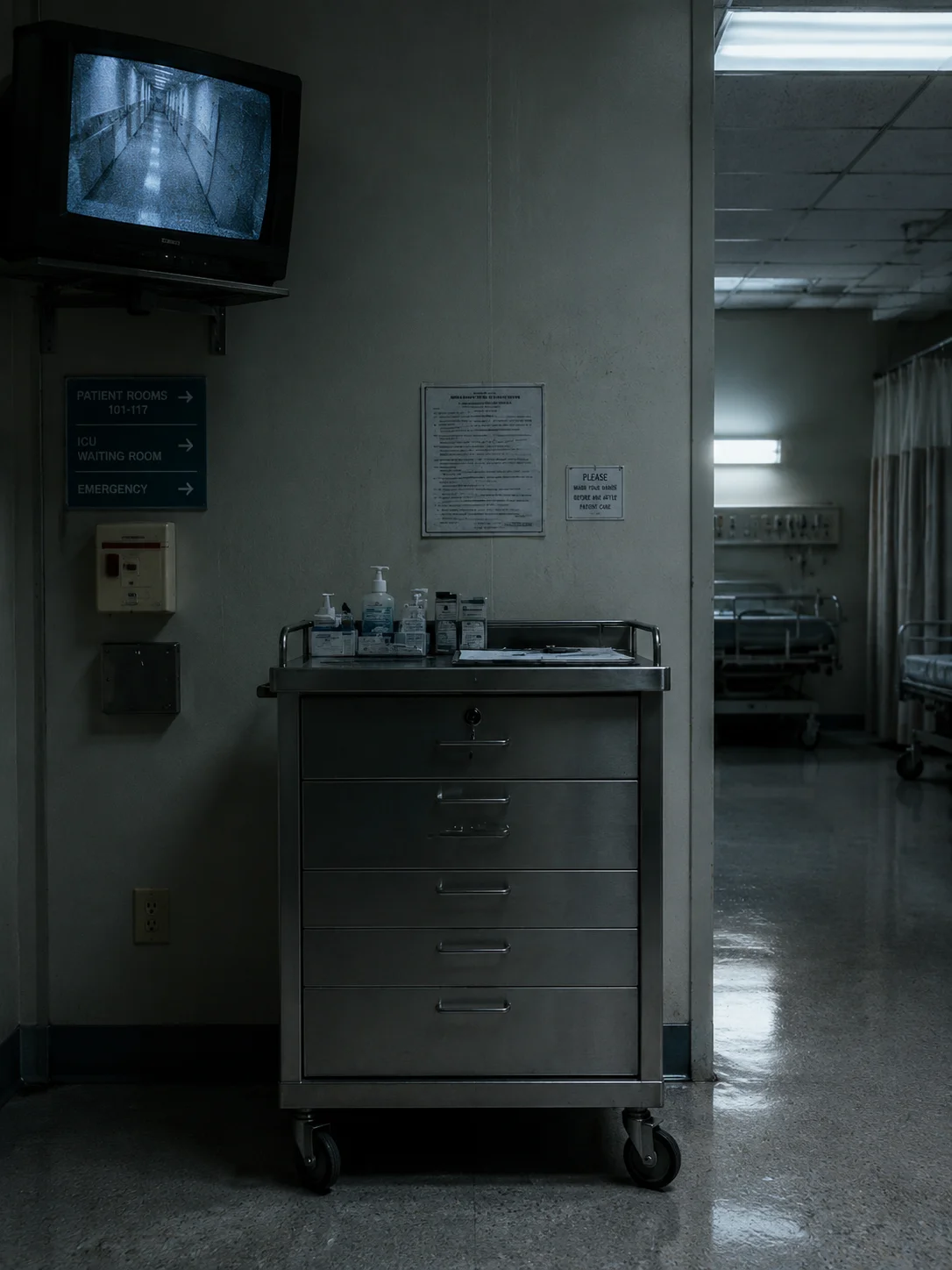
The fluorescent hum is the first sound that registers, a flat, institutional drone. The air carries a faint, chemical scent of solvent on linoleum. A medication cart sits against the wall, its keyed lock cylinder catching the sterile light, the metal showing a unique, directional scratch pattern. A VHS monitor in the corner displays a grainy, static-filled feed of an empty corridor.
 Crime Scene Environment
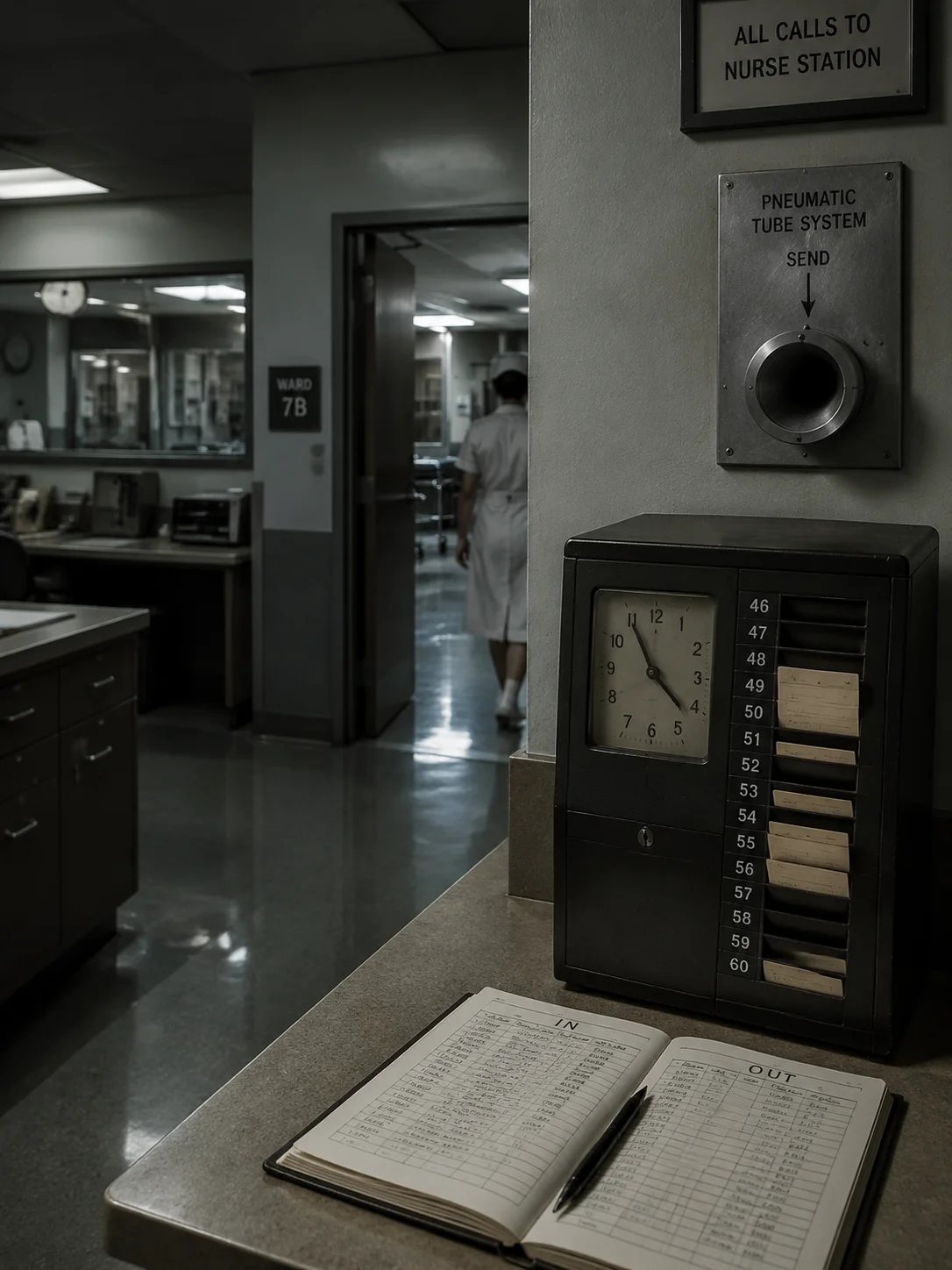
The environment is characterized by a sterile, clinical lighting profile from overhead fluorescents. The humidity is low, the air cool and dry. Acoustic density is minimal, punctuated by the hum of ventilation, the periodic whoosh of the pneumatic tube system, and the quiet rustle of paper.
 Investigation Constraints
Late 1990s to early 2000s hospital technology. This includes: paper-based medication administration records (MARs), handwritten physician order sheets, basic electronic patient monitoring systems (BP, pulse, O2 sat) with printouts, pneumatic tube system for lab samples, analog security camera footage on VHS tapes (low-resolution, limited angles), computer terminals with early EMR systems (prone to user error and data overwrite), simple keyed medication cart locks, and hospital paging systems.
✦ Related Cases ✦