The Paddington Compartment Incident
The death of a minor nobleman in a first-class compartment en route to London prompts an inquiry into the social environment of the evening train. Each passenger's timeline contains periods of uncorroborated activity, leading to multiple, conflicting personal narratives.
 Initial Crime Scene
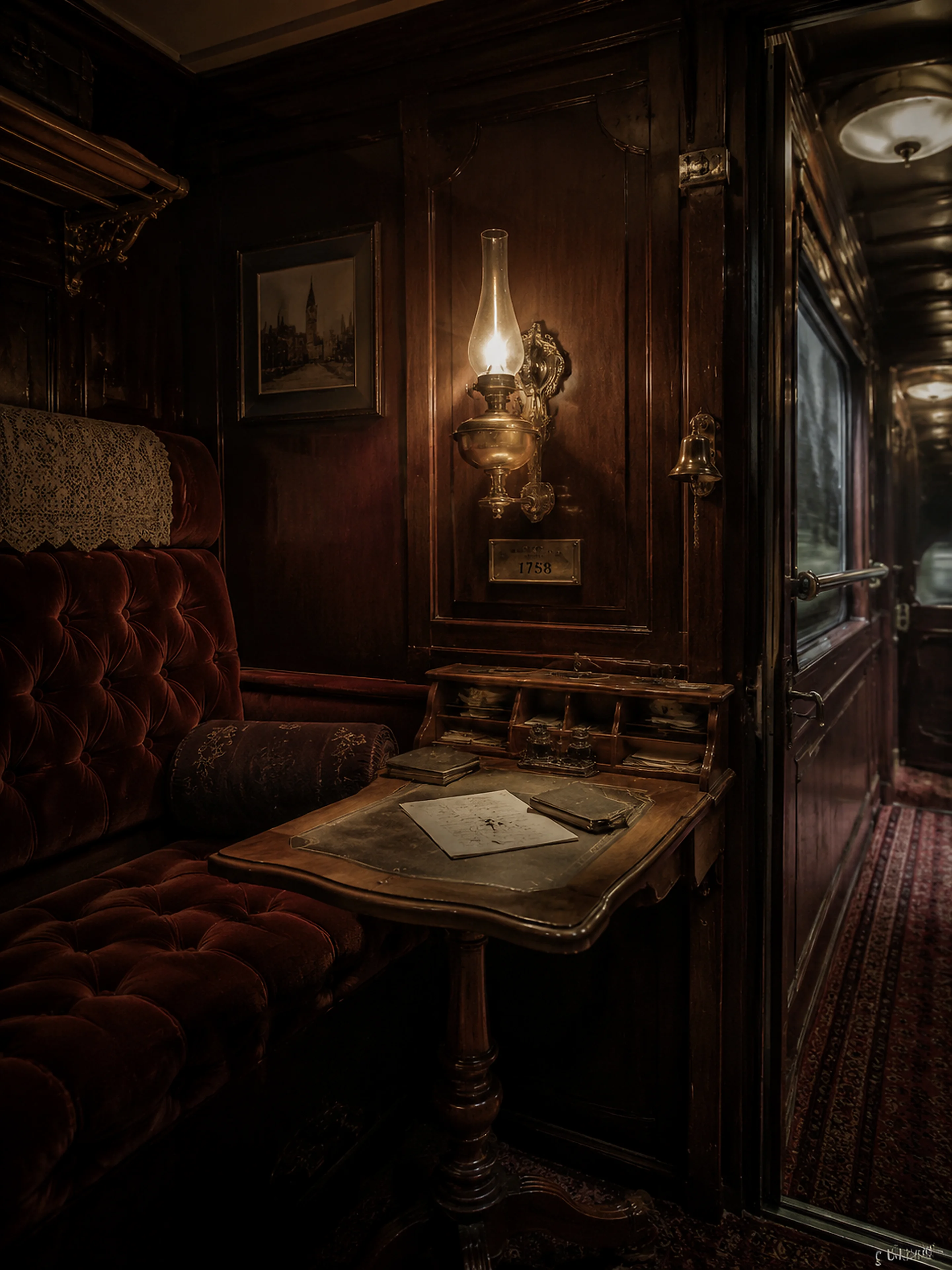
The compartment door swings open. A faint smell of old wool and leather polish hangs in the still air. The rhythmic clatter of wheels on track provides a constant, low thrum. The gas lamp sconce casts a warm, focused glow on the small mahogany writing table. A brass communication bell is mounted by the door, its mechanism silent. The velvet seat cushions hold a deep, permanent impression.
 Crime Scene Environment
The lighting is a focused, warm glow from gas lamps, creating sharp shadows. The humidity is low, the air dry with a cool draft from the corridor. Acoustic density is moderate, characterized by the pervasive wheel clatter, the distant hiss of gas lamps, and the occasional, muted chime of a communication bell from another car.
 Investigation Constraints
Mechanical clockwork, pneumatic tube messaging, hand-cranked telegraphs, physical ledger books, wax seal stamps, multi-tumbler brass padlocks, gas lamps, manual railway signal levers, leather-bound diaries, and handwritten correspondence.
✦ Related Cases ✦