The Pocket of Whispered Truths
An independent investigator is tasked with reconstructing the final hours of a deceased society hostess. Each guest present maintains a meticulously curated account of their evening, yet subtle inconsistencies in their personal effects and the room's arrangement suggest a layered narrative. The objective is to separate verifiable physical evidence from the self-preserving fabrications woven by those with personal stakes in the house's reputation.
 Initial Crime Scene
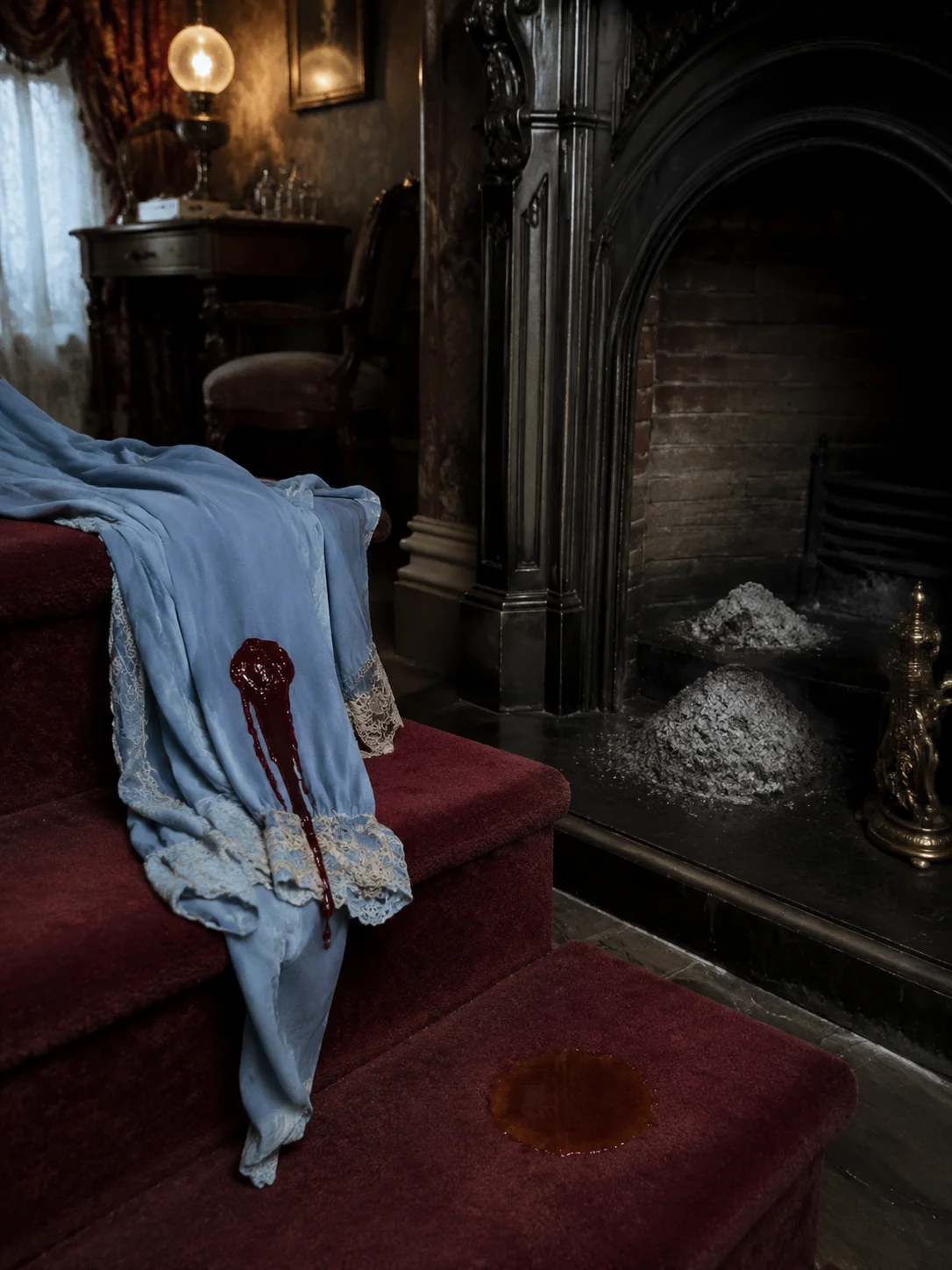
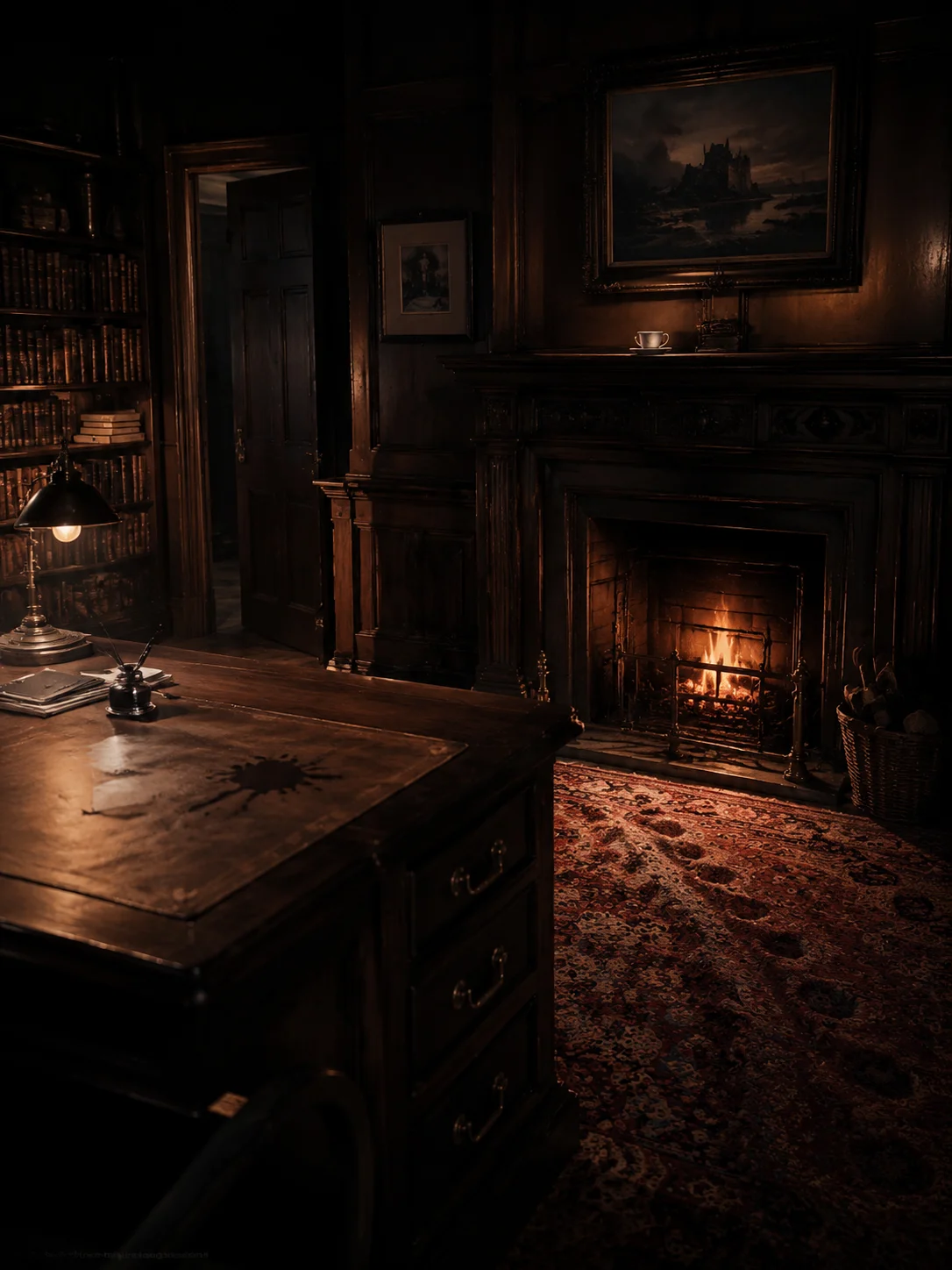
The scent of cold ashes and lavender mingled with a faint, acrid perfume hangs in the still air. A teacup rests on the mantelpiece, its surface perfectly still, reflecting the flickering lamplight. The room is dominated by a large mahogany writing desk, its leather blotter marked with a single, fresh ink stain. Dust motes dance in the slanting light, disturbed only by the deep, overlapping indentations in the thick Turkey rug that form a clear back-and-forth trail between the door and the hearth.
 Crime Scene Environment
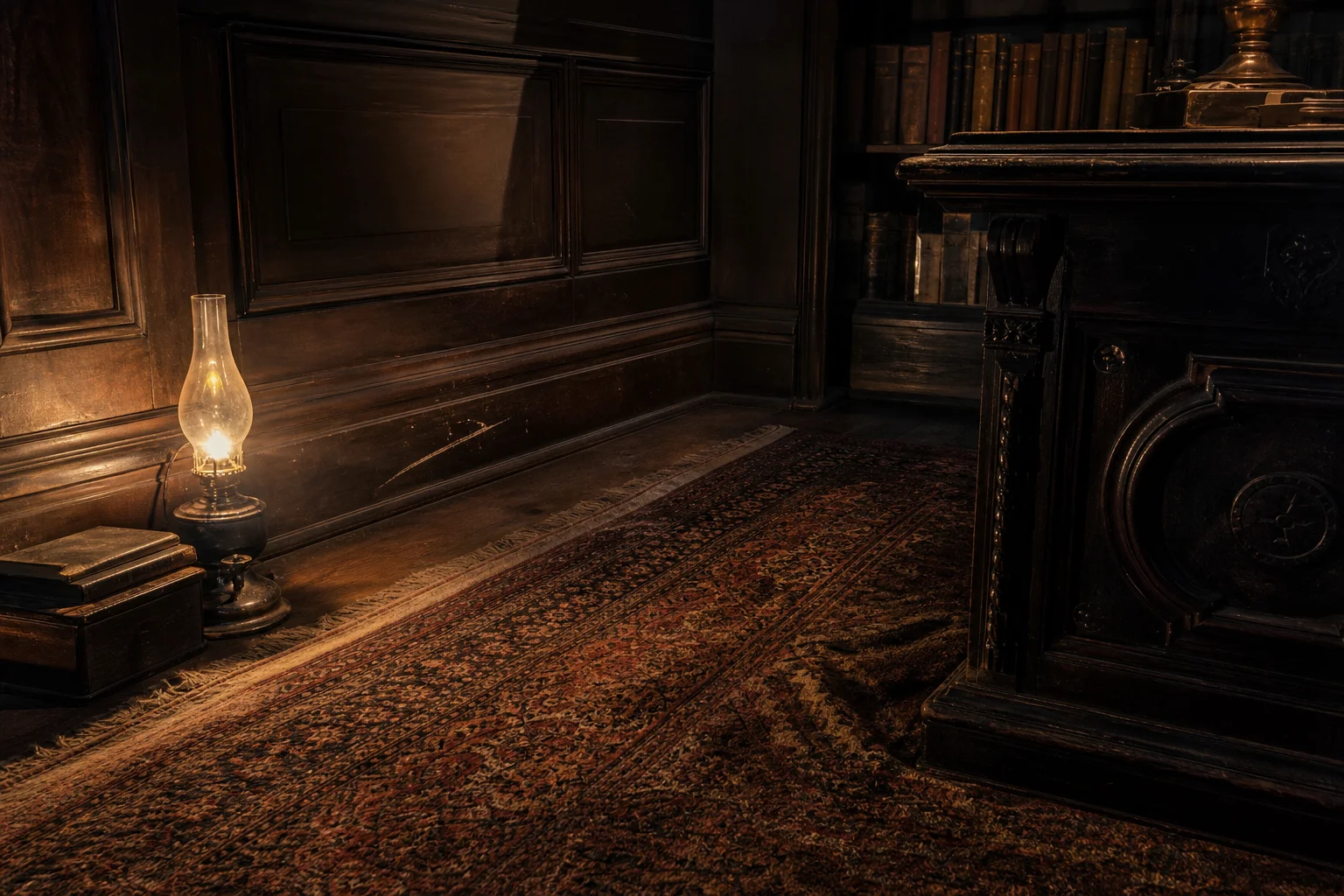
The interior is under low, warm lamplight, creating deep shadows in the oak-paneled corners. The air is cool and close, holding a faint humidity from the lingering scent of extinguished fires and damp wool. Acoustic density is high; the silence is profound, broken only by the rhythmic ticking of a mantel clock and the distant, muffled sounds of the household beyond the closed doors.
 Investigation Constraints
Communication via handwritten letters, telegrams, and whispered gossip. Personal effects are locked in strongboxes or hidden in clothing. Household security relies on hired staff, locked doors, and window latches. Information is stored in diaries, account ledgers, and social calling cards. Forensic analysis involves ink comparison, handwriting analysis, dusting for powder traces, and examination of fabric fibers.
✦ Related Cases ✦