The Procedural Labyrinth
An independent forensic auditor enters a prestigious teaching hospital to investigate a mislabeled cadaver. Initial documentation anomalies trigger a chain reaction of altered logs, contradictory witness statements, and environmental contaminants. Each staff member's actions to protect their professional standing create a dense network of procedural noise, obscuring the root cause and systemic vulnerabilities.
 Initial Crime Scene
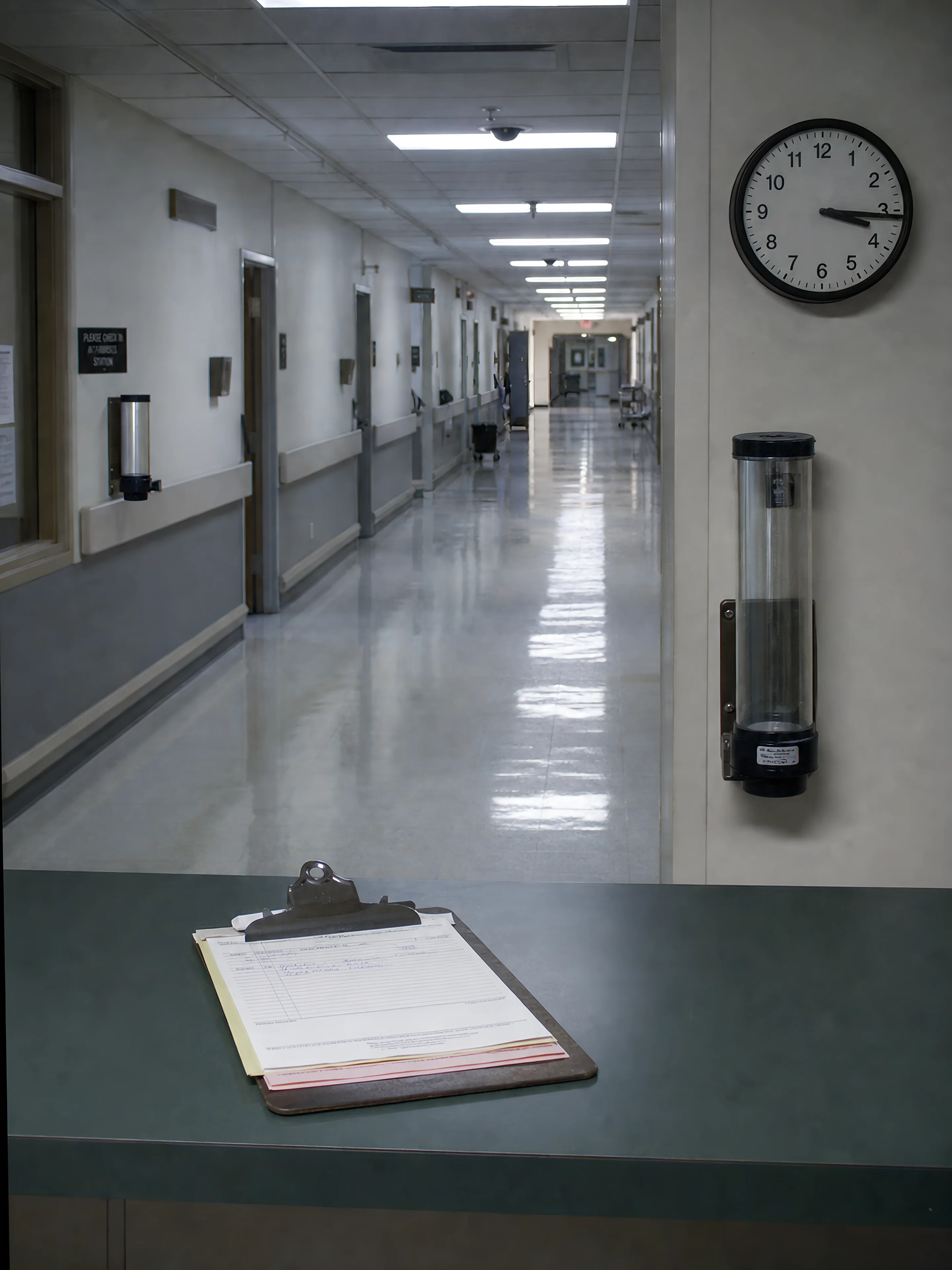
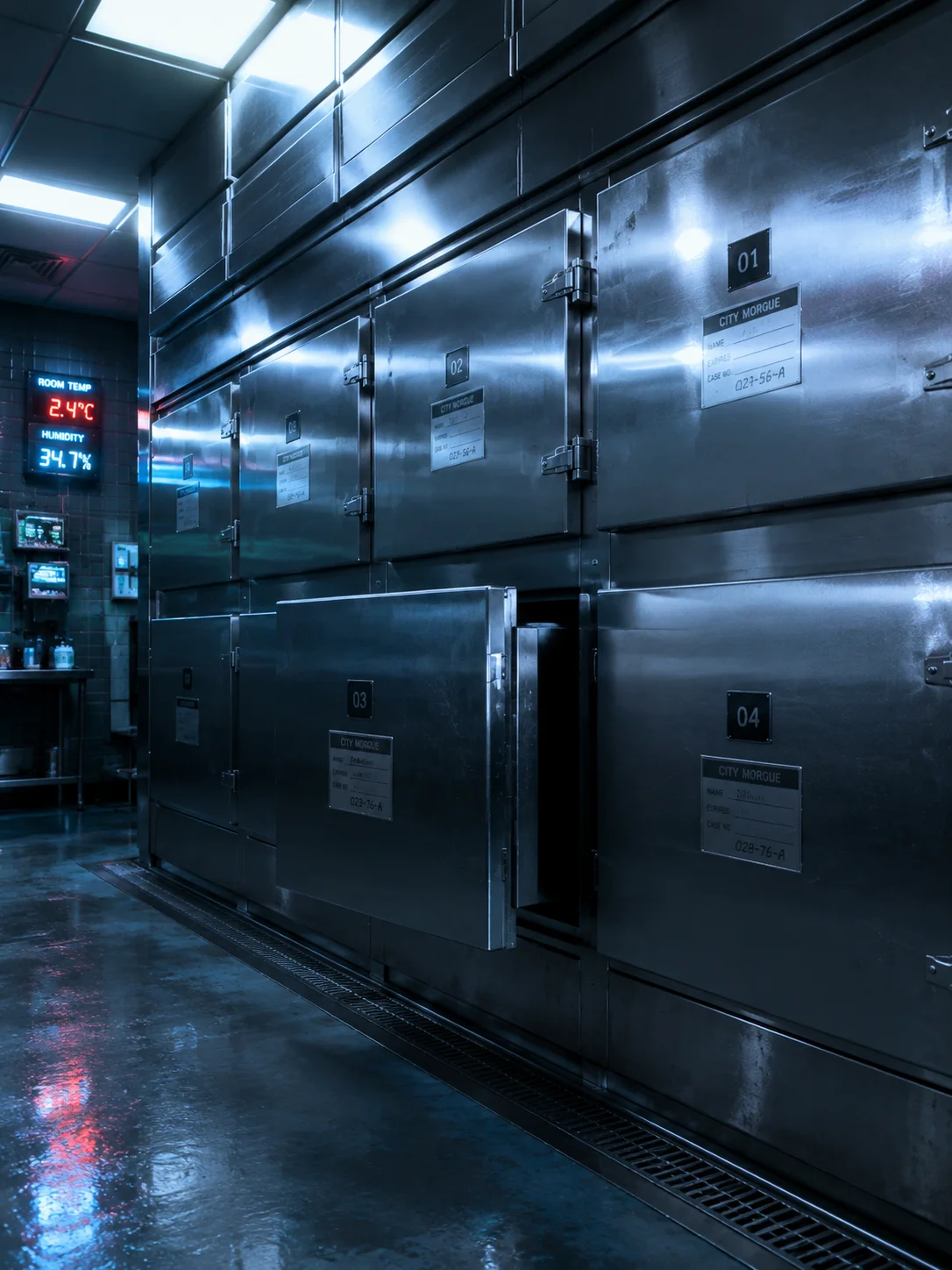
The fluorescent glare hums over sterile linoleum, casting a cold, blue-white light on the polished steel of the drawer fronts. The faint, distinct chemical odor of different preservation fluids taints the recycled air, a sharp tang against the antiseptic base. A consistent, low hum of ventilation fans underlies everything. The inconsistent gap between a morgue drawer seal and its metal frame is a visible, dark line in the otherwise seamless wall of refrigeration units.
 Crime Scene Environment
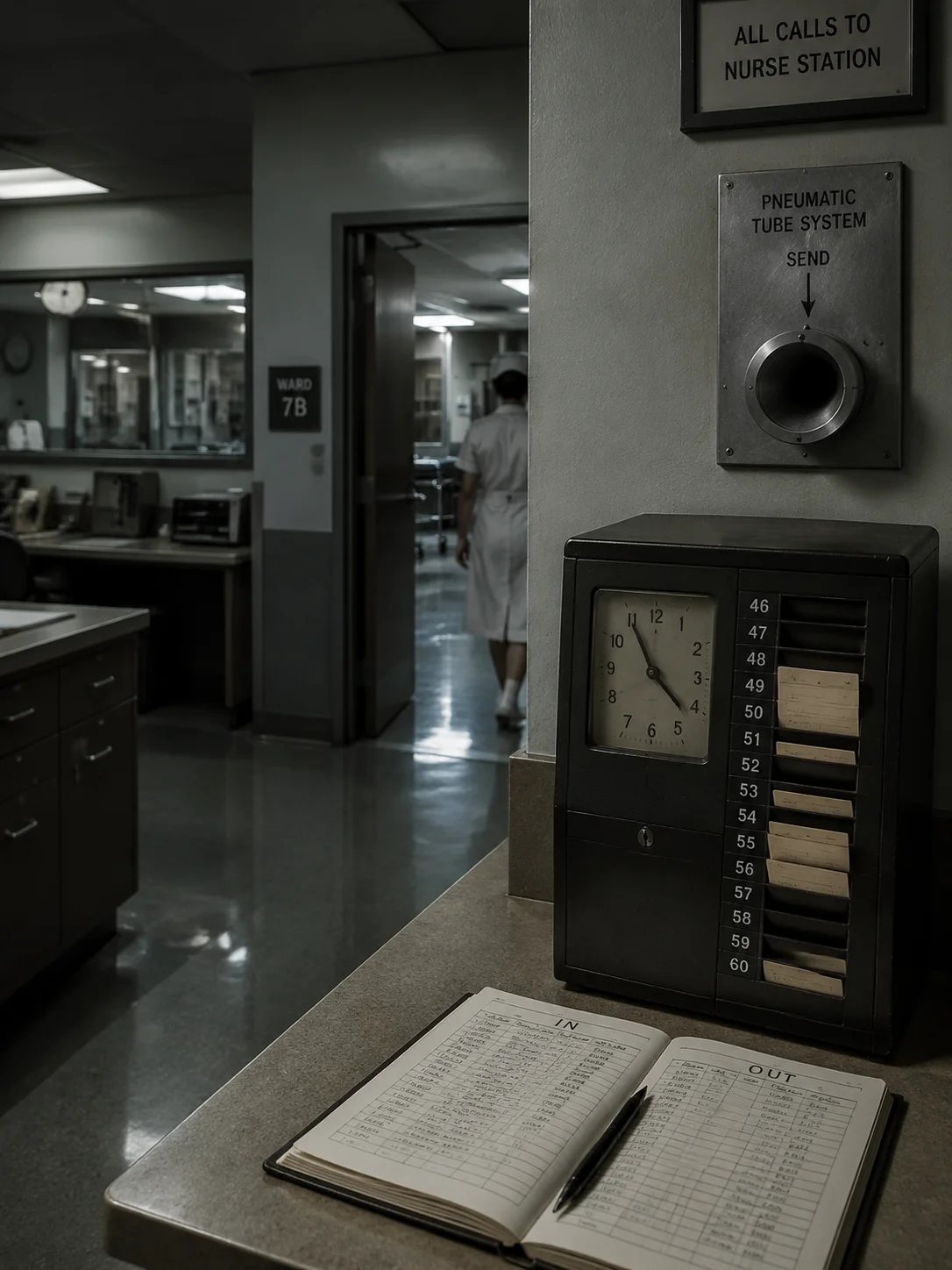
The initial environment is defined by a constant fluorescent glare, creating stark shadows and eliminating nuanced detail. The air maintains a cool, dehumidified state, a sterile chill against exposed skin. Acoustic density is low, characterized by the persistent hum of ventilation fans, the occasional whir and click of a distant dot-matrix printer, and the pneumatic whoosh of tube carriers in adjacent corridors. All textures are clinical, sterile, and procedural.
 Investigation Constraints
Late 20th-century analog-digital hybrid systems: pneumatic tube message carriers for hospital labs, early networked computer terminals with monochrome CRT displays for patient records, microfiche archives, paper-based death certificates with carbon copies, analog CCTV with magnetic tape loops, digital fingerprint scanners for restricted pharmacy access, electronic door logs for morgue refrigeration units, barcode scanners for specimen tracking, simple intercom systems, and digital pagers. No internet, no mobile phones, no cloud computing.
✦ Related Cases ✦