The Residue of Winter
A landowner is discovered in a state of sudden, permanent stillness within a sealed room that holds an unnatural cold. Family members and household staff, each carrying private histories of obligation and debt, are present. A series of physical disturbances and personal disclosures create a complex record that invites multiple interpretations.
 Initial Crime Scene
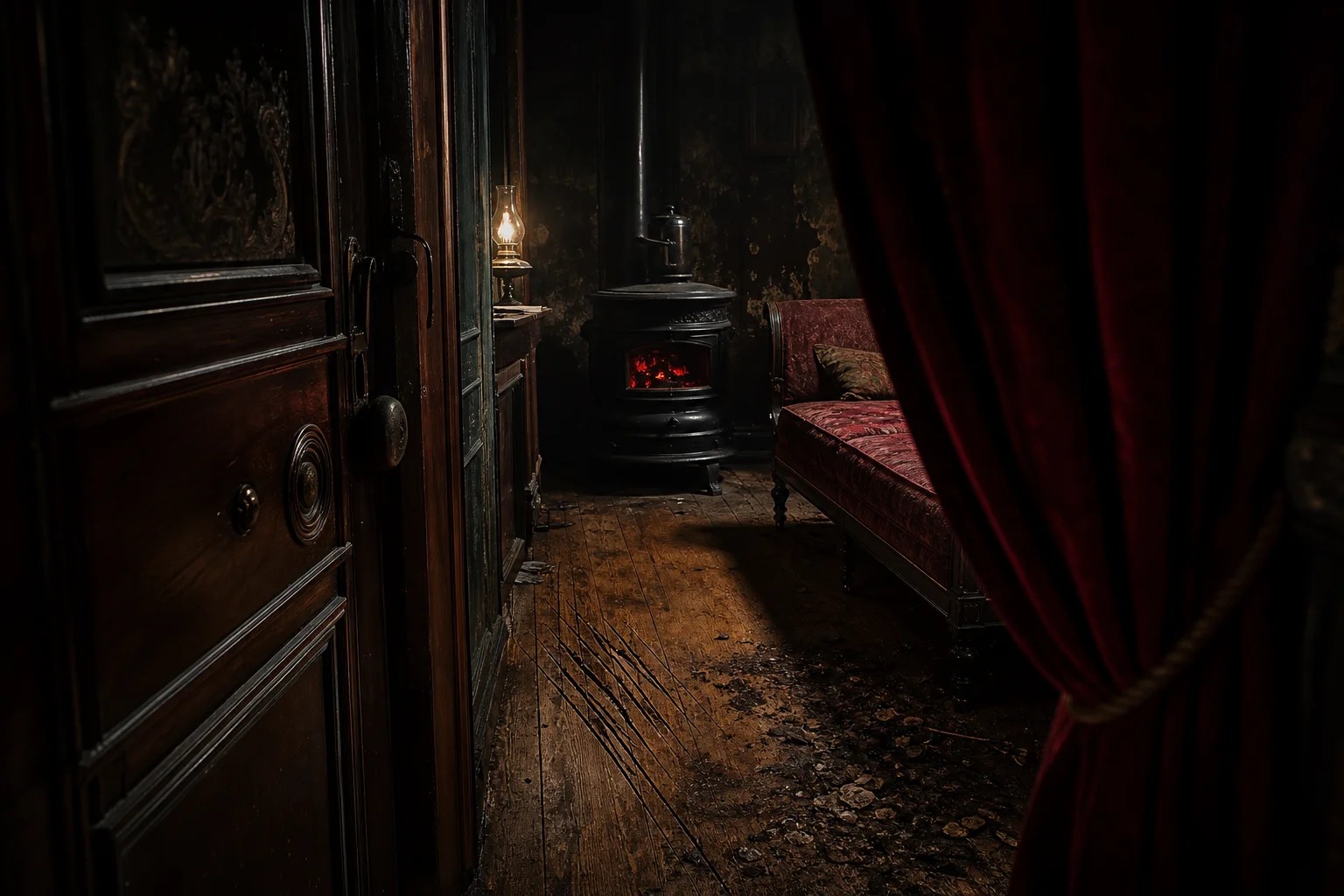
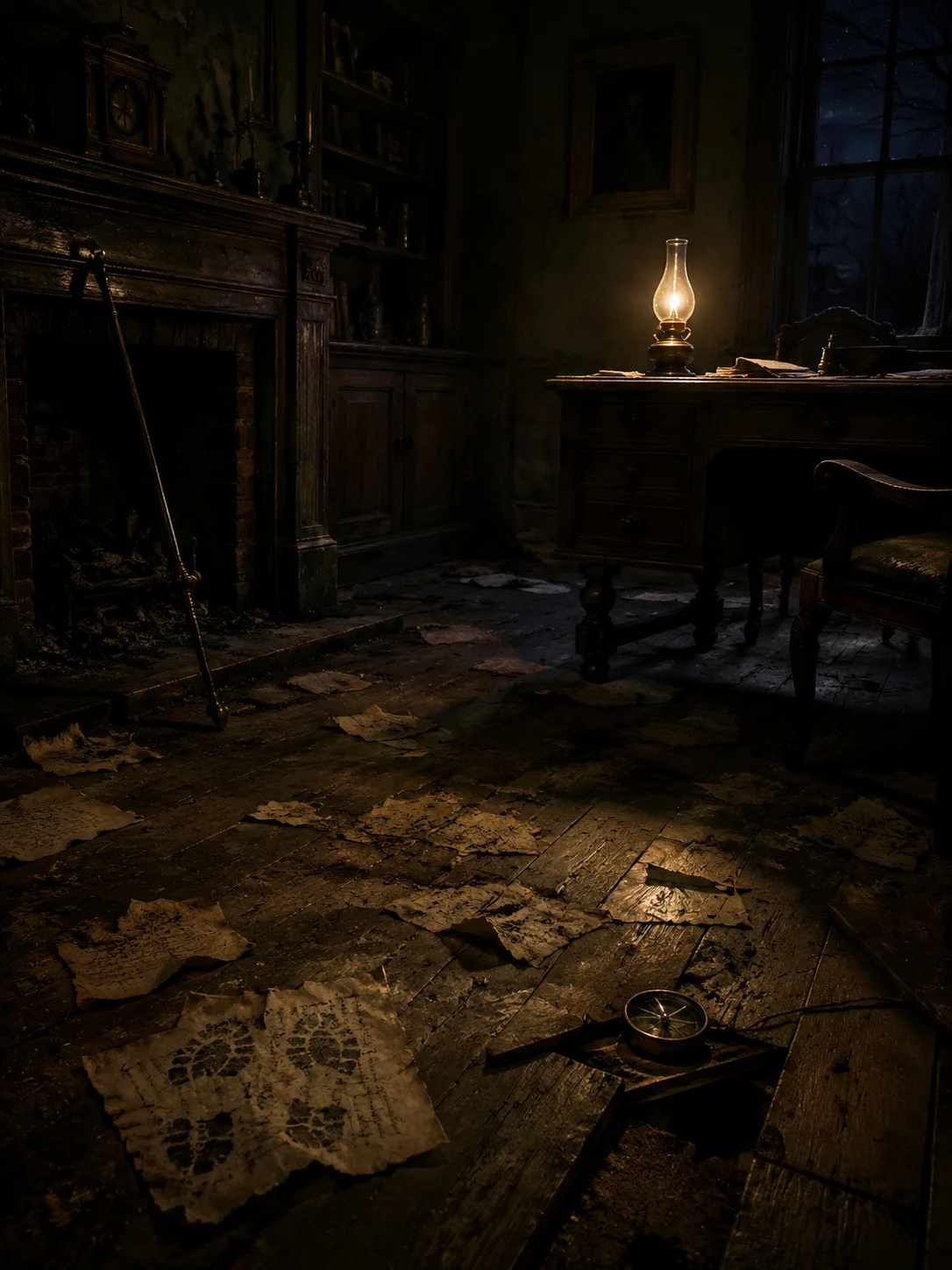
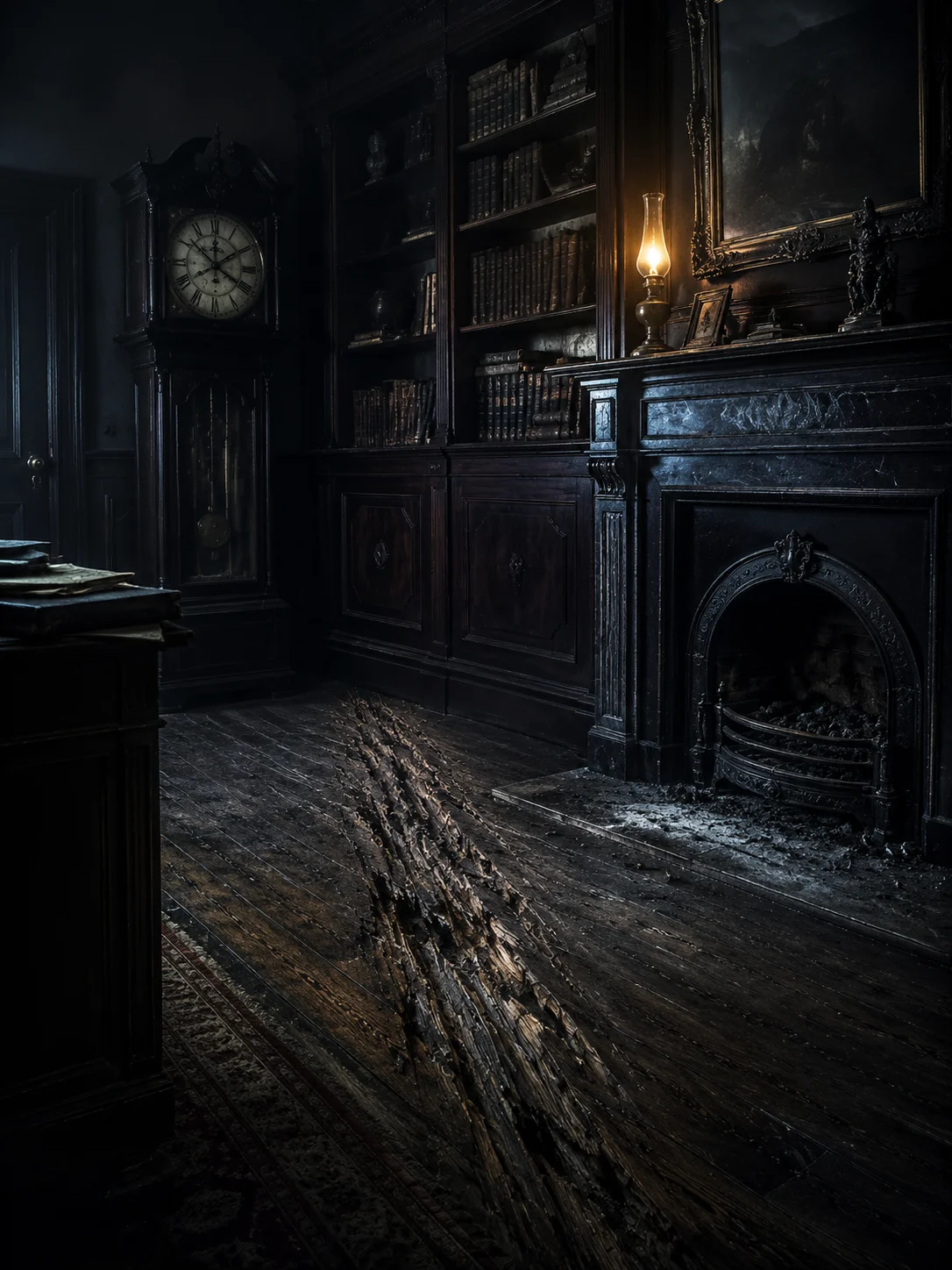
The first thing is the smell: sharp, like mineral dust and old metal, beneath the cloying scent of dried flowers. It cuts through the air. A grandfather clock's pendulum is silent, its hands frozen. On the floor, deep, splintered gouges run from the center of the room to the cold fireplace hearth. The air itself feels heavy and cool, clinging to the skin.
 Crime Scene Environment
The room is lit by a single kerosene lamp, casting long, wavering shadows that make the dark oak shelves seem to breathe. The air is dry and carries a persistent, unnatural chill, particularly near the stone hearth. Every sound—the creak of a board, the shift of a coat—is sharp and isolated in the dense, dusty quiet.
 Investigation Constraints
Late 19th century frontier technology. Tools include hand-crank telegraphs, kerosene lamps, mechanical clocks with pendulums, hand-drawn maps, leather-bound ledgers, wind-up phonographs for recorded sound, and basic hydraulic or pneumatic systems in mines or large estates. No electricity, radio, or digital systems.
✦ Related Cases ✦