The Sterile Audit
An independent forensic specialist enters a prestigious urban hospital as an external auditor. The investigation centers on a discrepancy involving a high-potency medication. The audit must reconcile the official records, physical evidence, and the testimony of the medical staff.
 Initial Crime Scene
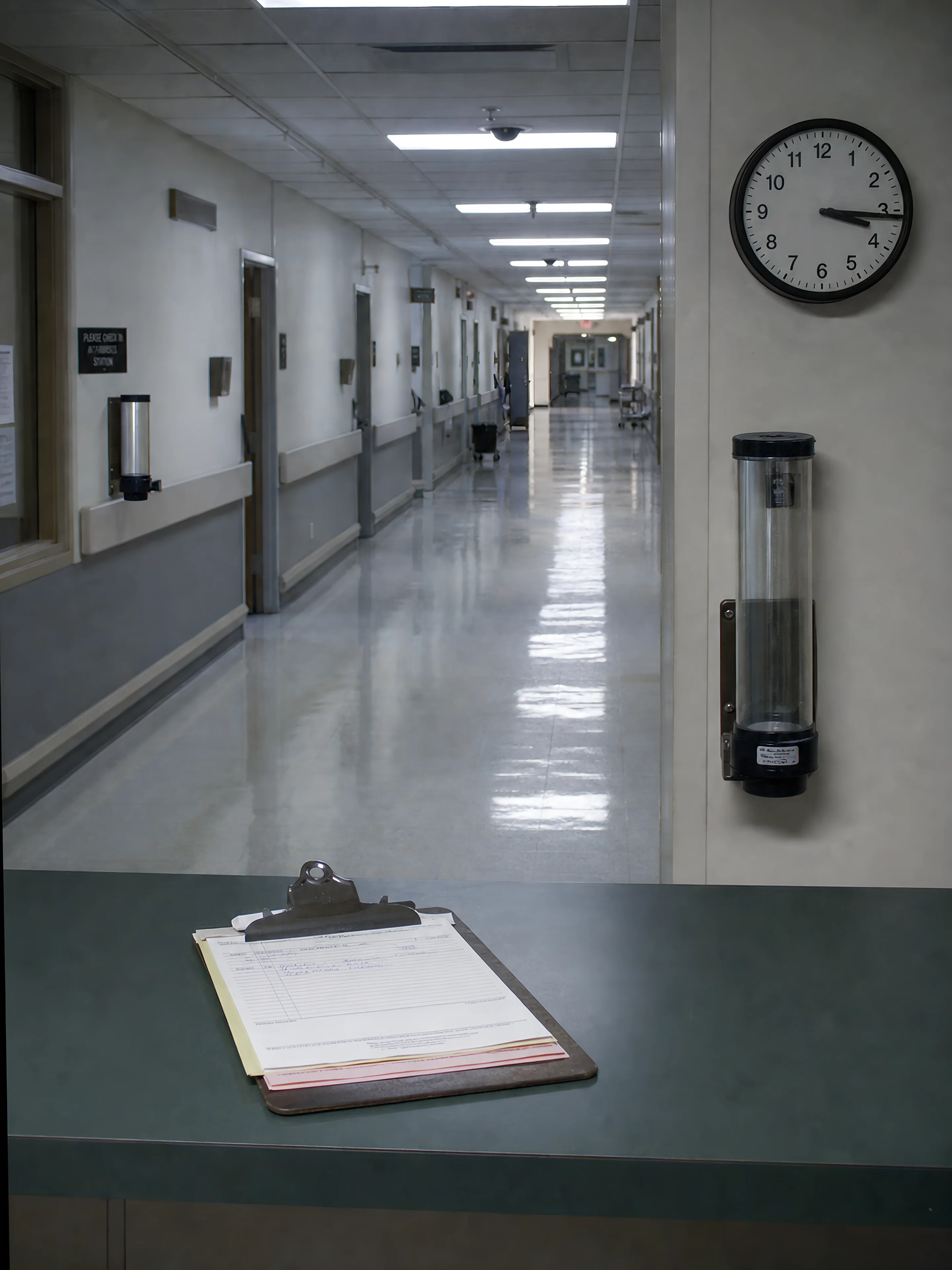
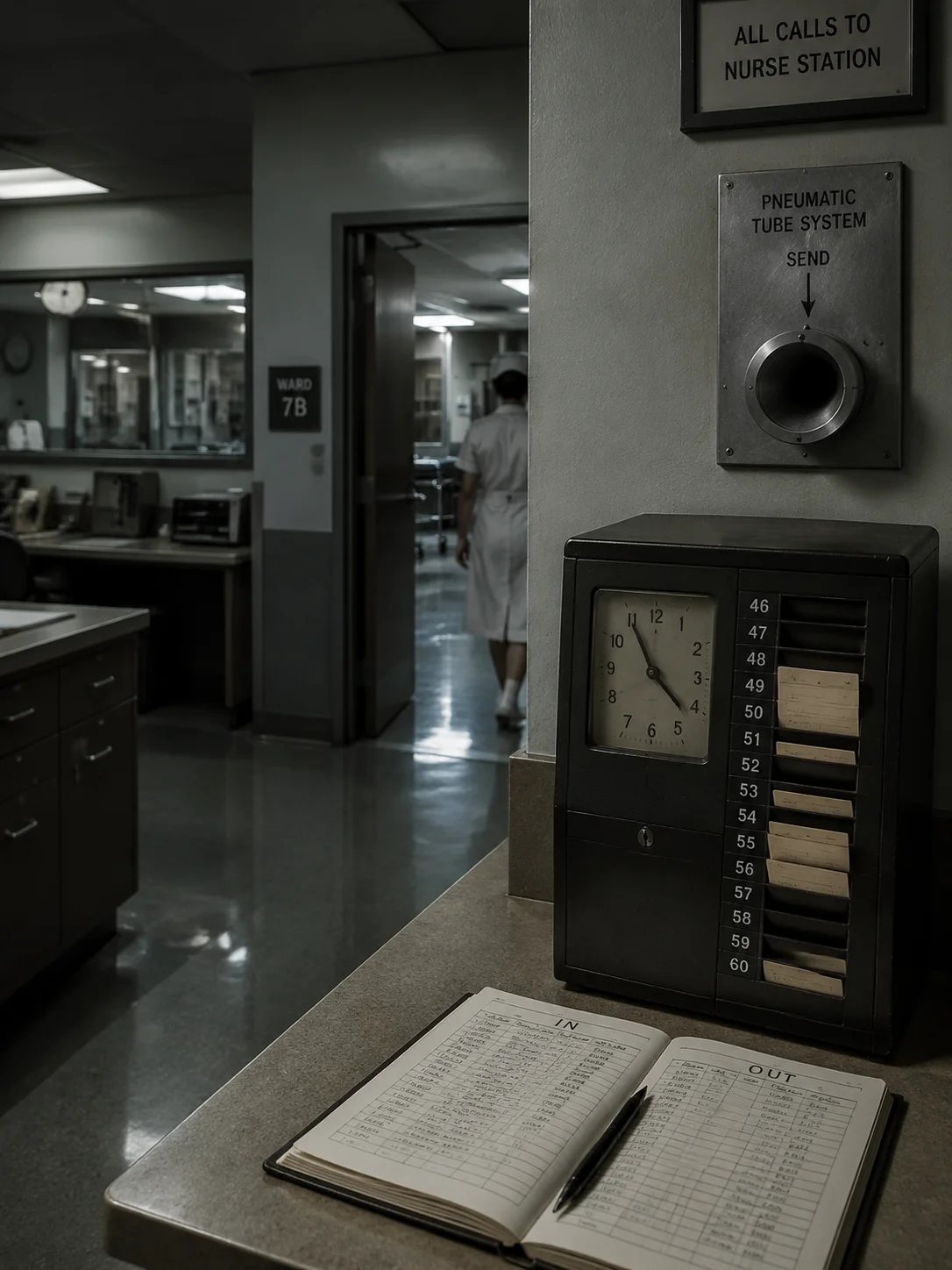
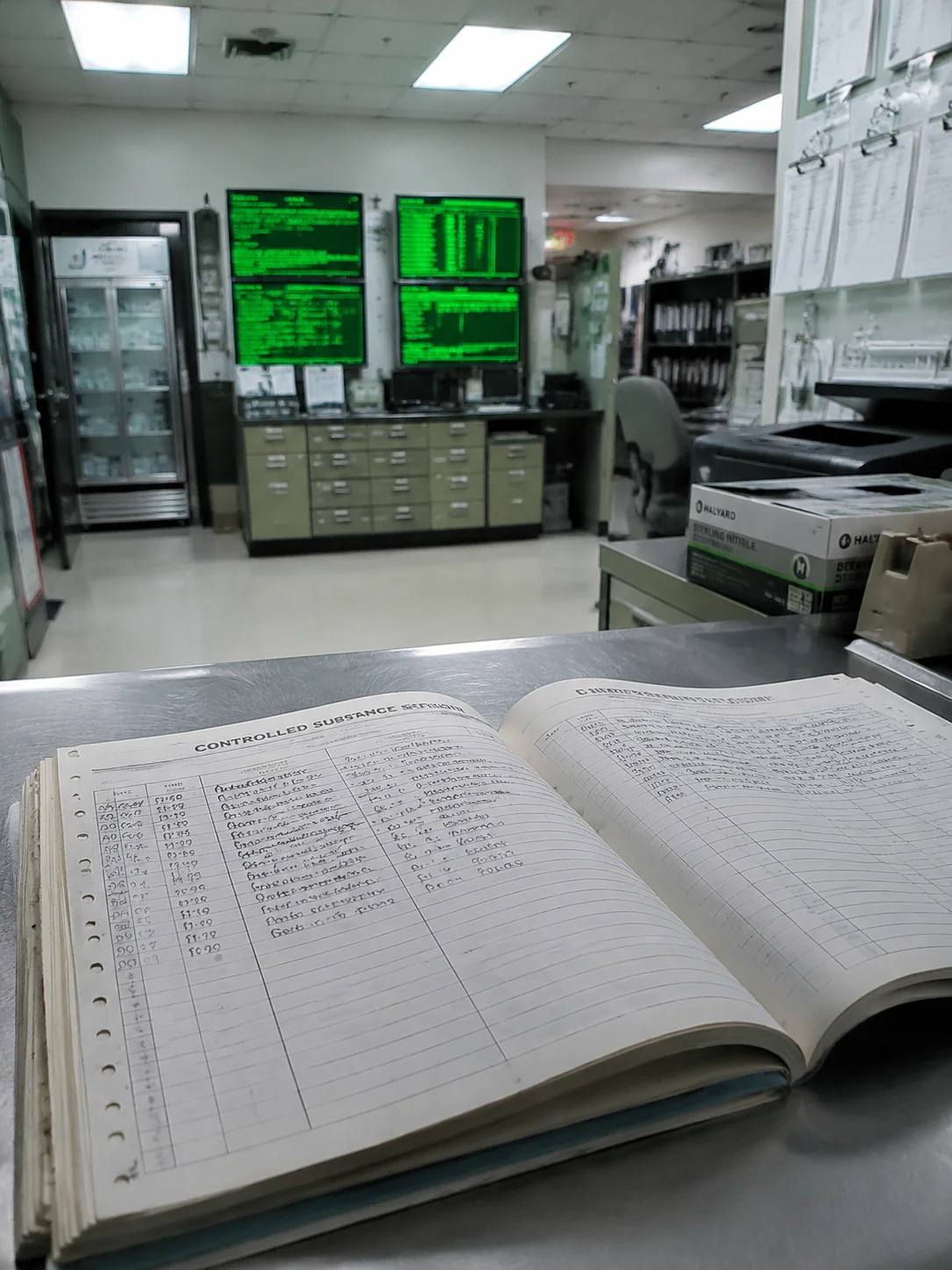
The antiseptic tang of ammonia and disinfectant hits you first, a sterile assault on the senses. A persistent, low hum comes from a bank of green-screen monitors in an adjacent office. The weight of a mechanical key turning in a lock echoes from a distant corridor. Your gaze lands on the open pages of a controlled substance logbook on the counter, the carbon-copy impressions crisp and dark. The air carries the hiss and thud of a pneumatic tube system, a sound that seems to vibrate through the linoleum floor.
 Crime Scene Environment
The lighting profile is a harsh, shadowless fluorescent glare from ceiling fixtures and the green-screen glow of early digital terminals. The humidity is low and controlled, with a cool, dry temperature maintained by the central system. Acoustic density is low but constant, dominated by the muted hum of ventilation, the intermittent hiss-thud of pneumatic transport, and the distant, sharp click of mechanical locks.
 Investigation Constraints
Standard analog and early digital hospital systems: pneumatic tube transport for samples, hand-written patient charts with carbon copies, mechanical medication cart locks with numbered keys, wall-mounted intercoms, manual logbooks for controlled substances, basic desktop terminals for patient admission records, payphones, and personal pagers. No internet, wireless, or advanced biometrics.
✦ Related Cases ✦