The Sterile Protocol
A patient is found deceased inside an MRI suite following a routine scan. The diagnostic image archived in the PACS server contains a localized signal void anomaly. An audit of biometric door access logs, pharmaceutical transaction records, and digital data trails reveals multiple timestamp discrepancies and overwrites across the hospital's technical systems.
 Initial Crime Scene
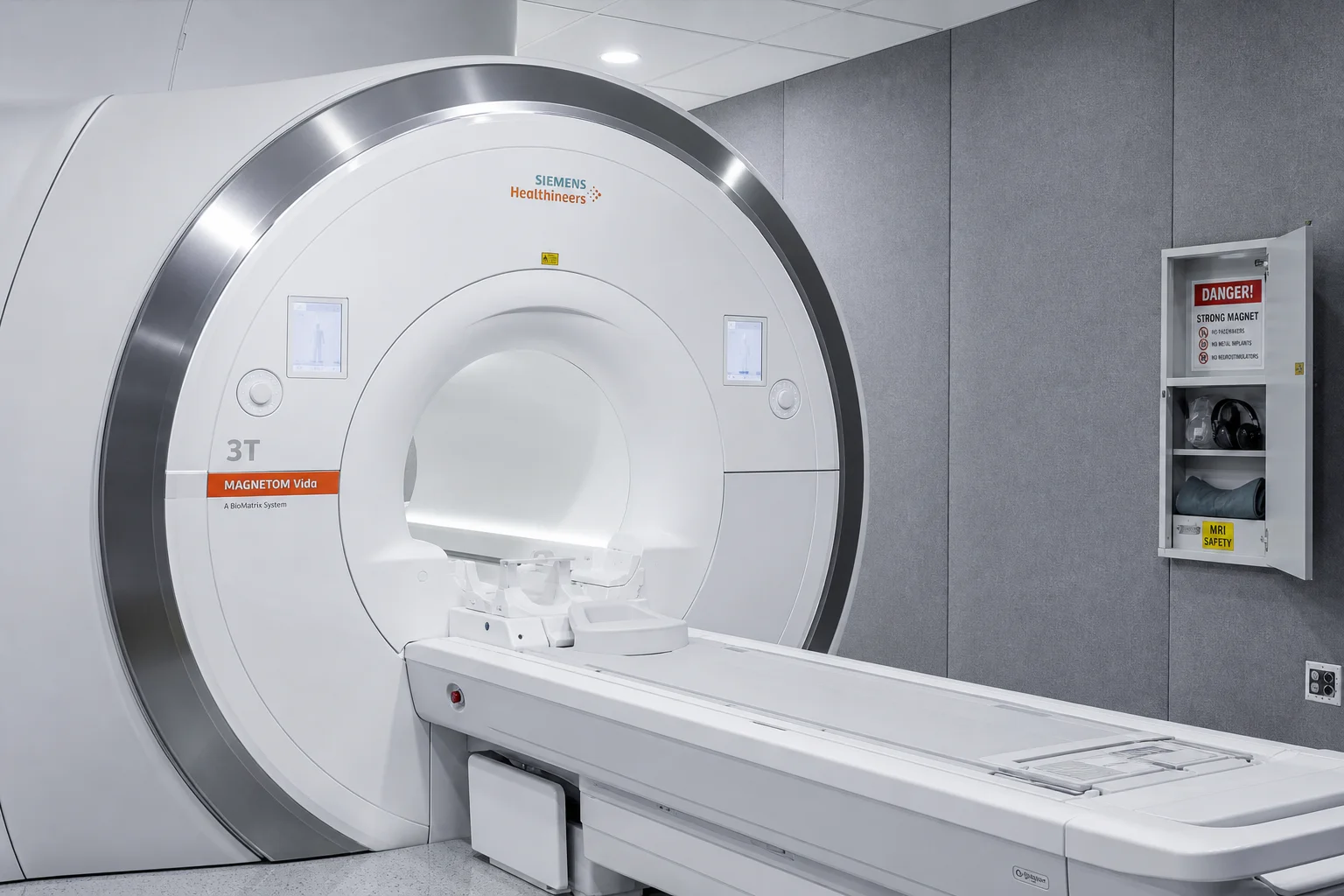
The fluorescent hum washes over the cold, sterile air as you cross the threshold. A faint metallic tang of ozone pricks your nostrils. The massive white bore of the 3T scanner dominates the room, its polished steel band gleaming under the shadowless light. Textured grey acoustic panels line the walls, absorbing sound into a sterile whir. Your gaze lands on a wall-mounted radiation safety kit, its door slightly ajar.
 Crime Scene Environment
A pervasive clinical sterility defines the space. The lighting profile is uniform, shadowless fluorescent glare. The air is cold and dry, conditioned to a precise humidity, carrying antiseptic tension. Acoustic density is low; the environment is designed to muffle external sounds, creating a contained, machine-whir ambiance.
 Investigation Constraints
1.5T and 3T closed-bore MRI scanners with PACS archival, hospital intranet with basic firewall, biometric door access logs (card-swipe, not retina), landline telephones, pagers, physical paper patient charts (EMR exists but is primitive), basic toxicology screens, local police CAD system, no advanced AI or real-time facial recognition. Data is siloed, logs are timestamped but not cryptographically secure.
✦ Related Cases ✦