The Sterile Transaction
A patient death in a private hospital's medical-surgical unit triggers a forensic review of conflicting paper and electronic records. The investigation maps the actions of staff, administrators, and a benefactor across the facility during a critical shift change.
 Initial Crime Scene
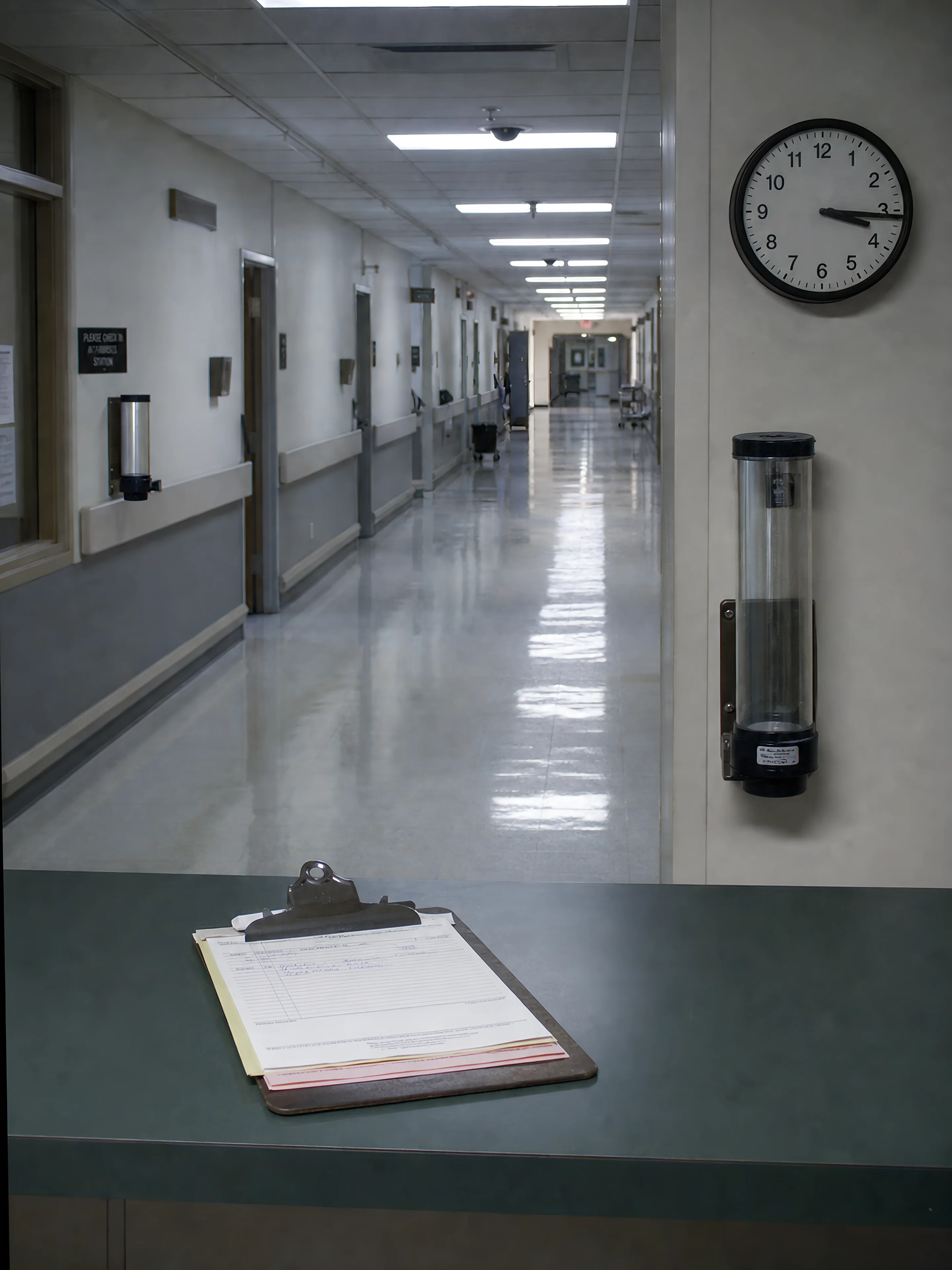
Your gaze settles on the medication cart's stainless-steel surface, reflecting the corridor's stark fluorescent glare in a distorted rectangle. The air carries the distinct chemical tang of isopropyl alcohol. From the nursing station, the persistent low hum of the EMR server room presses against the silence. A muted cardiac monitor beeps steadily from a nearby room, its rhythm a clinical counterpoint to the sterile quiet.
 Crime Scene Environment
The environment is defined by a clinical, institutional atmosphere under uniform fluorescent lighting that eliminates shadow. The air is cool and dry, carrying a sterile, bureaucratic quality. Acoustic density is low, characterized by isolated, rhythmic electronic beeps and the constant, low-frequency hum of data processing systems.
 Investigation Constraints
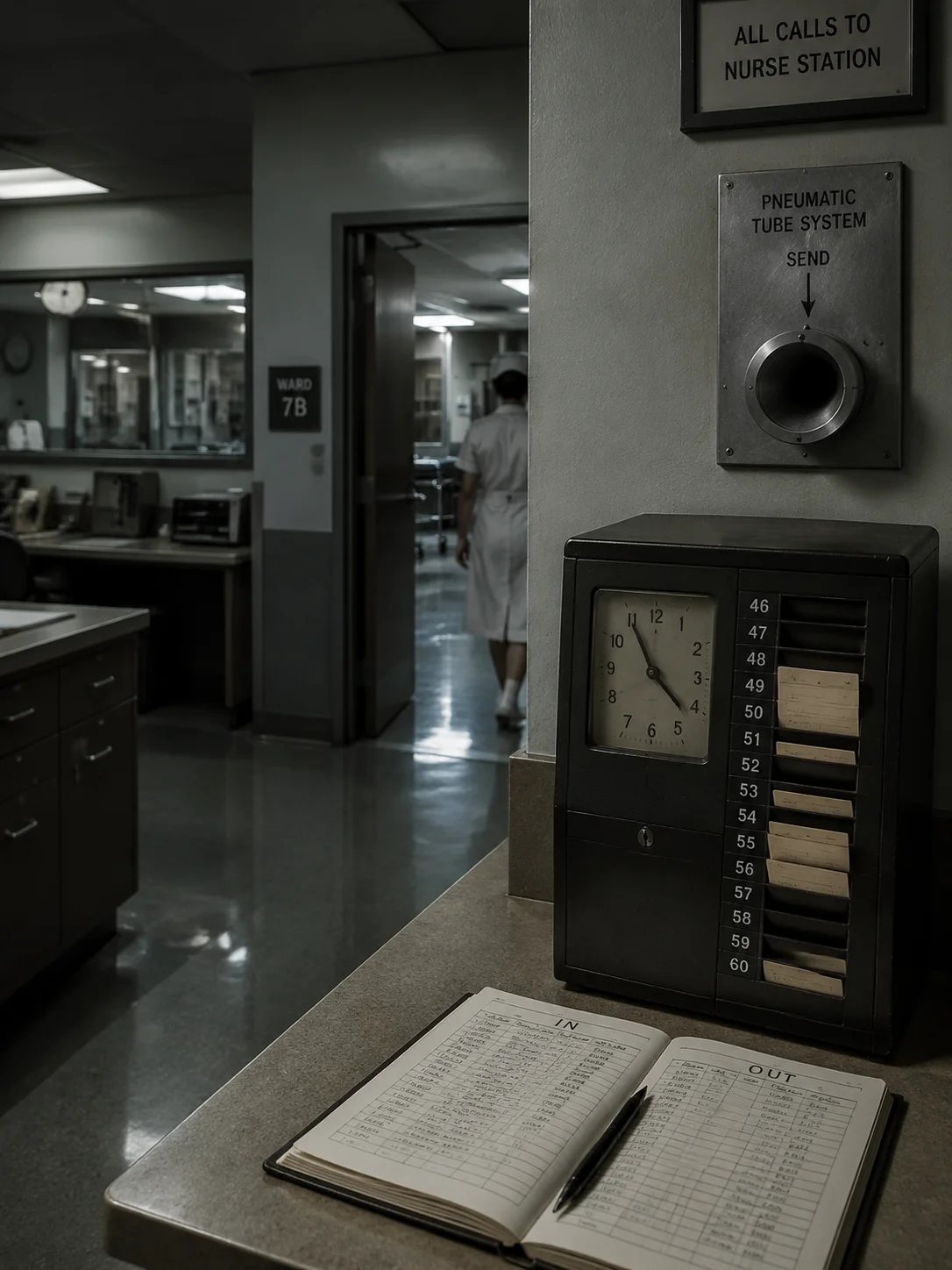
Late 1990s to early 2000s analog-digital hybrid systems: paper charting with carbon copies, early electronic medical record (EMR) terminals with login logs, barcode medication administration (BCMA) scanners that create electronic time stamps, paper-based controlled substance logs with manual counters, CCTV with VHS tapes recording in 30-minute intervals, phone switchboards, beepers/pagers, fax machines.
✦ Related Cases ✦