The Sterling-Avco Protocol
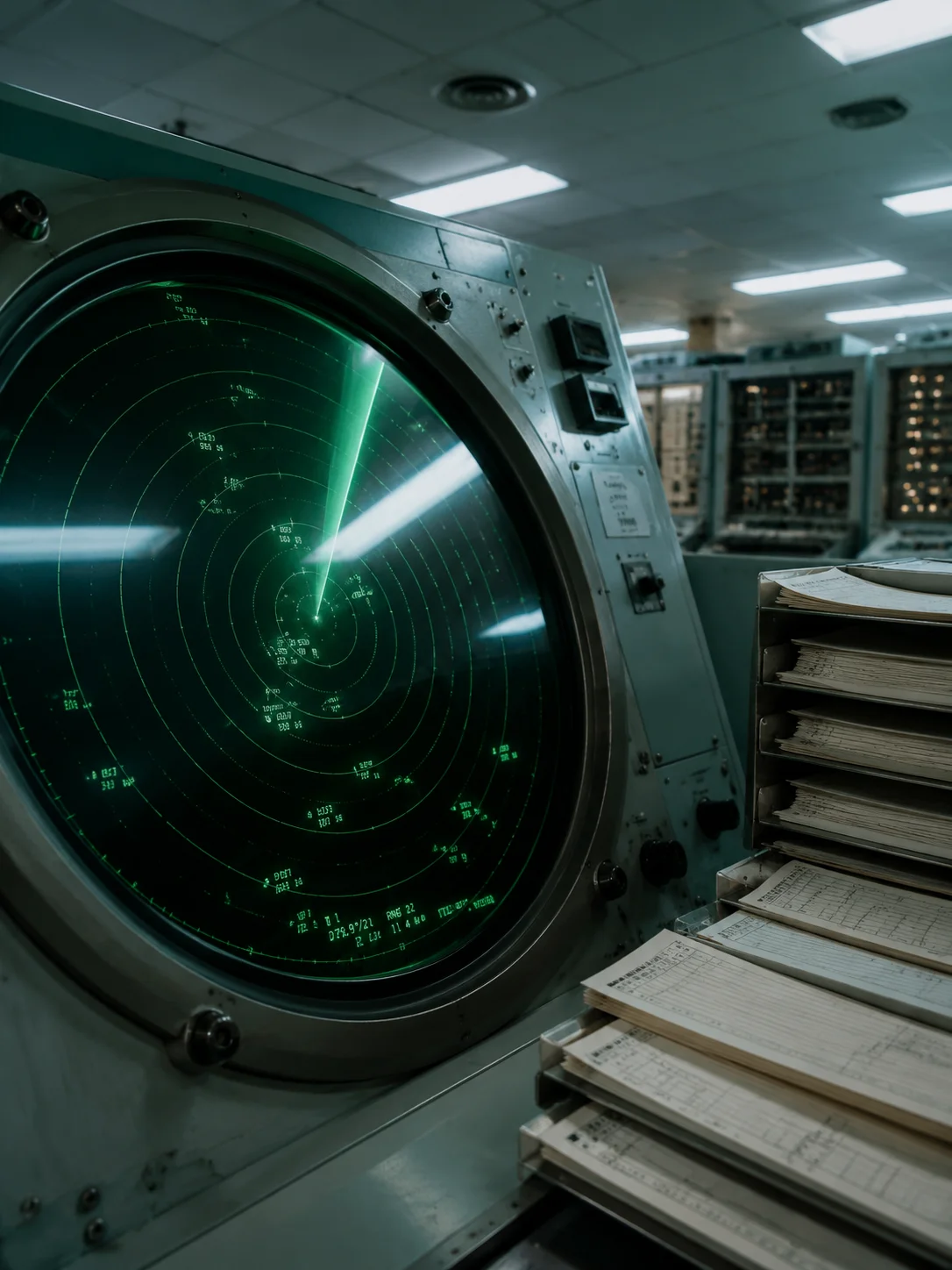
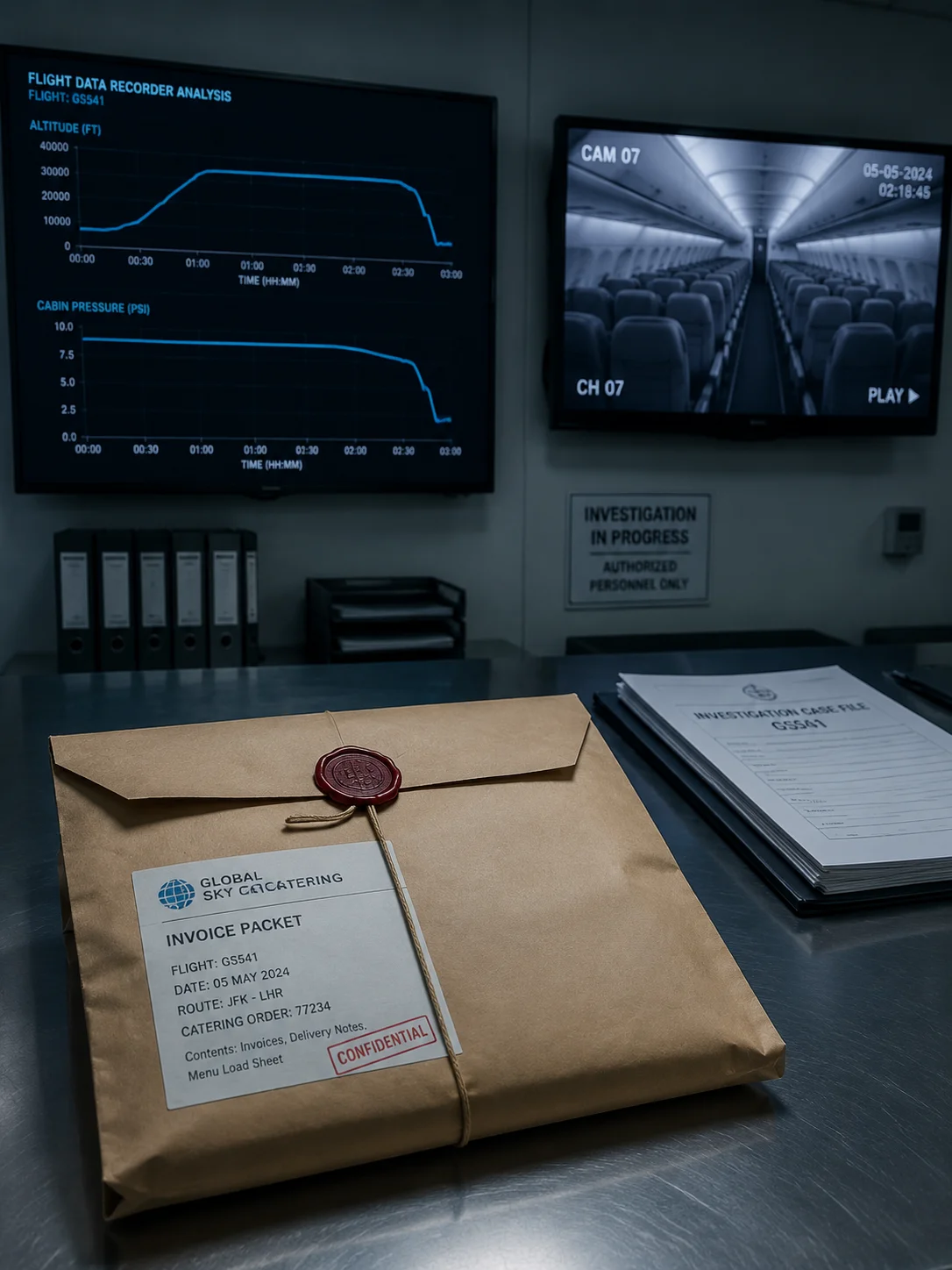
A fatal test flight anomaly at Sterling-Avco initiates a formal Civil Aviation Board investigation. The inquiry examines the state of operational logs, personnel statements, and material records within the corporation's analog infrastructure.
 Initial Crime Scene
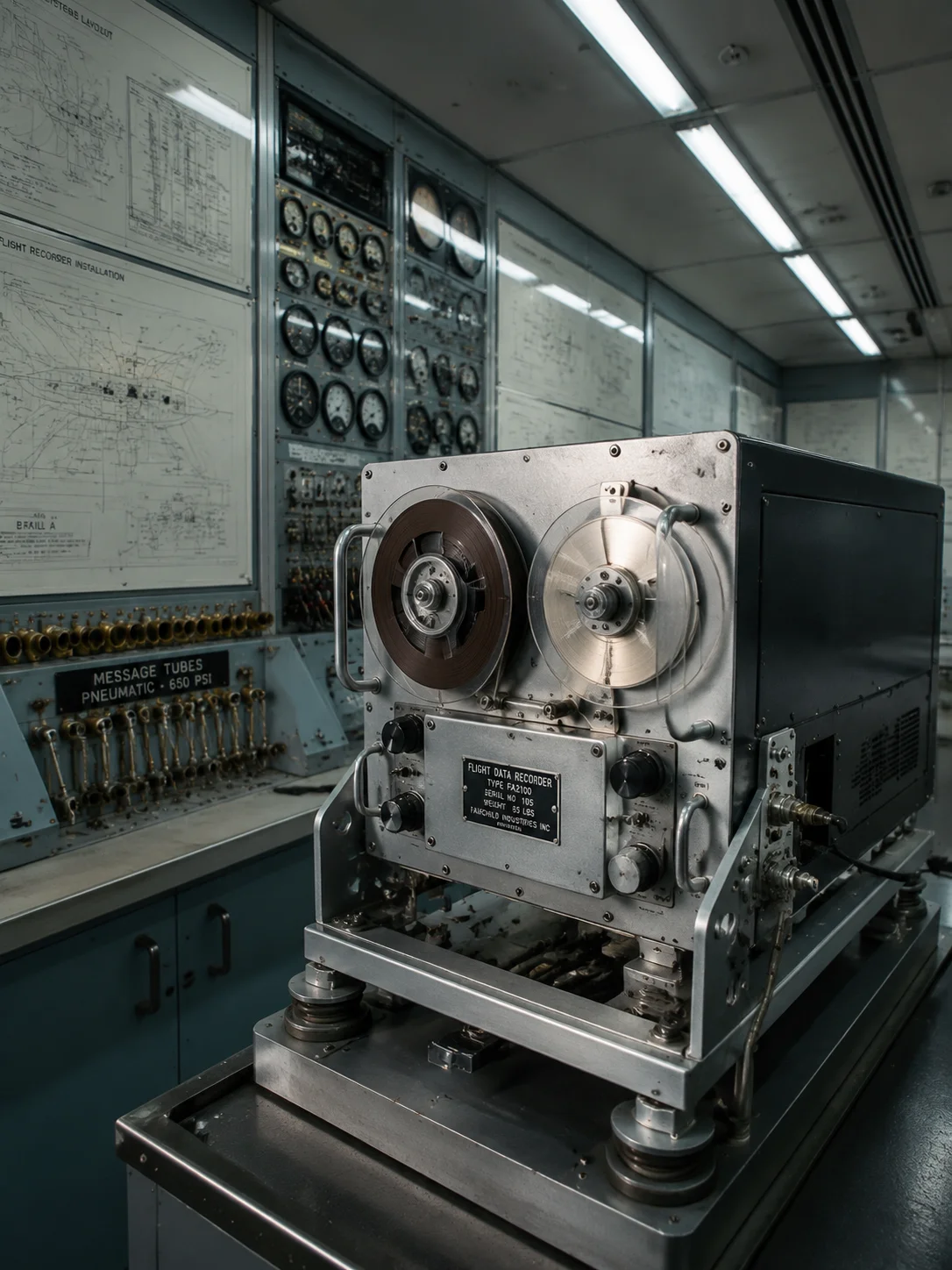
The fluorescent hum of the avionics lab meets the acrid tang of ozone and old solder. A reel-to-reel flight data recorder sits silent on its mount, its tape still. The sterile air carries the faint, stale smell of cigarette smoke. Blueprint cabinets line the walls, their contents reflecting a cold, anodized gleam. Pneumatic message capsules sit queued in the intake slots, brass fittings cool to the touch.
 Crime Scene Environment
Lighting: Cold, diffuse fluorescent strips. Humidity/Temperature: Cool, conditioned air with a residual humid warmth in the avionics lab. Acoustic Density: Low ambient hum from electronics, punctuated by the systemic hiss of pneumatic tube infrastructure and the occasional mechanical click of a relay.
 Investigation Constraints
Late 1960s/early 1970s analog corporate technology: Telex machines, pneumatic tube message systems, reel-to-reel flight data recorders, mechanical altimeters, paper-based flight plan logs, pneumatic riveters, fuel gauge dipsticks, analog oscilloscopes in the avionics lab, landline intercoms, carbon-copy triplicate reports, and basic photocopiers. No digital, networked, or computerized systems.
✦ Related Cases ✦