The Sunstone's Final Log
A luxury liner disaster yields a lifeboat with one too many bodies. An independent forensic investigator must navigate the waterlogged accounts of the survivors, piecing together the sequence of events from the ship's final minutes to reconstruct the objective truth.
 Initial Crime Scene
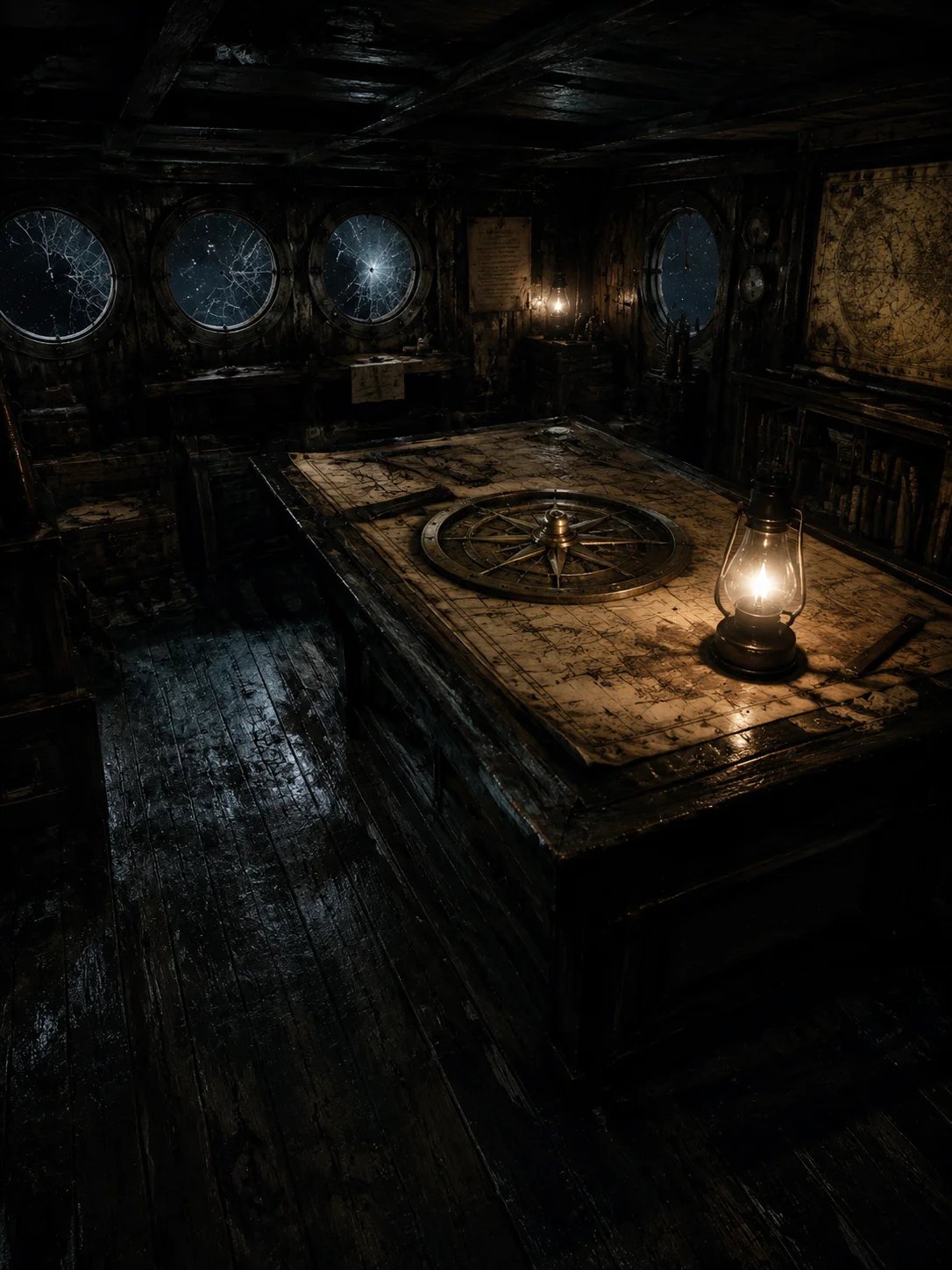
The creak of timber joints recording the ship's final, grim sighs fills your ears as you step over the threshold. Your boots land on tarred deck planking where faint, overlapping charcoal notations are smudged by salt spray. The sharp, briny scent of the open sea mixes with the dank, oily odor of bilge and the faint, lingering smell of burnt paper from a distant cabin. A single, brass-bound compass rose, its cardinal points worn smooth, sits centered on a chart table under the lone, flickering light of an oil lamp.
 Crime Scene Environment
The sandbox is enveloped in a gloom pierced only by the star-lit void through cracked portholes, casting deep, creaking shadows. The air is thick with a dank, humid chill that clings to wool and wood, carrying the acoustic density of fog-muffled waves against the hull and the constant, ominous groan of waterlogged timbers.
 Investigation Constraints
Early 19th-century maritime navigation tools: sextants, magnetic compasses, manual barometers, oil lamps, wax-sealed logbooks, mechanical ship's clocks, telegraph cables (limited to coastal relay stations). No electricity, no engines. Communication is via handwritten dispatches, signal flags, or voice across deck.
✦ Related Cases ✦