The Unsent Card
At a weekend gathering at the isolated Thornecroft Manor, the discovery of a calling card bearing the crest of a man who died a year prior sets off a series of contradictory accounts. The investigation must examine physical traces and testimonies to understand the sequence of events.
 Initial Crime Scene
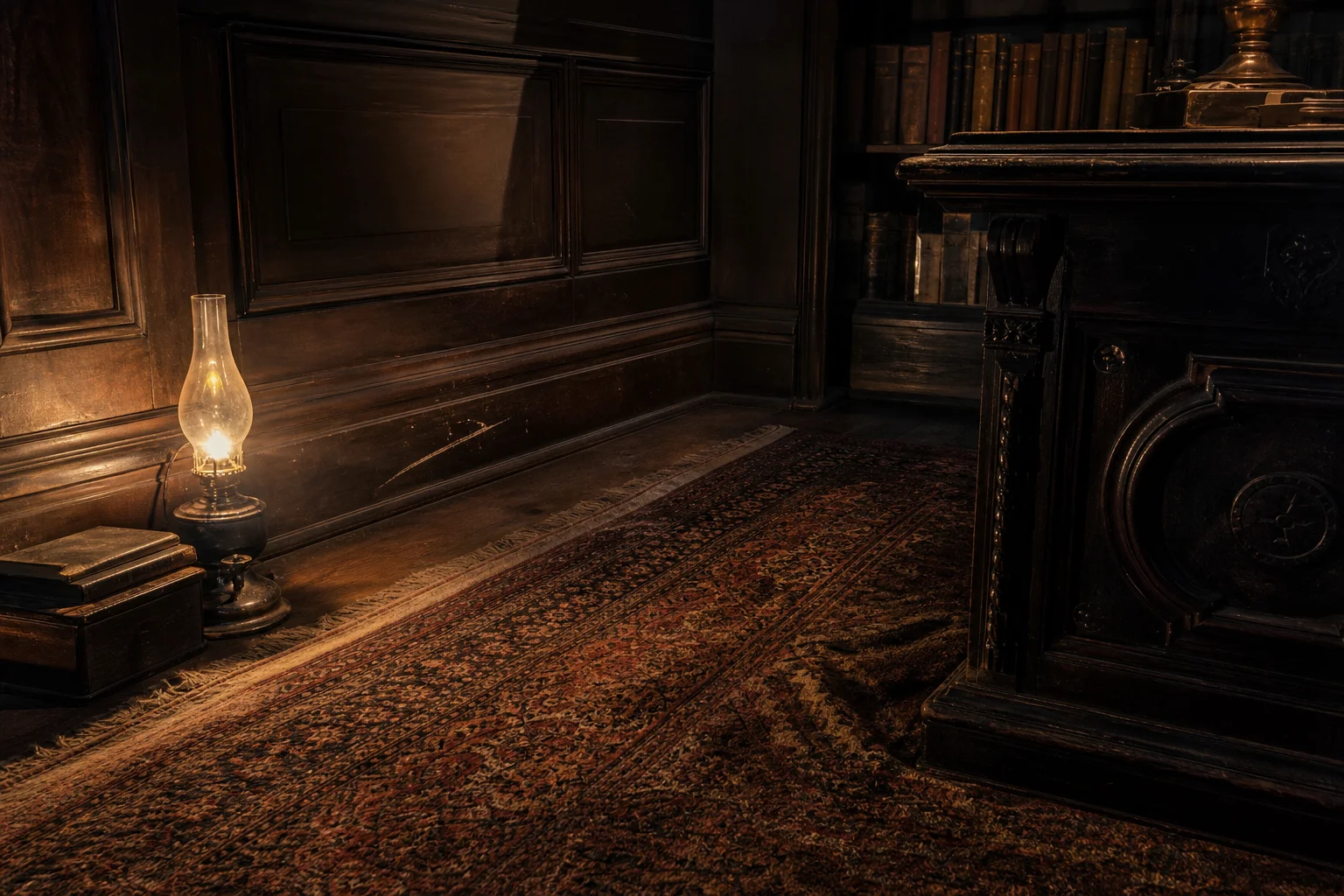
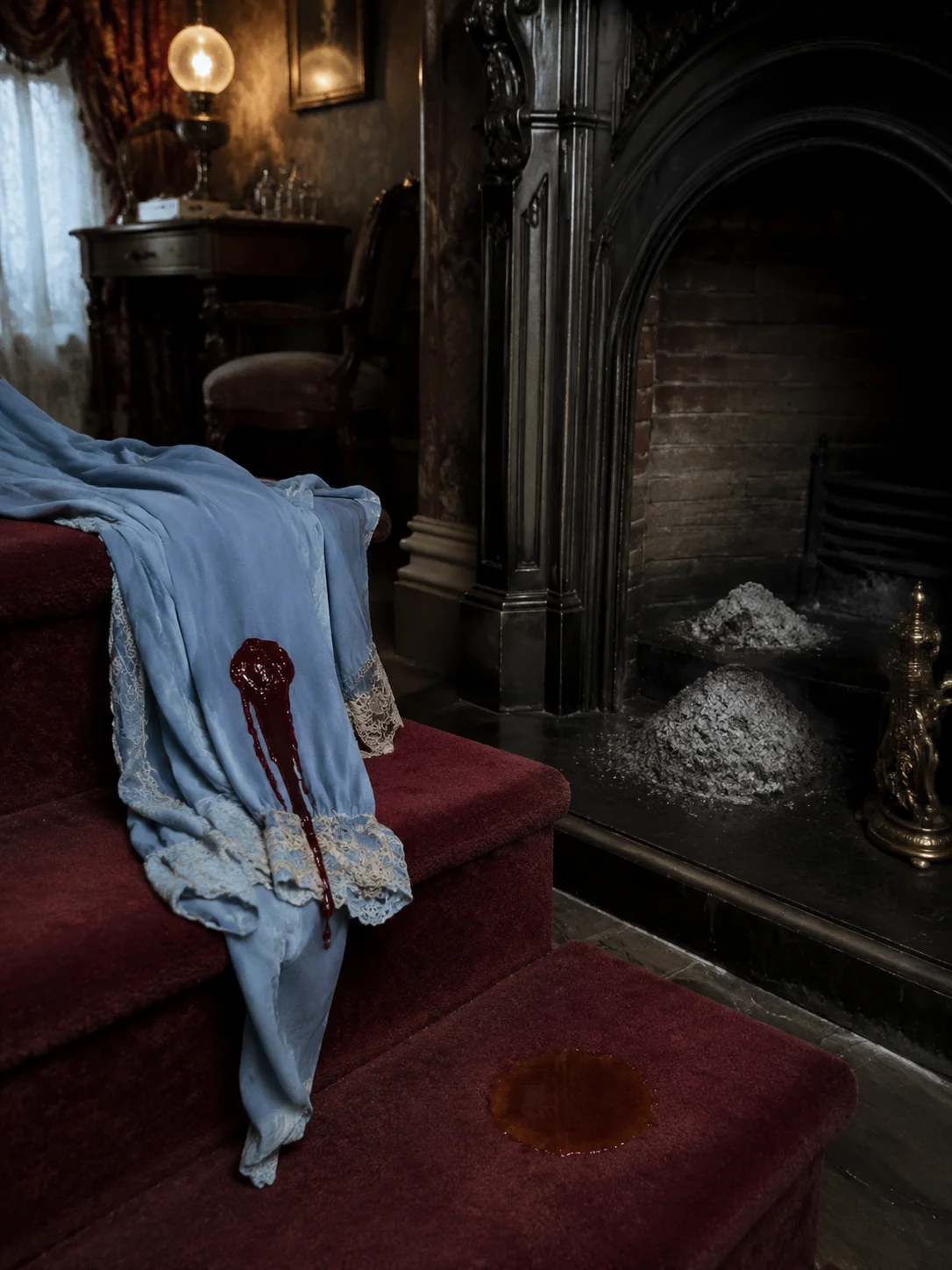
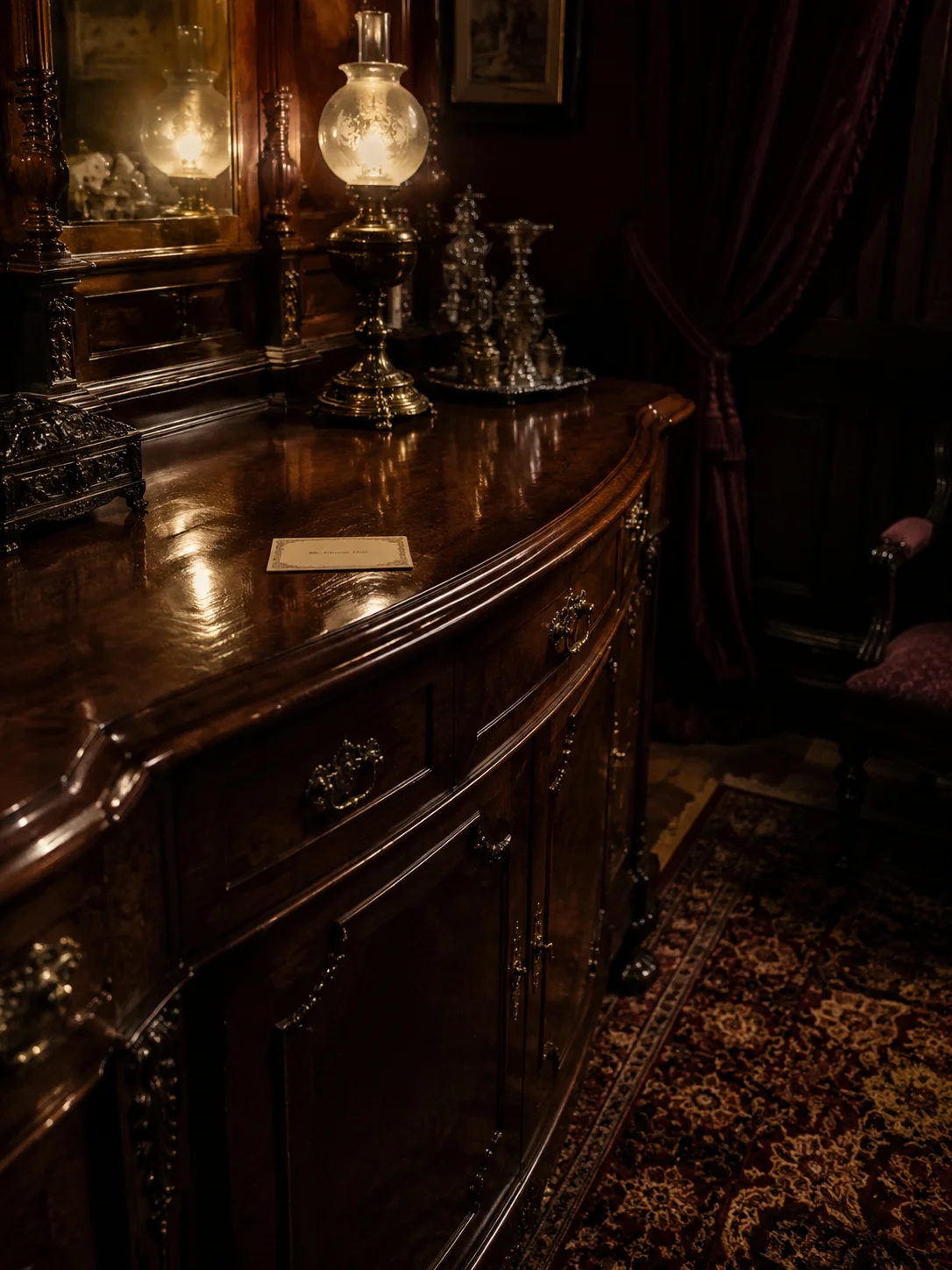
The gas lamp's glow catches the deep patina of polished mahogany, reflecting off the intricate weave of the Persian carpet. A faint, musty scent of old paper mingles with a sharp, clean odor that stings the nostrils. A single, misplaced calling card rests on a sideboard, its edge glinting under the light.
 Crime Scene Environment
The lighting profile is dim, warm gaslight creating pools of shadow. The humidity and temperature profile is cool and dry, with the air feeling close and still. The acoustic density is hushed, with sounds muffled by heavy curtains and thick carpets.
 Investigation Constraints
Communication is via hand-delivered letters, telegrams, and horse-drawn carriage. Lighting is gas lamps or candles. Locks are mechanical tumbler or warded types. Data storage is handwritten in ledgers, diaries, or on personal stationery. Forensic analysis relies on magnifying glasses, simple chemical tests (like litmus paper), and meticulous observation of dust, scratches, and stains.
✦ Related Cases ✦