The Verdigris Stain
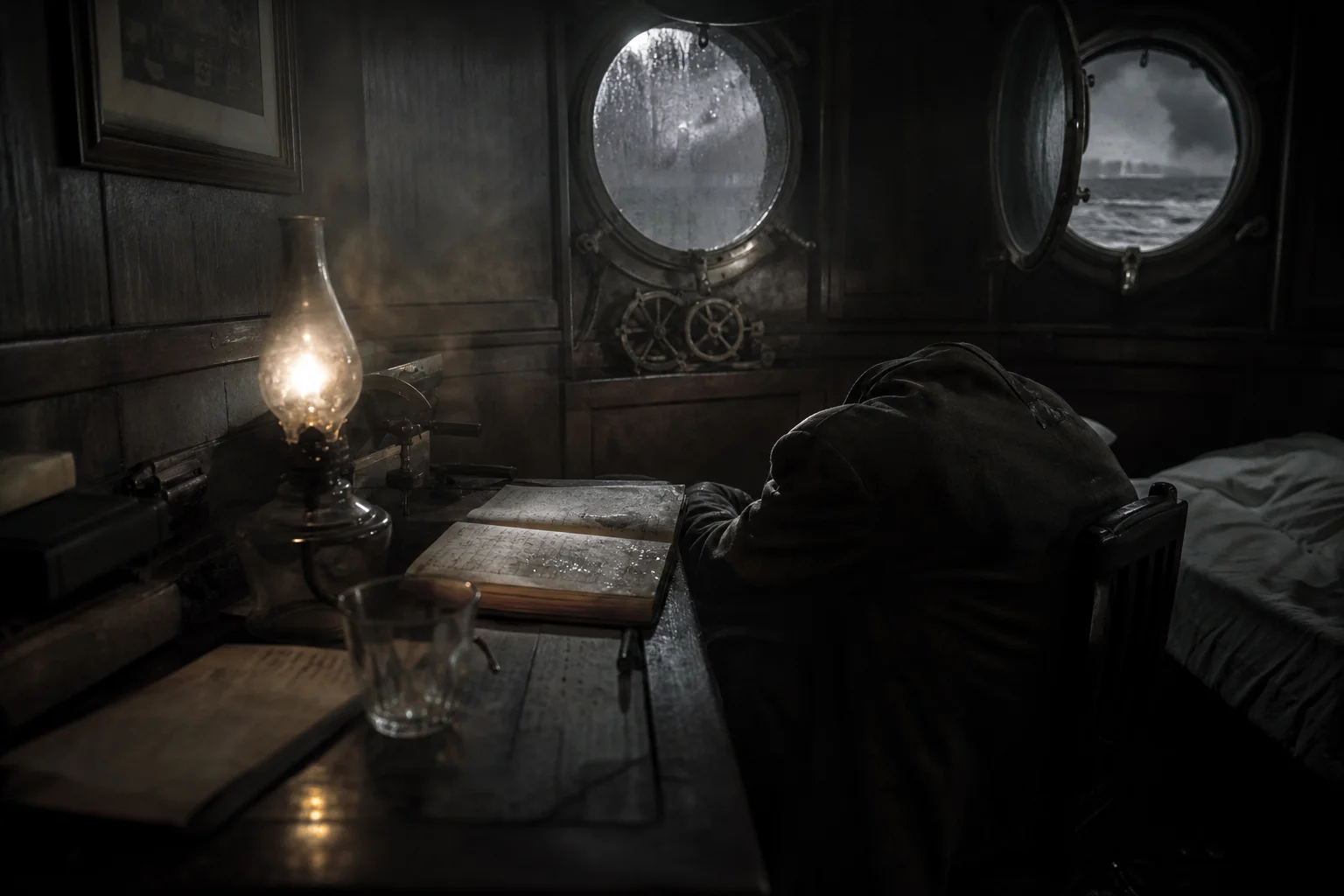
The owner of a steam yacht is found deceased in the engine room. Official findings cite mechanical failure. An investigator is dispatched to survey the vessel, its crew, and the physical residue left by the incident.
 Initial Crime Scene
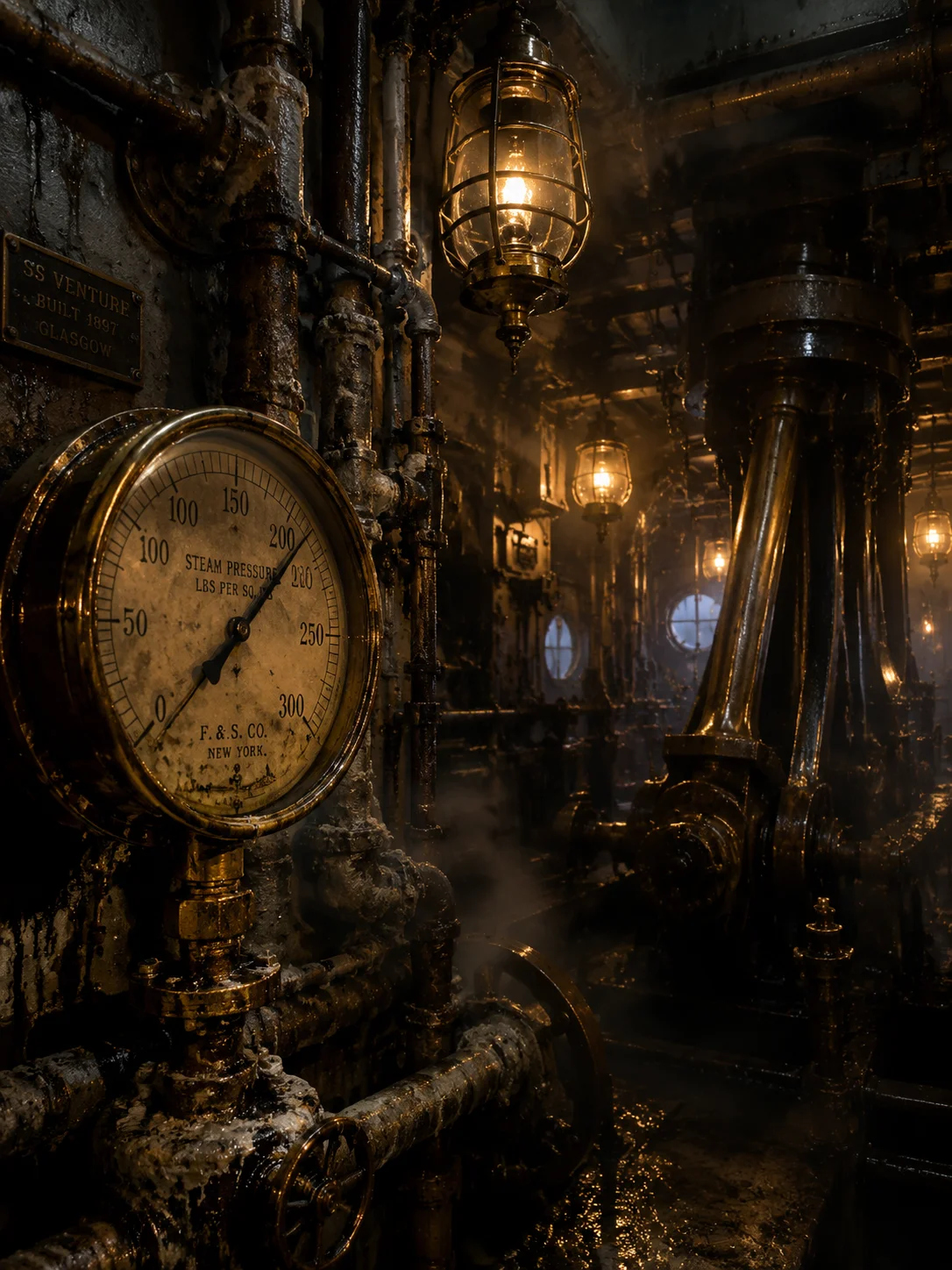
The metallic tang of hot oil and coal dust floods your senses as you step into the engine room's dim, vibrating space. A low, constant thrum resonates through the deck plating underfoot. Your gaze lands on a brass pressure gauge, its needle steady, then drifts to the crusted pipes running like iron veins along the bulkheads, their surfaces salt-crusted and iron-rusted. The only light comes from gimballed oil lamps, casting long, shifting shadows that make the massive pistons loom.
 Crime Scene Environment
The vessel's interior is defined by a persistent gloom, with visibility restricted to pools of flickering, uneven light from oil lamps. The air carries a high humidity, heavy with the moisture of brine and condensation that beads on every metal surface. Acoustic density is dominated by the low-frequency mechanical thrum of the steam propulsion system, punctuated by the occasional drip of water in confined spaces.
 Investigation Constraints
Late 19th Century maritime technology: steam propulsion, mechanical telegraphs, manual chain hoists, brass sextants, handwritten captain's logs, oil lamps, basic pneumatic tube messaging within the ship. No electronics or digital systems.
✦ Related Cases ✦