Whispers in the Polished Silver
An independent investigator is called to Highgate Manor following the death of its lord. The scene presents a study in meticulous order, a household of quiet routines, and a series of minor physical anomalies—a stripped hat lining, fine ash in a grate, a distorted wax seal. The task is to reconstruct the morning's events from sensory evidence alone.
 Initial Crime Scene
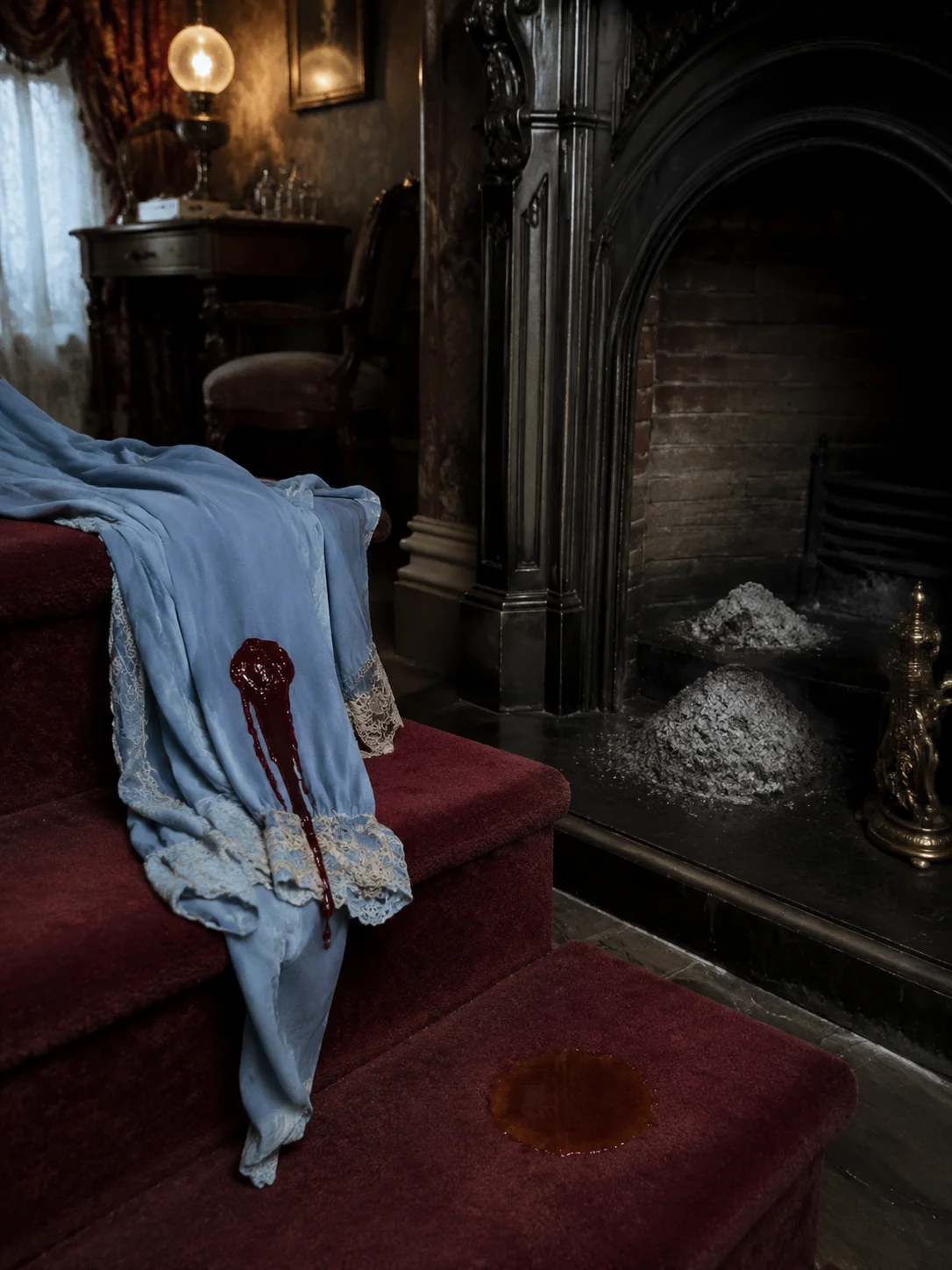
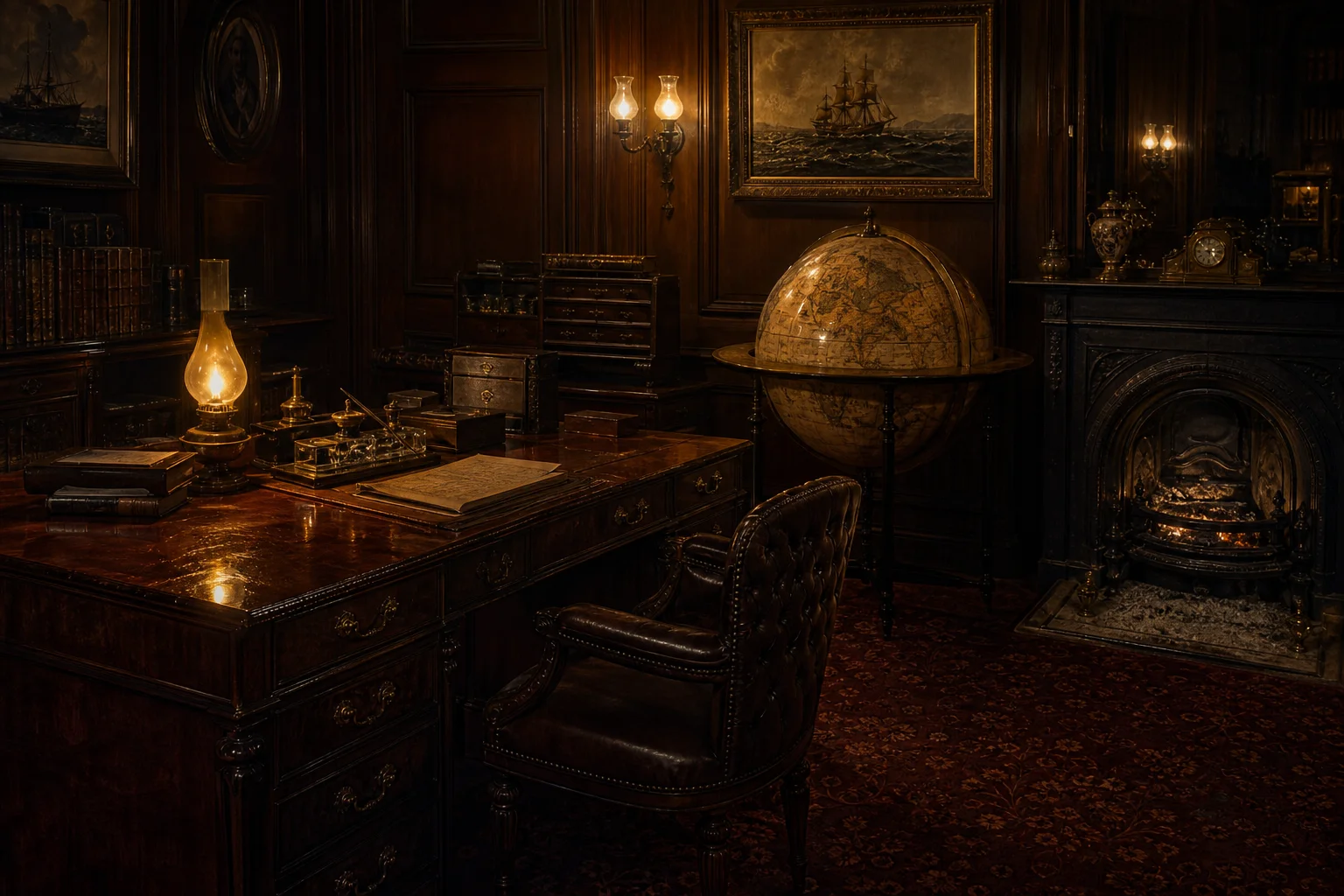
A faint, lingering scent of chemical solvents, sharper than lemon oil or beeswax, cuts through the air as you cross the threshold of Lord Alistair's study. The soft hiss of a gas lamp provides a constant, low ambient sound. Your eyes immediately register three points: the polished mahogany of a large desk, the varnished surface of an antique globe catching the light, and the fine, almost powdery ash visible within the iron fireplace grate.
 Crime Scene Environment
The environment is defined by steady, yellowish gaslight casting deep, soft-edged shadows. The air maintains a cool, dry stillness, with no draft. Acoustic density is low; sounds are muffled by thick carpets and wood paneling, with only the occasional faint creak of settling timber breaking the quiet.
 Investigation Constraints
Handwritten correspondence, telegrams, mechanical time clocks, wax seals, physical filing cabinets, gas lighting, early typewritten documents (but no electronic or digital systems). Forensic tools are limited to magnifying glasses, chemical reagent tests (e.g., for acids, inks), and physical trace evidence like fabric fibers or dust.
✦ Related Cases ✦