Whispers in the Veneer
An industrialist is found deceased in his study. The discovery of a misplaced calling card initiates a series of concealed personal transgressions by those present. Each attempt to obscure a private matter inadvertently alters the scene, generating a complex array of apparent trails.
 Initial Crime Scene
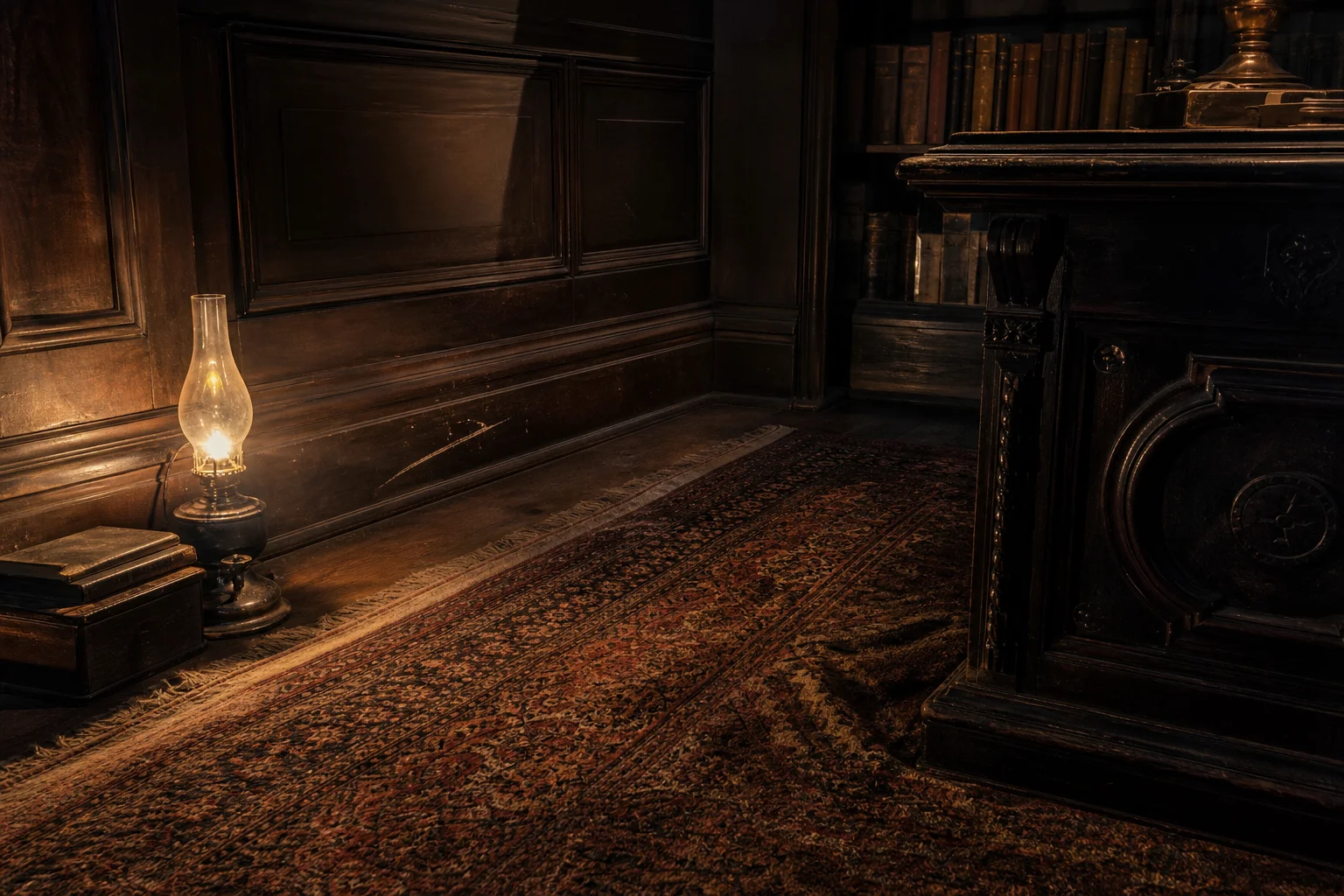
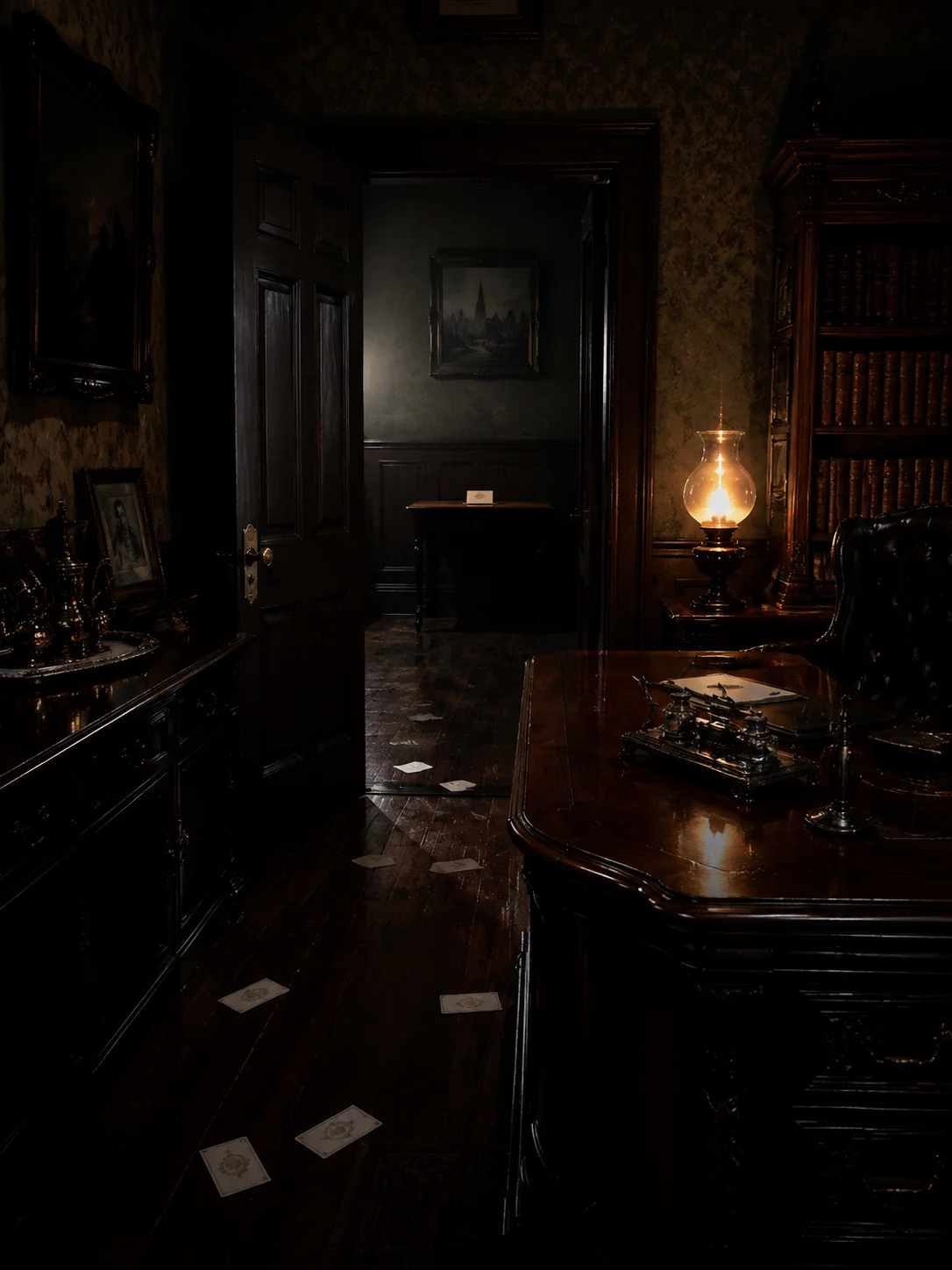
The first thing that hits you is the scent: the sweet, cloying smell of pipe tobacco clinging to the air, undercut by the faint, acrid tang of spilled brandy. A gas lamp hisses softly, casting long, flickering shadows that dance across the dark, directional grain of the mahogany writing desk. Your gaze catches on the scattered calling cards across the polished floor, the disturbed arrangement of the silver tray on the sideboard, and the single, pristine card lying perfectly centered on the hallway table just beyond the ajar door.
 Crime Scene Environment
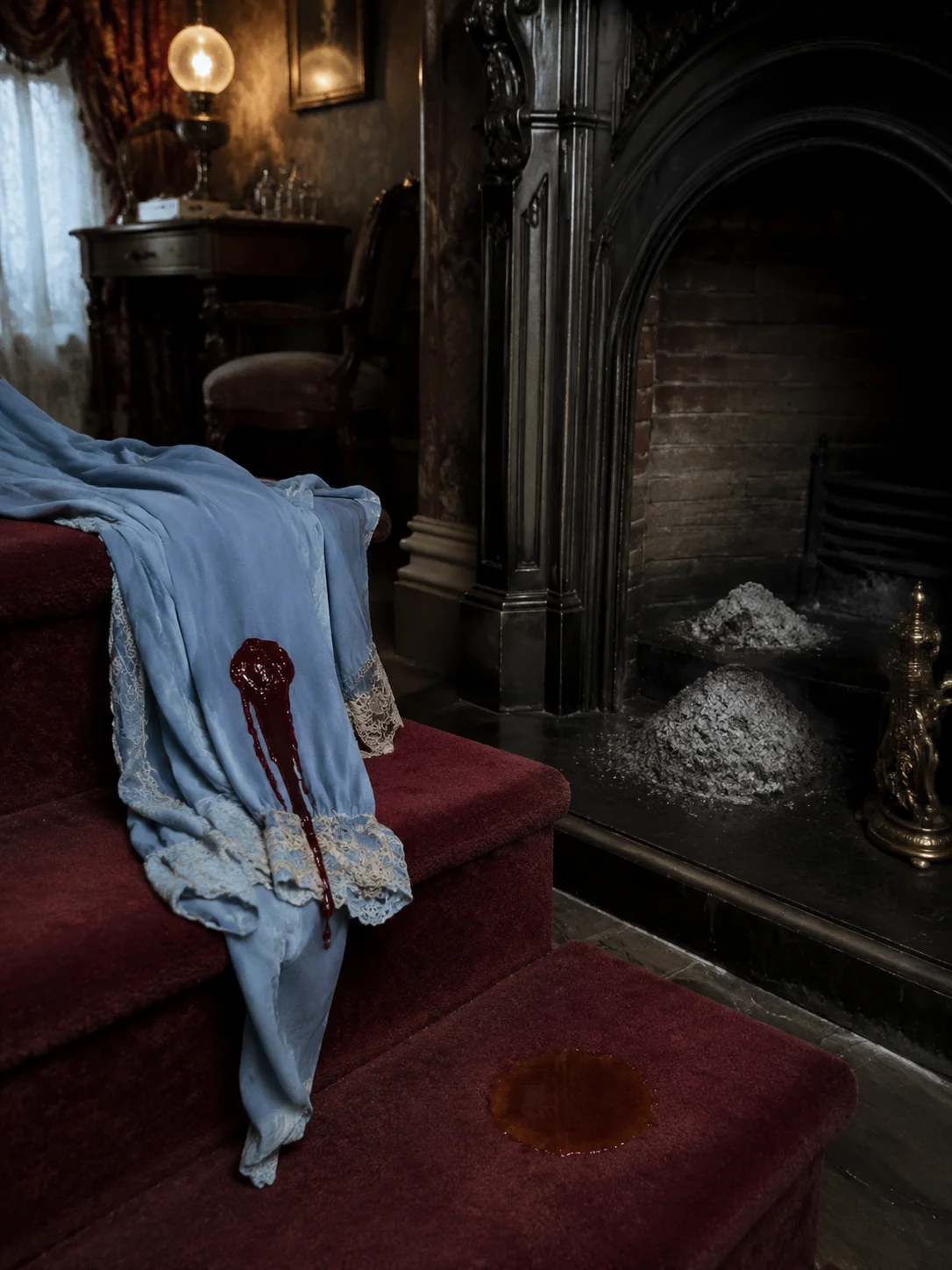
The environment is defined by the warm, flickering pool of gaslight, creating a chiaroscuro of deep shadows and sudden, bright gleams on polished surfaces. The air is cool and still, holding a humidity that carries the layered scents of beeswax polish, leather, and human anxiety. Acoustic density is low, punctuated only by the distant, muffled tick of a clock and the soft, persistent hiss of the gas lamp, amplifying any sudden sound into a pronounced event.
 Investigation Constraints
Gas lamps, mechanical clocks, handwritten ledgers, wax seals, horse-drawn carriages, printed calling cards, rudimentary chemical reagents (for cleaning or staining), bell-pull systems, and rotary telephones (exclusive to the very wealthy). No electricity beyond the laboratory; no instantaneous communication.
✦ Related Cases ✦